
Why Study Habits Matter More as an Adult
Adult learners - whether pursuing a professional certificate, upskilling for a promotion, or simply expanding their knowledge - face a distinct set of challenges. Competing priorities, time constraints, and the pressure to apply learning quickly can all undermine retention if study approaches aren't deliberate.
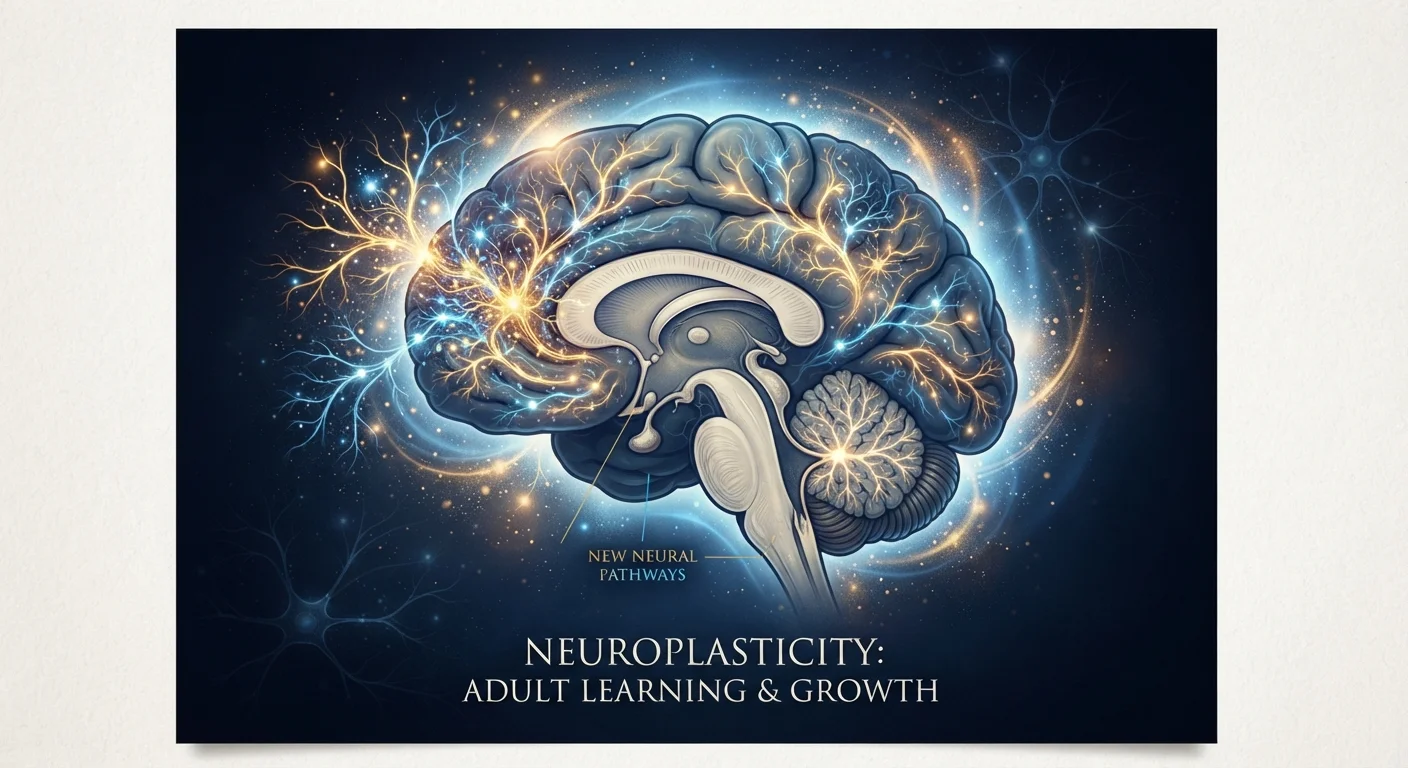
The good news is that cognitive science has identified specific strategies that reliably improve how we encode and recall information. These aren't study myths passed down from high school; they are techniques refined through decades of memory and learning research. As explored in The Science Behind Why Adult Brains Are Built for Learning, neuroplasticity continues well into adulthood - meaning your brain remains capable of forming durable new knowledge structures at any age.
What follows are evidence-informed practices designed specifically for adult learners in professional or continuing education contexts.
Use spaced repetition instead of massed review sessions.
The spacing effect - revisiting material at increasing intervals - is one of the most replicated findings in memory research. It prevents the illusion of familiarity that comes from rereading and forces the brain to reconstruct knowledge, which strengthens the memory trace. This is especially valuable for professional learners who need information to transfer to real tasks, not just pass a quiz.
Replace rereading with active retrieval practice.
Testing yourself before you feel ready is uncomfortable, but research consistently shows it produces stronger long-term retention than passive review. The act of struggling to retrieve an answer reinforces the neural pathway far more than simply reading the correct answer again. This is sometimes called the 'testing effect' in cognitive psychology literature.
Connect new concepts to what you already know professionally.
Adults enter learning situations with rich prior knowledge - a major cognitive advantage. Anchoring new information to existing frameworks or workplace experiences reduces cognitive load and gives the new knowledge a stronger structural home in long-term memory. This is the adult learner's edge over younger students.
Interleave topics rather than blocking all practice on one subject.
Blocked practice - finishing everything on Topic A before moving to Topic B - feels efficient but can lead to shallow learning. Interleaving, or mixing related topics within a session, forces the brain to discriminate between concepts and retrieve the correct strategy for each, building more flexible, transferable knowledge.
Keep study sessions short and frequent rather than long and infrequent.
Cognitive fatigue and declining attention within a single long session limit how much actually consolidates into long-term memory. Multiple shorter sessions distributed across the week allow the brain to consolidate material during sleep and rest periods between sessions, which is when much of memory consolidation occurs.
Techniques That Translate Directly Into Your Routine
Knowing why a strategy works is only useful if you can actually fit it into a busy week. The quick-start actions below are low-friction ways to begin applying these principles today, even if your available study time is limited.
~50%
Recall drop within an hour of learning
Research on the 'forgetting curve,' originally associated with Hermann Ebbinghaus's 19th-century memory experiments and replicated in modern studies, suggests people can forget roughly half of new information within an hour without deliberate review.
2×
Retention improvement with retrieval practice
Multiple studies in cognitive psychology, including work published in journals such as Psychological Science, have found that retrieval practice can roughly double retention compared to equivalent time spent rereading.
Building a Sustainable System
Individual techniques are most powerful when embedded in a consistent routine. A single evening of spaced review won't compensate for months of passive rereading - the gains accumulate over time, session by session.
“The best strategies for learning are those that feel difficult in the moment - desirable difficulties force the brain to work harder, and that effort is what produces durable memory.”
— Robert Bjork, Distinguished Professor of Psychology, UCLA, and researcher in human learning and memory
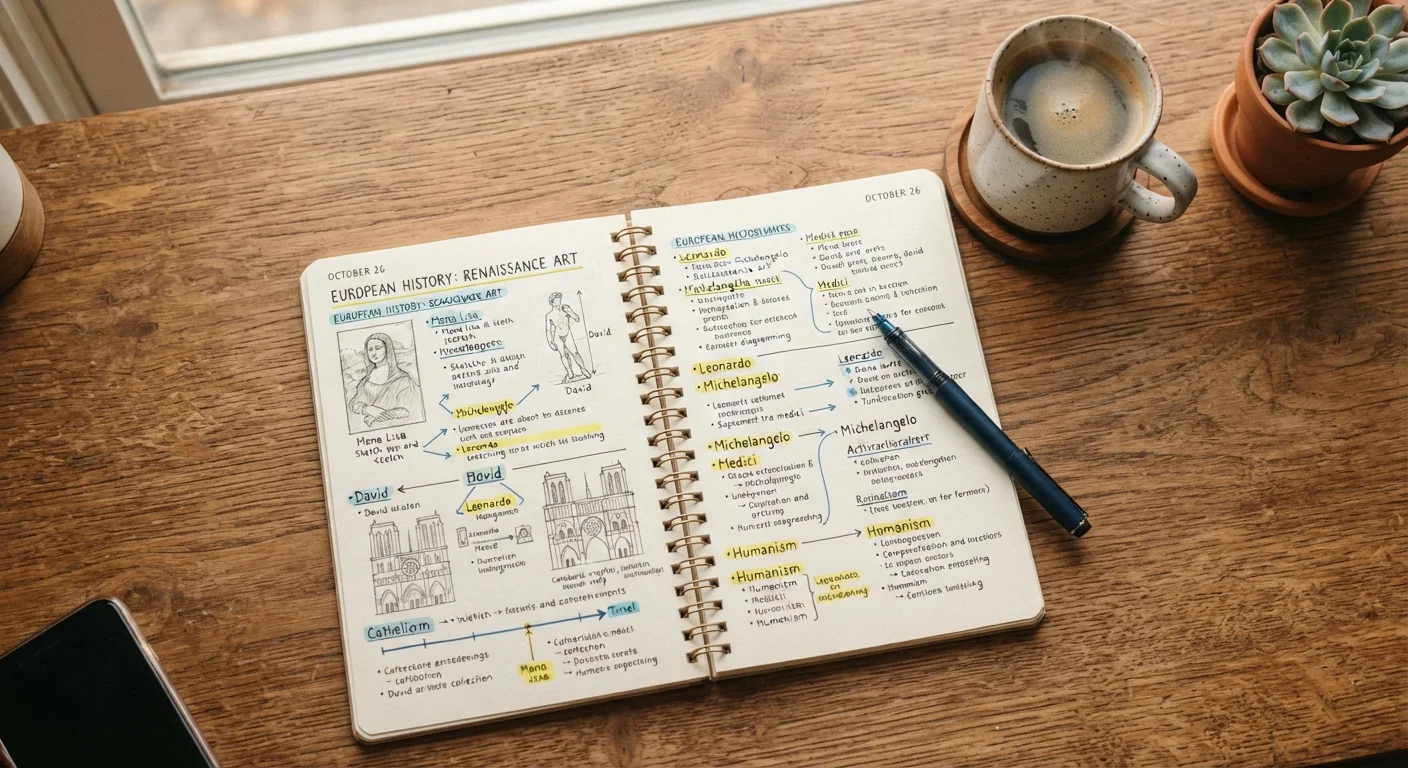
Consider pairing these strategies with a structured note-taking approach. Methods such as the Cornell system or concept mapping actively engage you with material rather than transcribing it verbatim. Our companion guide on note-taking methods for adult learners compares several frameworks so you can choose one that fits how you actually think.
For a deeper dive into weaving these habits into daily life, Building a Personal Learning Habit That Actually Sticks offers a practical framework for designing a routine around real-world constraints. And if you want the full scientific foundation behind spacing, retrieval, and interleaving, Spacing, Retrieval, and Interleaving: The Learning Techniques Backed by Cognitive Research goes into the research in more depth.
These Strategies Work Best Together
Spaced repetition, retrieval practice, and interleaving are each effective individually, but their benefits compound when used in combination. You don't need to overhaul your entire study routine at once - introduce one technique at a time and give it several sessions before evaluating its effect. Sustainable improvement matters more than a perfect system that never gets used. See the Lifelong Learner's Complete Roadmap for a broader framework on building expertise progressively.