
Why Accessible Learning Matters for Adults
Continuing education is no longer confined to classrooms or formal degree programs. Whether you're looking to shift careers, master a new skill, or simply stay curious, the landscape of free and low-cost learning available to U.S. adults has expanded dramatically - yet many people remain unaware of what's truly within reach.
This guide cuts through the noise and organizes the most reliable, widely available options by resource type, so you can quickly identify what fits your goals, schedule, and budget. For a broader look at building a sustained learning practice, see The Lifelong Learner's Complete Roadmap.
| Public library cardholders in the U.S. | Approximately 172 million (American Library Association, 2022) |
| Community college tuition vs. 4-year institutions | Roughly 40-60% lower on average (College Board, Trends in College Pricing) |
| Free MOOC audit availability | Available on most major platforms (Platform policies vary; verify before enrolling) |
| American Job Centers nationwide | Approximately 2,300 locations (U.S. Department of Labor) |
| Adults who say cost is a barrier to learning | Nearly 1 in 3 (Pew Research Center, Lifelong Learning survey) |
Core Resource Categories at a Glance
U.S. adults can draw from several distinct types of learning infrastructure. Understanding each category helps you match the right resource to the right learning need.
Public Libraries
A valid library card - free in virtually every U.S. county - typically unlocks far more than books. Many library systems provide access to digital learning platforms, language-learning software, databases of academic journals, e-books, and audiobooks. Some branches also host free in-person workshops on topics ranging from digital literacy to small-business basics.
Community Colleges and Open Enrollment Programs
Community colleges often offer non-credit continuing education courses at low cost, covering professional skills, trades, health, technology, and the arts. Many also participate in state-funded tuition-waiver programs for adults over a certain age or income threshold - eligibility varies by state, so check directly with your local institution.
Open Courseware and MOOCs
Massive Open Online Courses (MOOCs) are structured courses made available online, often for free or a modest fee for a certificate. Universities and independent platforms publish thousands of these covering nearly every subject. Audit options - which let you access course materials without paying - are available on many platforms, though certificates typically require payment. See what to weigh before committing your time to an online platform before enrolling.
Government and Nonprofit Programs
Federally supported programs - including those administered through the American Job Centers network - offer free workforce training, job search support, and sometimes subsidized skills courses for qualifying adults. Local nonprofits, community centers, and public broadcasting organizations (such as PBS LearningMedia) also publish freely accessible educational content.
MOOC
Massive Open Online Course - a structured course delivered online and open to large numbers of participants, often at no cost to audit. MOOCs are offered by universities and independent platforms and cover subjects from coding to philosophy.
Open Courseware
Freely available educational materials - lectures, syllabi, problem sets - published online by universities and instructors without requiring enrollment or payment.
Non-Credit Course
A course offered by a college or institution that does not count toward a formal degree. Non-credit courses are generally lower cost and focus on practical or professional skill development.
American Job Centers
A nationwide network of publicly funded employment and training centers operated through a partnership of federal, state, and local agencies, offering free career counseling, job search tools, and workforce training programs.
Digital Literacy
The ability to find, evaluate, use, and create information using digital devices and the internet. Many libraries and nonprofits offer free digital literacy workshops specifically for adults.
Making the Most of What's Free
Access alone doesn't produce learning outcomes - structure and intention do. Here are practical habits for turning free resources into real skill gains:
- Start with a clear goal. Vague intentions like "learn more about finance" are harder to sustain than specific ones like "understand how compound interest works." Narrow goals lead to better resource choices.
- Sequence your resources. Combine a free MOOC lecture series with library books on the same subject. Layering formats reinforces retention.
- Set a consistent schedule. Even 20-30 minutes daily compounds over weeks. Calendar blocking works for self-directed learners as well as enrolled students.
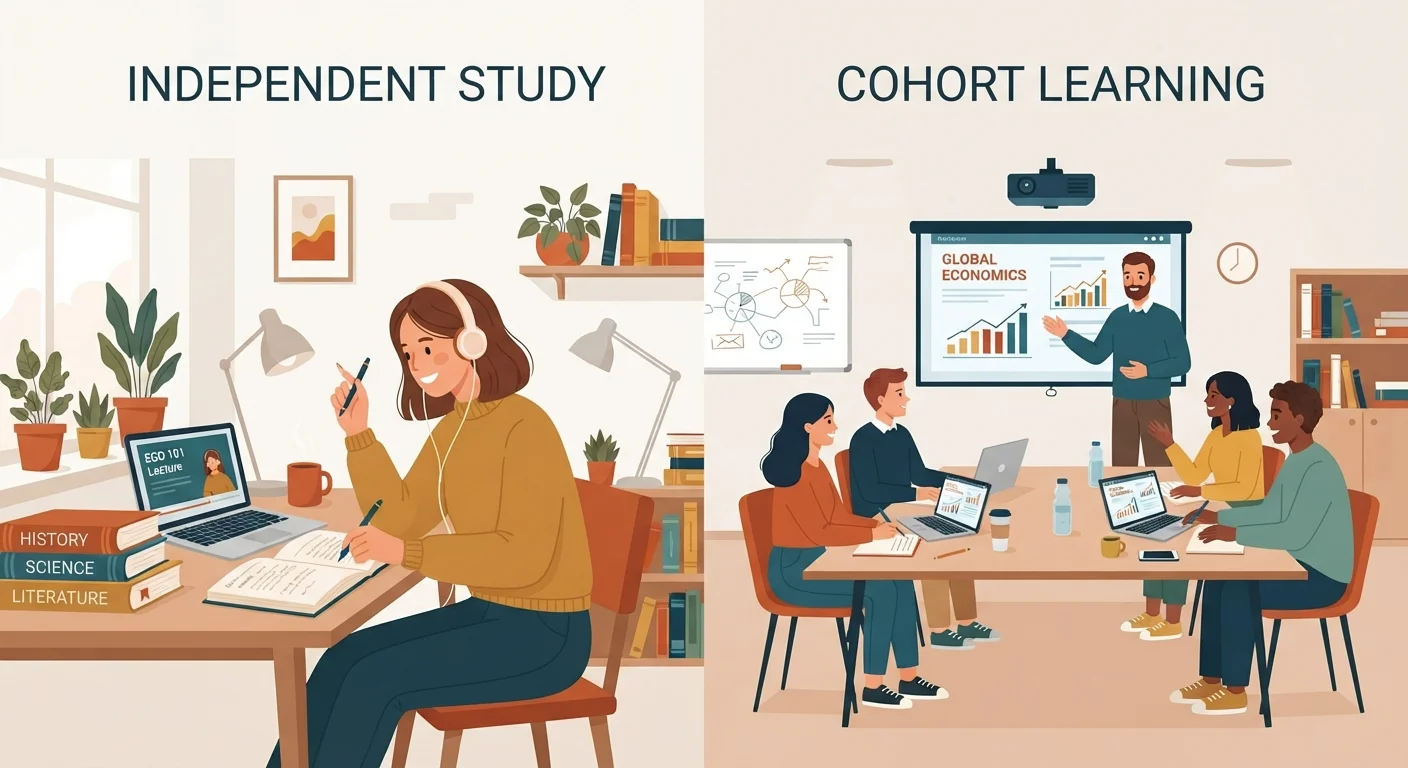
- Seek accountability. Study groups, online learning communities, and library-hosted discussion circles provide the social structure that self-study often lacks. For a frank comparison of self-directed versus enrolled learning, read Self-Directed Learning vs. Structured Programs.
Don't Overlook Your Employer
Many U.S. employers offer tuition assistance, professional development stipends, or subscriptions to learning platforms as part of their benefits packages - yet these benefits often go unused. Check your employee handbook or ask your HR department what's available before spending out of pocket on courses or materials.
Adults balancing work and family will find that time management is often the biggest barrier - not cost. If you're considering a more formal return to education, Returning to School as a Working Adult offers a practical roadmap for navigating those logistics.