
Why Adults Return to School - and What's Actually at Stake
Adults go back to school for concrete reasons: a promotion that requires a specific credential, a career pivot into a different field, or the realization that a degree left unfinished is limiting current opportunities. Whatever the motivation, the decision carries real stakes - financial, professional, and personal.
Unlike traditional students, adult learners carry existing obligations. A full-time job, a mortgage, children, or aging parents don't pause while you complete coursework. This isn't a reason to avoid returning to school - it's a reason to approach it deliberately. The adults who succeed tend to be those who treat enrollment as a logistics problem first and an academic challenge second.
For those weighing whether a formal program is even the right vehicle, it helps to first consider what kind of learning structure fits your life. The guide on choosing between formal courses, self-study, and mentorship can help you clarify that before committing to tuition.
Choosing the Right Program Format
Program format is one of the most consequential decisions an adult learner makes - yet it often gets less attention than program rankings or reputation. The key variables to evaluate are scheduling flexibility, pace, and how the program accommodates work schedules.
- Asynchronous online programs let you complete coursework on your own schedule, which suits shift workers and those with unpredictable hours.
- Synchronous online or hybrid programs require attending virtual class sessions at set times - useful if you value real-time interaction but can protect specific evenings.
- Evening and weekend cohort programs are designed for working adults and build peer community, though they require firm time blocks each week.
- Part-time enrollment extends your timeline but sharply reduces per-semester workload - often the sustainable choice when full-time employment isn't negotiable.
Accreditation matters regardless of format. Verify that any program you consider holds regional or programmatic accreditation recognized in your field, as this affects how employers and licensing boards view your credential.
Request a meeting with an academic advisor before selecting courses, not after. Advisors often know which course sequences are workload-intensive and can help you sequence them around your professional calendar.
Adult learners who engage advisors early tend to make more efficient program progress and are less likely to take courses that don't count toward their specific credential requirements.
If your employer offers tuition reimbursement, get the reimbursement policy in writing and confirm which institutions and credential types qualify before you enroll - not after.
Reimbursement programs frequently have fine print around grade requirements, approved institutions, and employment tenure post-graduation that can affect whether you actually receive the benefit.
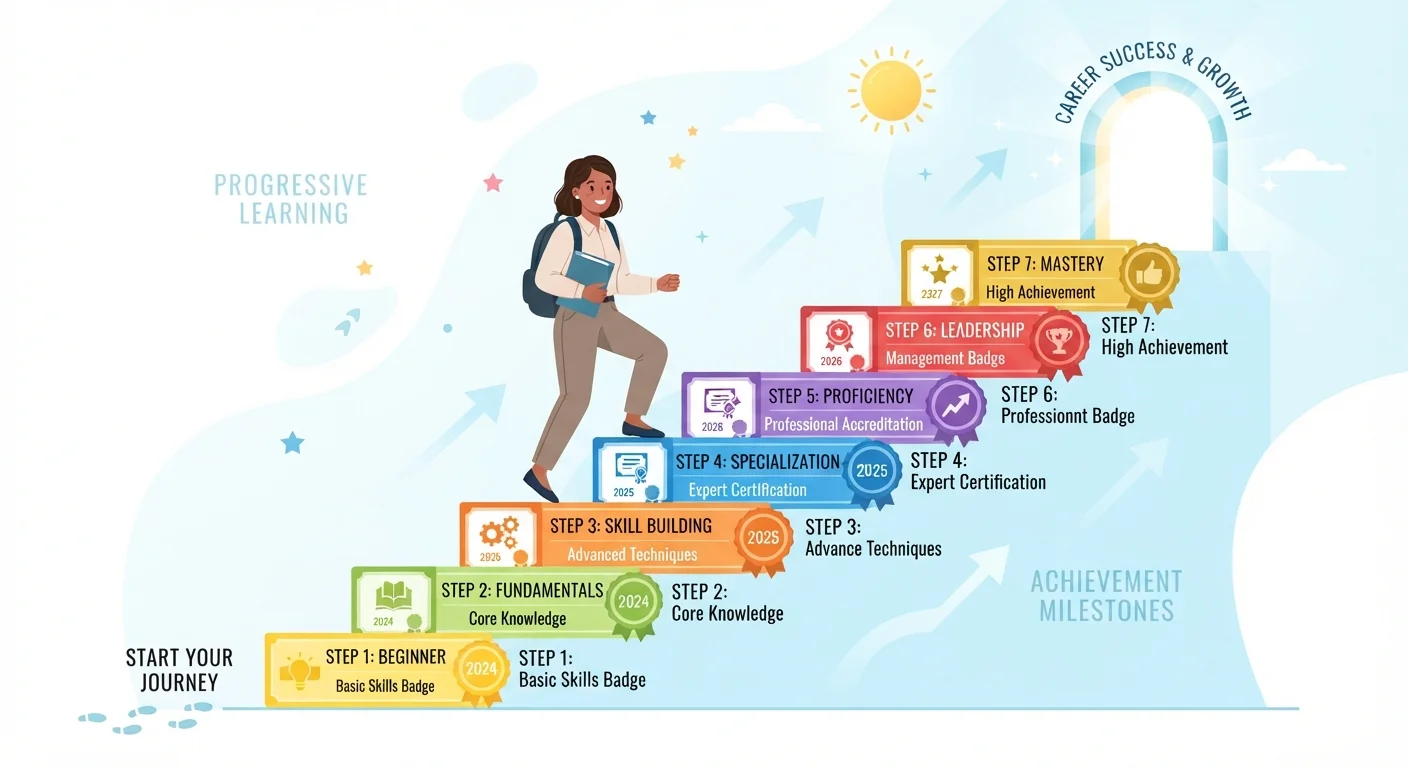
If you're exploring credentials shorter than a full degree, the framework of stackable credentials is worth understanding - it lets you build career value one step at a time rather than committing to a multi-year degree before seeing return.
Navigating the Financial Reality
Tuition is the most visible cost, but adult learners also face indirect costs: lost overtime, childcare during study hours, and the opportunity cost of time. Mapping all of these before enrolling prevents financial surprises mid-program.
Aid and funding sources to investigate
- Federal financial aid (FAFSA): Adult students are often surprised to qualify for grants or subsidized loans. Dependency status changes after age 24, which can improve your aid package.
- Employer tuition benefits: Many employers reimburse tuition - sometimes up to $5,250 per year tax-free under federal law - but this benefit goes unclaimed far more often than it should. The article on tuition reimbursement and employer education benefits explains how to find out what your employer actually offers.
- State workforce development grants: Many states fund retraining programs for workers in targeted industries. Your state's workforce agency website is the starting point.
- Institutional scholarships for adult learners: Many colleges have dedicated scholarship pools for returning students - ask the financial aid office directly.
40%
Share of U.S. undergraduates who are adults over 25
According to the National Center for Education Statistics, adult learners make up a substantial portion of the college-going population, yet campus services are often designed for traditional-age students.
$5,250
Annual employer tuition assistance excluded from federal income tax
Under IRS Section 127, employers may provide up to this amount per year in educational assistance tax-free, though eligibility depends on the employer's specific plan.
3 in 5
Adult students who report experiencing burnout during enrollment
Surveys of non-traditional student populations consistently find high rates of role-related stress, underscoring the importance of proactive workload management.
Before borrowing, compare the credential's expected salary impact against total program cost. General financial information like this is educational - consult a qualified financial adviser or your institution's financial aid counselor for guidance specific to your situation.
Building a Schedule That Holds
The single most common reason adult learners fall behind isn't lack of intelligence - it's underestimating how much time coursework actually requires and overestimating how much discretionary time they have each week.
A practical approach: before your first semester begins, track your actual weekly hours for two weeks. Log work, commute, meals, sleep, family commitments, and existing social obligations. What remains is your realistic study window - not the idealized one you imagined when you enrolled.
Track Your Time Before You Enroll
Spend two weeks logging every commitment - work, commute, family, sleep, and leisure - before your first semester starts. This reveals your true available study window, which is almost always smaller than estimated. Designing your course load around reality, not optimism, is the single most effective burnout-prevention step you can take.
For a structured method to turn that window into a reliable weekly plan, the guide to building a study schedule you'll actually stick to walks through the process step by step, including how to account for energy levels and assignment deadlines.
Time management principles that work for traditional students also scale to adult contexts - the time management principles for students at every level article covers techniques applicable from undergraduate through graduate programs.
Preventing and Managing Burnout
Adult learner burnout is distinct from general work stress. It tends to emerge from sustained role overload - simultaneously performing as an employee, student, partner, parent, and caregiver - with no single role ever fully releasing pressure. Warning signs include chronic fatigue, declining performance across all roles, and a creeping sense that nothing you do is ever enough.
Prevention strategies that have evidence behind them
- Semester pacing: Deliberately take a lighter course load in semesters when work projects are intense. A longer timeline is not failure - dropping out is a far more costly outcome.
- Protected recovery time: Schedule at least one half-day per week with no coursework and no work email. Recovery isn't wasted time; it's what makes sustained effort possible.
- Communicate proactively: Most instructors respect adult learners who communicate early about conflicts. Waiting until you've missed deadlines removes your options.
- Reassess periodically: Every semester, ask whether the program is still moving you toward the goal that justified enrollment. Programs sometimes stall career progress rather than accelerate it - the article on where professional development goes wrong identifies the patterns to watch for.
Don't Wait Until You're Overwhelmed to Ask for Help
Many adult learners delay reaching out to instructors, advisors, or support services because they feel they should be able to handle everything independently. By the time they do ask, they've often already missed critical deadlines or accumulated debt without adequate progress. Institutions have resources specifically for adult and returning students - use them early, not as a last resort.
Making Your Credentials Count
Completing a program is not the finish line - translating credentials into career movement requires deliberate action. Employers and hiring managers respond to credentials when candidates can connect them to demonstrated skills and real outputs, not just a line on a resume.
- Build portfolio artifacts during coursework: projects, analyses, or presentations that show applied capability, not just course completion.
- Update your professional profiles as you progress, not only when you graduate - ongoing learning signals initiative.
- Network within your program; cohort peers are often your most valuable professional resource post-graduation.
For adults building credentials incrementally, the stackable credentials pathway approach lets each completed certificate add immediate value while contributing to a longer-term qualification. And if you're returning to learning after a significant gap, the honest guide to skill-building in mid-life addresses the specific cognitive and motivational landscape adults navigate.
“The adults who succeed in returning to school are rarely the most academically gifted - they're the ones who treat time management as a non-negotiable discipline from day one.”
— Malcolm Knowles, Pioneer of adult learning theory (andragogy) and author of 'The Modern Practice of Adult Education'
The Lifelong Learning hub and the Academic Skills hub offer additional resources for every stage of your return-to-school journey.