
What Actually Changes About Learning After 40
When adults decide to learn something new, one of the first fears they encounter is the belief that their brain is no longer up to it. That fear deserves an honest answer - not reassurance for its own sake, but evidence-grounded perspective.
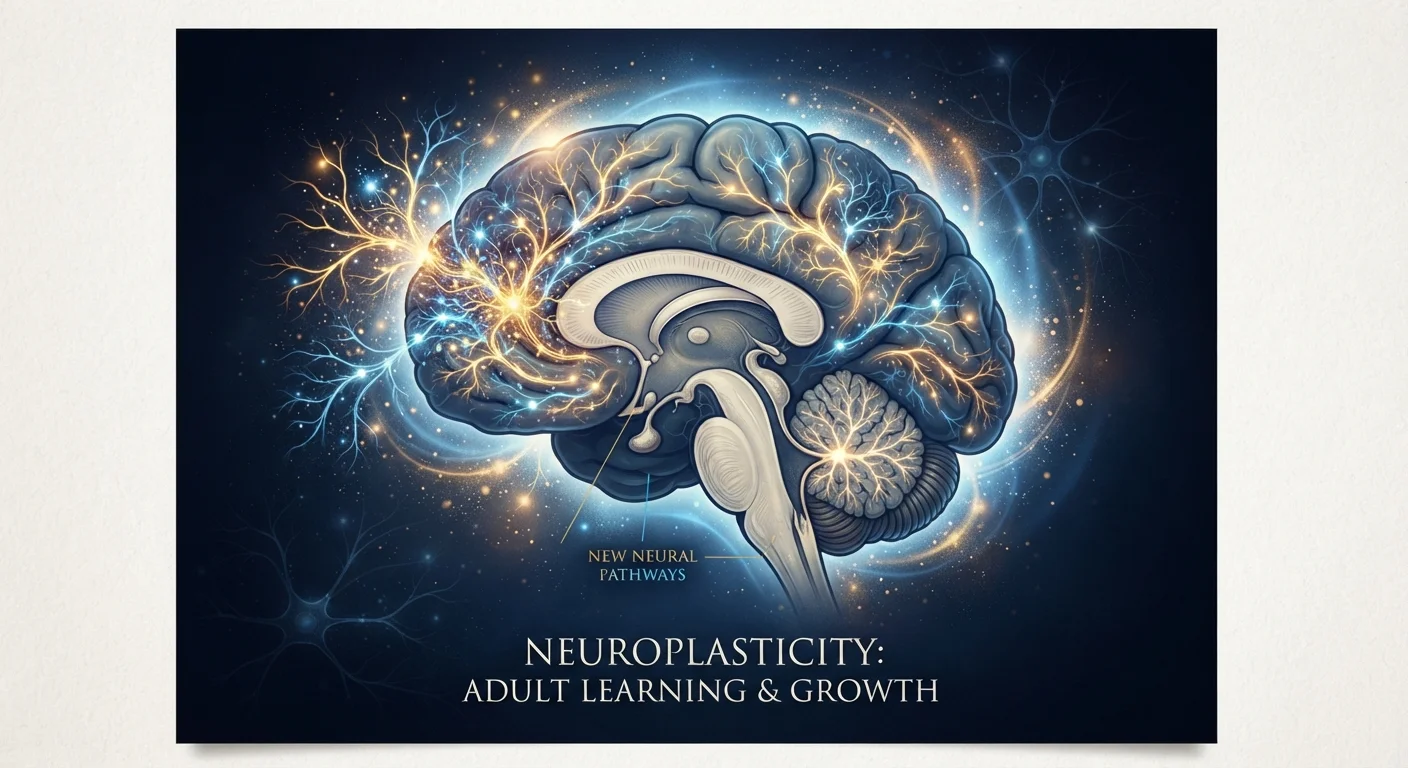
Neuroplasticity does not stop at 25. The brain continues forming new connections throughout adulthood, though the process shifts in character. Processing speed - how quickly information is initially absorbed - tends to slow somewhat with age. Working memory capacity may also narrow slightly, meaning holding several new concepts simultaneously can feel harder than it once did.
What this means practically: adult learners may take longer to get through the initial, disorienting phase of learning something unfamiliar. Early stages can feel clunkier. That is a real difference, worth acknowledging - but it is not the whole picture. See what research tells us about adult brain learning for a deeper look at the neuroscience behind this.
Neuroplasticity
The brain's ability to reorganize itself by forming new neural connections. It continues throughout life, though the speed and style of learning may shift with age.
Spaced repetition
A study technique where you revisit material at increasing intervals over time, which research suggests leads to stronger long-term retention than massed practice.
Metacognition
Thinking about your own thinking - being aware of how you learn, what confuses you, and how to adjust your approach. Adults typically have stronger metacognitive skills than younger learners.
Deliberate practice
Focused practice that targets specific weaknesses and pushes just beyond your current comfort level, rather than simply repeating what you already know.
Intrinsic motivation
Motivation that comes from genuine personal interest or satisfaction, rather than external rewards or pressure. It tends to sustain learning better over the long term.
The Real Advantages Adult Learners Have
What often goes unsaid in conversations about adult learning is how much accumulated life experience actually helps. Adults bring context that younger learners simply do not have yet.
When a 45-year-old learns a new software language, they already understand workplace constraints, project structure, and what makes a useful tool - frameworks that help new knowledge land somewhere meaningful. Metacognition is also typically stronger in adults: you know how you learn, what distracts you, and when you need to change tactics.
Intrinsic motivation - genuine interest rather than obligation - is another asset. Adults who choose to learn something usually want to learn it. That internal drive predicts follow-through far better than raw cognitive speed. This is why cultivating curiosity deliberately can be a meaningful part of sustaining any new learning goal.
Slower Isn't the Same as Stuck
Research suggests that while adults may acquire some skills more slowly than children - particularly those involving accent or motor automaticity - they often retain and apply knowledge more durably. If early progress feels gradual, that does not indicate failure. It typically reflects the brain encoding material more deliberately.
Choosing the Right Skill and Starting Point
The single most common mistake new adult learners make is choosing a skill based on what they think they should want rather than what genuinely interests them. Interest is not a luxury - it is a practical engine for persistence.
Start by asking: does this skill connect to something I already care about, use in daily life, or am genuinely curious about? A skill with real-world application gives your brain anchors for new information. A skill you find intrinsically interesting reduces the psychological friction of showing up to practice.
Also consider the entry point carefully. Many adult learners underestimate how important it is to begin at the true beginner level, even if it feels too easy. Building a solid foundation early prevents the frustrating gaps that slow progress later. If you're weighing formal study options alongside self-directed learning, navigating adult education as a working adult covers practical logistics worth reviewing.
Avoid Comparing Your Progress to Younger Learners
Measuring your pace against a 22-year-old's can skew your sense of progress in misleading ways. Adults bring different cognitive tools and different contexts to learning. Comparison to a different life stage is rarely useful and often discouraging - track your own trajectory instead.
How to Build Learning Into a Busy Life
Time is the most common barrier adult learners cite - and it is a legitimate one. But the structure of practice matters more than its total volume. Short, consistent sessions tend to outperform occasional long blocks, particularly for adults whose attention is frequently divided.
Deliberate practice - focused, targeted effort aimed at specific weak points - is more productive than passively reviewing material you already know. Pair this with spaced repetition: returning to concepts at increasing intervals rather than cramming them in a single session.
Anchor New Learning to a Daily Routine
Attach your practice session to something you already do every day - a morning routine, a commute, or an evening wind-down. Habit-stacking reduces the willpower needed to start and makes consistency more achievable. Even 15 focused minutes per day compounds into significant progress over weeks and months.
For those considering more structured paths, the Career Learning hub offers guidance on certifications and professional development programs designed with working adults in mind. These can provide accountability and structure without requiring a full return to formal schooling.
Managing Frustration and Staying the Course
Frustration is almost universal in the early stages of any new skill - and it does not mean you are doing it wrong or that your brain has let you down. It usually means you are in the uncomfortable zone where real learning happens.
Expect a period where effort feels disproportionate to progress. This is sometimes called the learning plateau, and it is a predictable feature of skill development, not a personal failing. Adults who anticipate it are better positioned to push through it.
Tracking small, specific improvements - rather than measuring against an imagined endpoint - helps maintain perspective. Keeping a short learning log, noting what clicked or what you practiced each session, can make invisible progress visible. For a broader framework on sustaining learning over years rather than weeks, the lifelong learner's complete roadmap offers a structured approach to building a practice that endures.
Lifelong Learning Hub
A collection of structured guides on building learning habits, choosing educational tools, and developing expertise across decades - useful for adults at any stage of the learning journey.
Spaced Repetition Scheduler
Digital tools using spaced repetition algorithms help adult learners review material at optimal intervals, improving retention without requiring marathon study sessions.
Career Learning Resource Center
Practical guides on upskilling, professional certifications, and career development designed specifically for adult learners balancing existing work and life commitments.