
How Debt Consolidation Actually Works
When you consolidate debt, you're taking out a new credit product - typically a personal loan or a balance transfer card - and using it to pay off several existing balances. From that point on, you owe one creditor instead of several, and you follow one repayment schedule.
The mechanics are straightforward, but the math is what matters. The financial case for consolidation rests almost entirely on whether the new interest rate is meaningfully lower than what you're currently paying across your existing accounts. Understanding how interest compounds on your current balances is essential groundwork - see our primer on interest rate basics for a plain-language breakdown of APR, compound interest, and amortization.
If your blended average interest rate across five credit cards is 22% and a consolidation loan offers 13%, you save real money - provided the loan term doesn't extend repayment so long that accumulated interest offsets the rate advantage. That's the key tension to track.
~$1.14T
U.S. credit card debt outstanding
According to Federal Reserve data, revolving consumer credit - primarily credit card balances - exceeded $1.14 trillion, reflecting the scale of high-interest debt many households carry.
20%+
Average credit card interest rate
The Federal Reserve's consumer credit data shows average credit card interest rates have remained above 20% in recent periods, making rate reduction through consolidation a meaningful potential lever.
3-5%
Typical balance transfer fee
Most balance transfer credit cards charge a fee of 3-5% of the transferred amount, which should be factored into any comparison of consolidation costs.
Common Consolidation Methods
There's no single consolidation product - several vehicles exist, each with distinct trade-offs:
- Personal loans: Unsecured fixed-rate loans from banks, credit unions, or online lenders. You receive a lump sum, pay off existing debts, then repay the loan in fixed monthly installments. Rates depend heavily on your credit profile.
- Balance transfer credit cards: Cards that offer a low or 0% introductory APR on balances transferred from other cards, typically for 12-21 months. Effective only if you can pay the balance in full before the promotional period ends; the standard rate after that is often high.
- Home equity loans or HELOCs: Borrowing against your home's equity to pay off unsecured debt. Rates are generally lower, but this converts unsecured debt into secured debt - meaning your home is collateral. Missed payments carry serious consequences.
- Debt management plans (DMPs): Offered through nonprofit credit counseling agencies, DMPs aren't loans. The agency negotiates reduced rates with your creditors and you make one monthly payment to the agency, which distributes funds. This path typically requires closing enrolled credit accounts.
What to Watch For Before You Consolidate
Consolidation solves a structural problem - scattered, high-rate debt - but it doesn't address the behaviors or circumstances that created the debt. Without a realistic plan to avoid adding new balances, consolidation can leave you worse off: old balances are cleared but new ones accumulate on the freed-up cards.
Do the Math Before You Commit
Before signing any consolidation loan, calculate the total interest you'll pay over the full loan term - not just the monthly payment. Compare that figure to what you'd pay staying on your current trajectory. Free amortization calculators are widely available and take only a few minutes to use. The monthly payment number alone can be misleading if the term is significantly longer.
Several specific risks deserve attention:
- Extended loan terms: A longer repayment window lowers your monthly payment but can significantly increase total interest paid. Always compare the total cost of the loan, not just the monthly figure.
- Origination fees and transfer fees: Personal loans sometimes carry origination fees of 1-8% of the loan amount. Balance transfer cards typically charge 3-5% of the transferred balance. Factor these into your break-even calculation.
- Secured vs. unsecured risk: Converting unsecured credit card debt to a home equity product changes the stakes considerably. Defaulting on an unsecured personal loan is damaging; defaulting on a home equity product can cost you your home.
- Credit score requirements: The most favorable consolidation rates go to borrowers with strong credit. If your score has been affected by the same financial stress driving the debt, your options may be limited or less advantageous.
Consolidation works best as one component of a broader financial plan. Pairing it with deliberate saving - even a modest emergency fund - reduces the likelihood that an unexpected expense pushes you back into high-interest debt. Our guide on building an emergency fund while carrying debt covers how to pursue both goals at once.
When Consolidation Makes Sense - and When It Doesn't
Debt consolidation is a tool, not a universal solution. It tends to make sense when: you have multiple high-interest unsecured debts, your credit profile qualifies you for a meaningfully lower rate, you can realistically repay within the new loan term, and you have a clear plan to stop adding new debt.
It's less compelling when: the rate difference is negligible, fees erode the savings, the new term extends repayment significantly, or the consolidation requires putting up collateral you can't afford to risk.
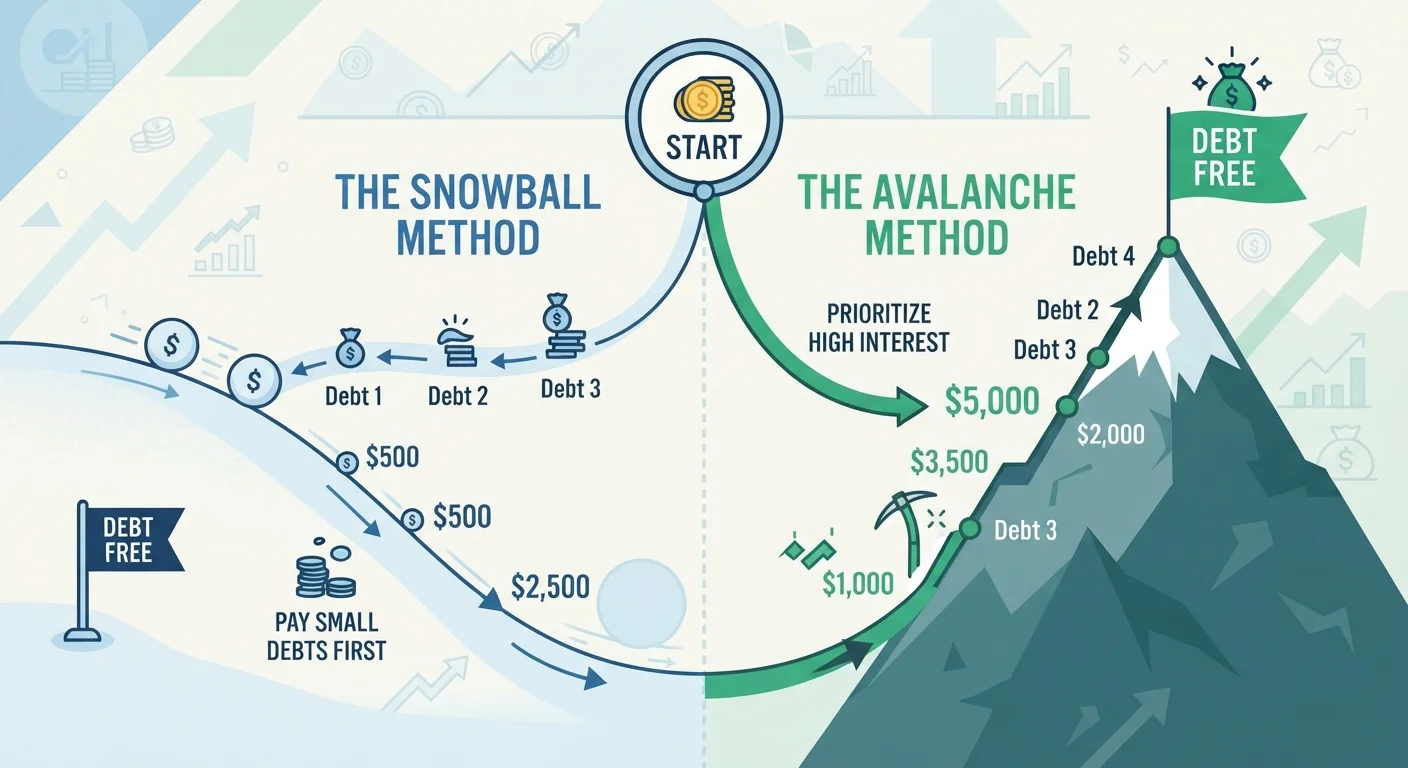
Consolidation is also not the only path. Targeted payoff strategies - like the avalanche method (highest rate first) or the snowball method (smallest balance first) - may achieve similar or better results without a new loan. Our comparison of the debt avalanche vs. debt snowball can help you weigh those alternatives. And if you're trying to manage repayment alongside other financial goals, our framework for paying off debt while saving offers practical structure.
“Debt consolidation can be a smart financial move - but only if it's part of a larger plan. By itself, it just moves the problem around.”
— Financial Counseling Association of America, Nonprofit professional association for financial counselors
This article is for general informational purposes only and does not constitute personalized financial, tax, or legal advice. Consult a licensed financial professional before making decisions about debt management for your specific situation.