Why Mental Stimulation Matters for Indoor Cats
Indoor cats live longer on average than outdoor cats, but that safety comes with a trade-off: a predictable environment that rarely challenges them. In the wild, cats spend much of their waking time hunting, patrolling territory, and investigating their surroundings. Remove those demands and boredom - and its consequences - often follow.
Veterinary behaviorists associate chronic under-stimulation with stress behaviors including over-grooming, inappropriate elimination, aggression, and compulsive eating. These aren't personality flaws; they're signals that a cat's behavioral needs aren't being met. For a fuller picture of how the indoor lifestyle affects cats overall, see our overview of indoor vs. outdoor trade-offs.
The good news is that targeted enrichment - designed around how cats actually think and behave - can address most of these issues without requiring major expense or renovation.
Match enrichment to your cat's personality
Not every cat responds the same way to every enrichment type. Shy or older cats may prefer passive options like window perches and scent items, while high-energy cats benefit most from active play and climbing structures. Observe what your cat gravitates toward naturally and build from there rather than offering every option at once.
Enrichment Strategies Rooted in Feline Behavior
Puzzle feeders and food-dispensing toys
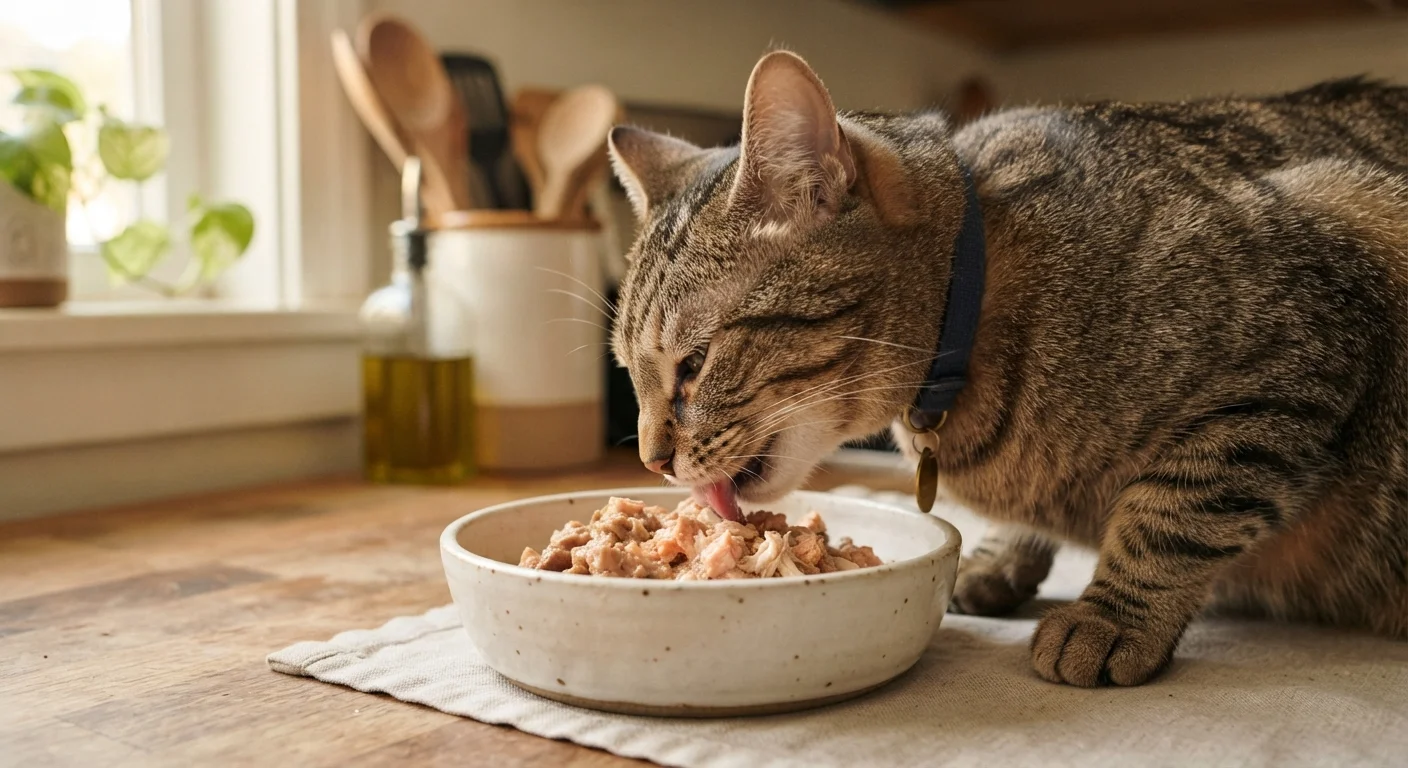
Cats are solitary hunters whose brains are wired to work for food. Replacing a static bowl with a puzzle feeder or food-dispensing toy activates problem-solving circuits and slows eating, which can also reduce digestive issues linked to rapid consumption. Start with simple designs and increase complexity as your cat's confidence grows - frustration defeats the purpose. Even rolling a portion of dry food inside a paper bag achieves the same cognitive engagement at no cost.
A puzzle feeder turns an ordinary meal into a hunt, engaging your cat's brain every single day.
Vertical space and elevated pathways
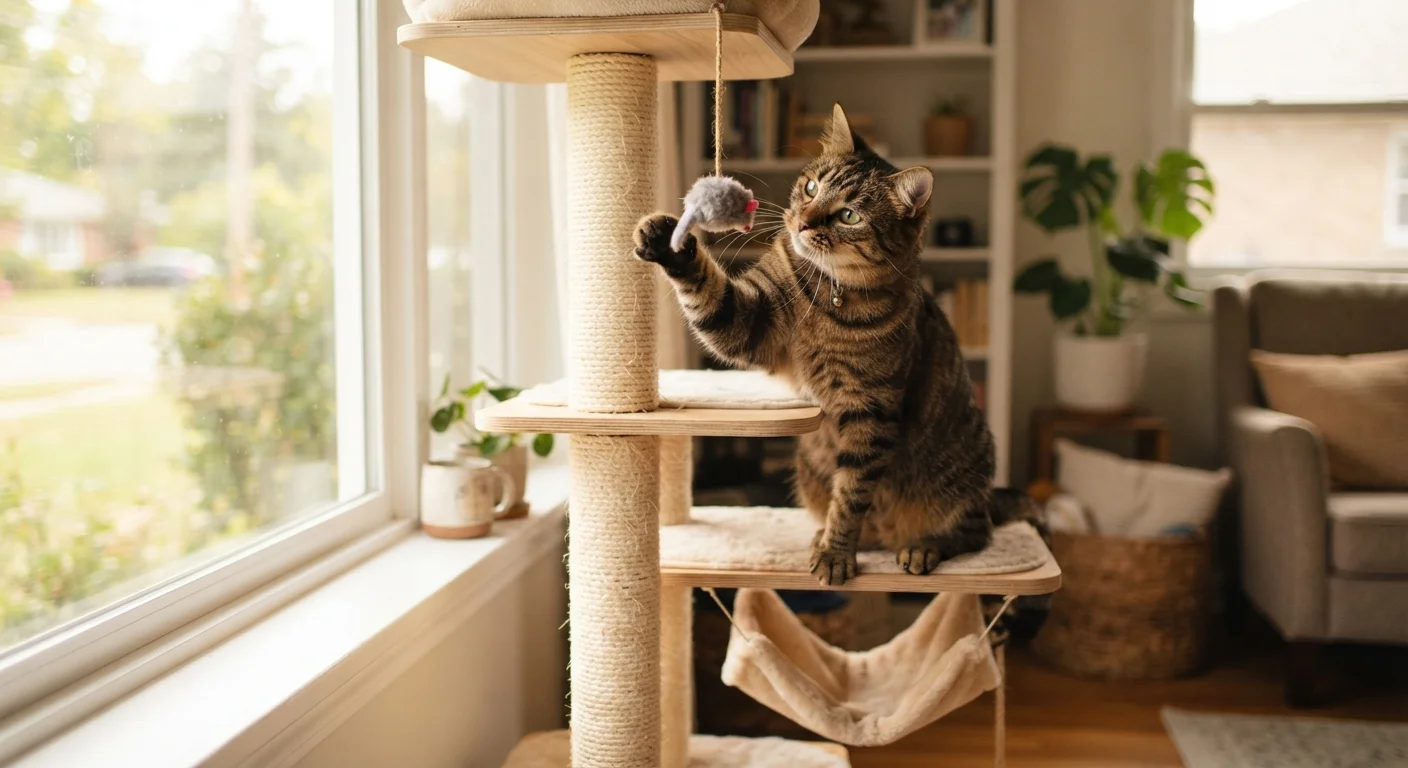
Height is a resource cats actively seek. Elevated positions allow them to monitor their territory with minimal exposure - a strategy deeply embedded in feline predator-prey psychology. Cat trees, wall-mounted shelves, and window perches all satisfy this drive. When setting up vertical space, aim for multiple routes up and down; a cat that feels trapped at height may develop anxiety around using the space at all. Even a cleared bookshelf can serve as an effective perch.
Elevated perches let cats survey their environment safely, meeting a core territorial need.
Structured interactive play sessions
Wand toys and feather teasers simulate prey movement in ways that automated toys rarely replicate convincingly. The critical element is the arc of a hunt: erratic movement, a pause, then flight. Aim for two sessions daily of around ten minutes each, and always allow the cat to catch the "prey" at the end - a hunt that never ends is chronically frustrating. Structured play is especially important for single-cat households where social play with another animal isn't available.
Ending a play session with a successful 'catch' prevents the frustration of an unresolved hunt.
Hiding spots and safe retreats
Cats are both predator and prey, and the ability to hide is central to their sense of security. Covered cat beds, cardboard boxes with entry holes, and even tunnels offer hiding opportunities that reduce baseline stress levels. Research in shelter environments has found that access to a hiding box measurably lowers stress indicators in cats housed in unfamiliar settings - the same principle applies at home during loud events, visiting guests, or multi-pet tension. A dedicated retreat is not a luxury; it's a basic welfare need.
Access to a reliable hiding spot measurably reduces a cat's baseline stress levels.
Scent enrichment and novel smells
Cats process environmental information heavily through olfaction. Introducing novel, safe scents - dried herbs like valerian or silver vine, a pinecone from outside, or a paper bag that came in from the car - gives them new information to investigate without any physical risk. Catnip is effective for roughly 50-70% of cats (the response is genetic) and provides a short, harmless burst of stimulation. Rotate scent items regularly so the environment continues to feel new.
Novel scents give an indoor cat new 'data' to process, satisfying their investigative instincts.
Window access and environmental viewing
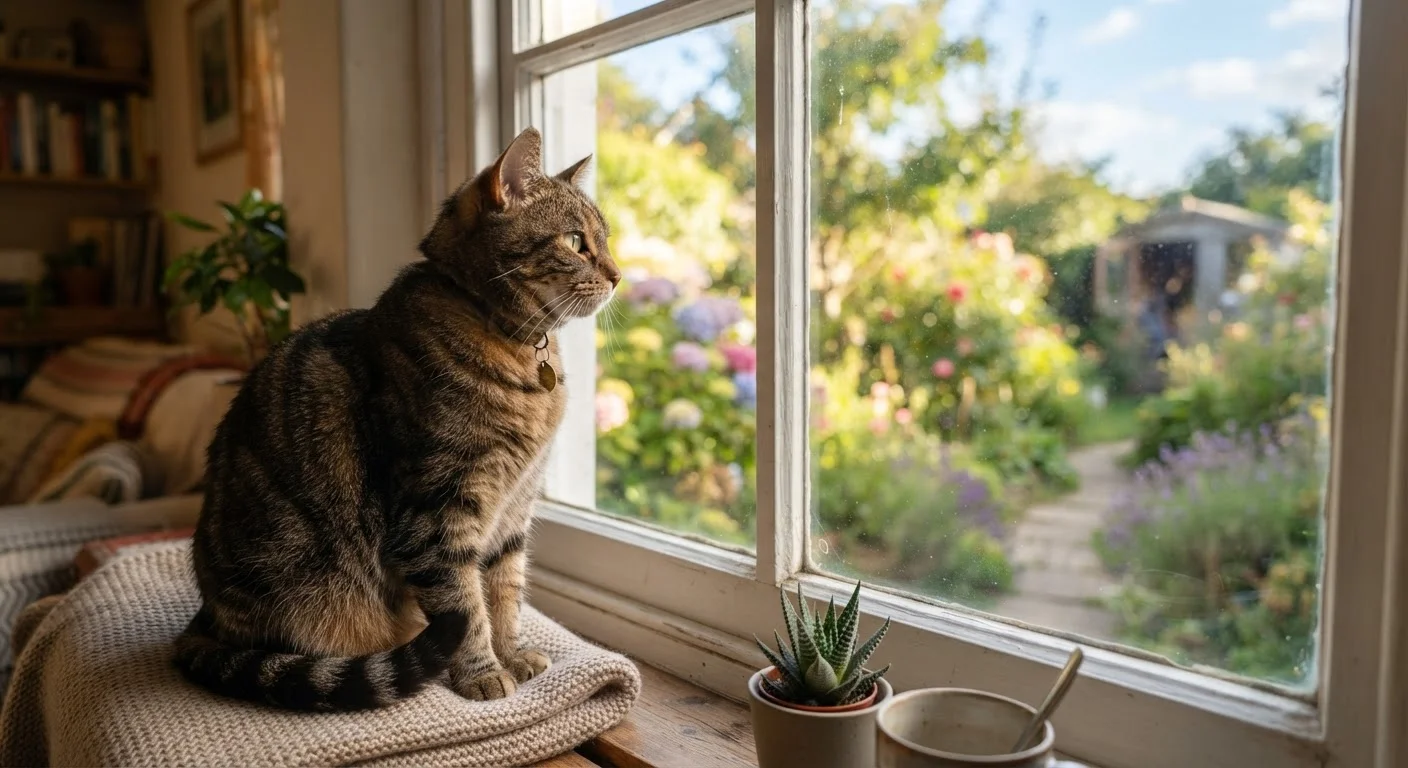
A window with a clear outdoor view functions as what behaviorists sometimes call "cat television." Bird feeders or a small water feature placed in a cat's sightline provide ongoing, unpredictable visual stimulus - the kind that holds attention precisely because it can't be anticipated. Ensure the window screen is secure before positioning a perch; a cat absorbed in watching birds can lean against a screen with considerable force.
A bird feeder outside a window delivers hours of unpredictable, engaging visual enrichment.
Rotating and reintroducing toys
Cats habituate quickly to static objects in their environment - a toy left out permanently becomes invisible within days. Storing toys and rotating them on a weekly basis restores novelty without purchasing anything new. When reintroduced, a familiar toy can prompt the same investigative response as a new one. This approach also means that even a small collection of toys can sustain engagement long-term, making it one of the most cost-effective enrichment strategies available.
Rotating toys weekly restores novelty and keeps your cat engaged without buying anything new.
Enrichment for multi-cat households
In homes with more than one cat, competition over resources can undermine enrichment efforts entirely. The general guidance from feline behaviorists is to provide one resource (litter box, feeding station, hiding spot, perch) per cat plus one extra. Spreading resources across different vertical levels and room locations reduces conflict and ensures each cat can engage with enrichment without social pressure.
Building Enrichment Into Daily Life
Enrichment doesn't require a complete home makeover. A few consistent changes - a puzzle feeder at breakfast, a ten-minute wand session in the evening, a new cardboard box left to explore - add up to a measurably more stimulating environment. The key is variety and consistency rather than novelty for its own sake.
Because many enrichment activities connect directly to how cats hunt and forage, they also offer a natural complement to good nutrition. Understanding what cats need to eat can help you choose food-based enrichment tools - like puzzle feeders or lick mats - that align with their dietary requirements. If your cat shows persistent signs of anxiety, destructive behavior, or compulsive habits despite enrichment efforts, consulting a veterinarian or certified feline behaviorist is the appropriate next step.
This article is for general informational purposes only and is not a substitute for professional veterinary advice. Always consult your veterinarian about your individual cat's behavioral or health needs.