
The Details That Separate Smooth Trips from Stressful Ones
Most travelers nail the big stuff: book the flight, pack the bag, show up at the airport. It's the quieter details - the ones that don't appear on a booking confirmation - that tend to derail plans at the worst possible moment. A frozen bank card in a foreign ATM, a passport flagged for insufficient validity, a medication held at customs - these are entirely preventable problems that experienced travelers have learned to anticipate.
Whether you're heading out of the country for the first time or your tenth, running through a pre-departure checklist is one of the highest-leverage habits in travel planning. Before you even pack a bag, see our pre-trip research checklist for the foundational steps that should shape every booking decision.
Below are the specific, overlooked details that experienced travelers always verify before leaving - and the reasons each one genuinely matters.
Passport validity - not just expiration
Many countries require that your passport remain valid for at least six months beyond your planned return date - not just through your departure. Travelers have been denied boarding or turned away at immigration because their passport expired technically while still being in date for the travel window. Check your destination's specific rules via its official embassy or government travel advisory site, since requirements vary. If you're cutting it close, renewing before booking is far less stressful than renewing on a deadline.
A passport valid through your return date may still get you turned away at some borders.
Bank and credit card notifications
Foreign transactions can trigger fraud alerts, causing your card to be frozen at exactly the wrong moment - say, paying for a taxi or checking into a hotel. Most major banks allow you to set travel notifications through their app or by phone. Do this for every card you plan to bring, and carry at least two different cards from different networks as backup. Also confirm your cards' foreign transaction fees and whether your bank has international ATM partnerships that waive withdrawal charges.
Notifying your bank before departure takes five minutes and can prevent your cards from being frozen abroad.
Entry requirements and visa status
Visa requirements, entry fees, and tourist tax rules change more frequently than travelers expect. Even visa-exempt destinations may require travelers to obtain an ETA or register online before arrival. Always verify current requirements directly through the destination country's official immigration or embassy website - not travel blogs, which can be outdated. For international trips, also cross-reference with the key planning differences between domestic and international travel.
Entry requirements can change after you book - verify them again in the week before departure.
Medication rules and documentation
Some medications legal in the US are controlled or outright prohibited in other countries. Travelers carrying prescription drugs should carry the original labeled pharmacy bottle, a copy of the prescription, and ideally a letter from their prescribing physician explaining the medical necessity. For longer trips or medications that require refrigeration, research storage logistics in advance. Contact the destination country's embassy if you're uncertain - customs officials at the border are not the right time to sort this out. This is general travel information; consult your healthcare provider for guidance specific to your medical situation.
Some US-legal prescriptions are prohibited abroad - verify the rules before packing your medication.
Offline access to maps and documents
Roaming data abroad can be unreliable or expensive, and airport Wi-Fi isn't always trustworthy for accessing sensitive documents. Before leaving, download offline maps for your destinations in your navigation app of choice, and save digital copies of your passport, travel insurance, accommodation confirmations, and itinerary in a cloud service you can access on mobile. Store a second copy in email so it's retrievable even without the app. This takes under 30 minutes and eliminates an enormous category of logistical risk.
Download offline maps and document backups before you leave - don't count on connectivity when you land.
Travel insurance coverage gaps
Many travelers purchase travel insurance without actually reading what it covers. Common surprises include exclusions for pre-existing conditions, adventure activities like hiking or scuba diving, and cancellations due to work obligations. Read the policy summary carefully and understand what documentation the insurer requires to process a claim - for example, police reports for theft or medical records for health claims. This article provides general information only; consult the insurer directly for guidance on your specific policy and situation.
Adventure activities and pre-existing conditions are among the most common travel insurance exclusions.
Check-in windows and accommodation logistics
Arriving at 7 a.m. after a red-eye when check-in isn't until 3 p.m. is a solvable problem - but only if you've planned for it. Confirm your accommodation's check-in time, whether early arrival is possible (often for a fee), and whether luggage storage is available on-site. For rental apartments and non-hotel stays, verify the key handoff method: some require the host to be physically present at a specific time, which creates problems if your flight is delayed. These logistics are worth a quick email or message before you depart.
A misaligned check-in window can strand you with luggage for hours - sort it out before you board.
Local currency and payment access
Even in largely cashless destinations, small vendors, rural areas, transportation, and tipping often require local currency. Research whether your destination is predominantly card-friendly or cash-dependent, and plan accordingly. Airport currency exchange desks typically offer poor rates; in-network ATMs at your destination often provide better value - but verify this before assuming. Carrying a modest amount of local currency from the start avoids the scramble of arriving with nothing and no working card. For broader cost planning before your trip, our budget planning checklist covers this in more depth.
Arriving without any local currency is a preventable stressor - even card-friendly cities have cash-only moments.
Build the Habit, Not Just the List
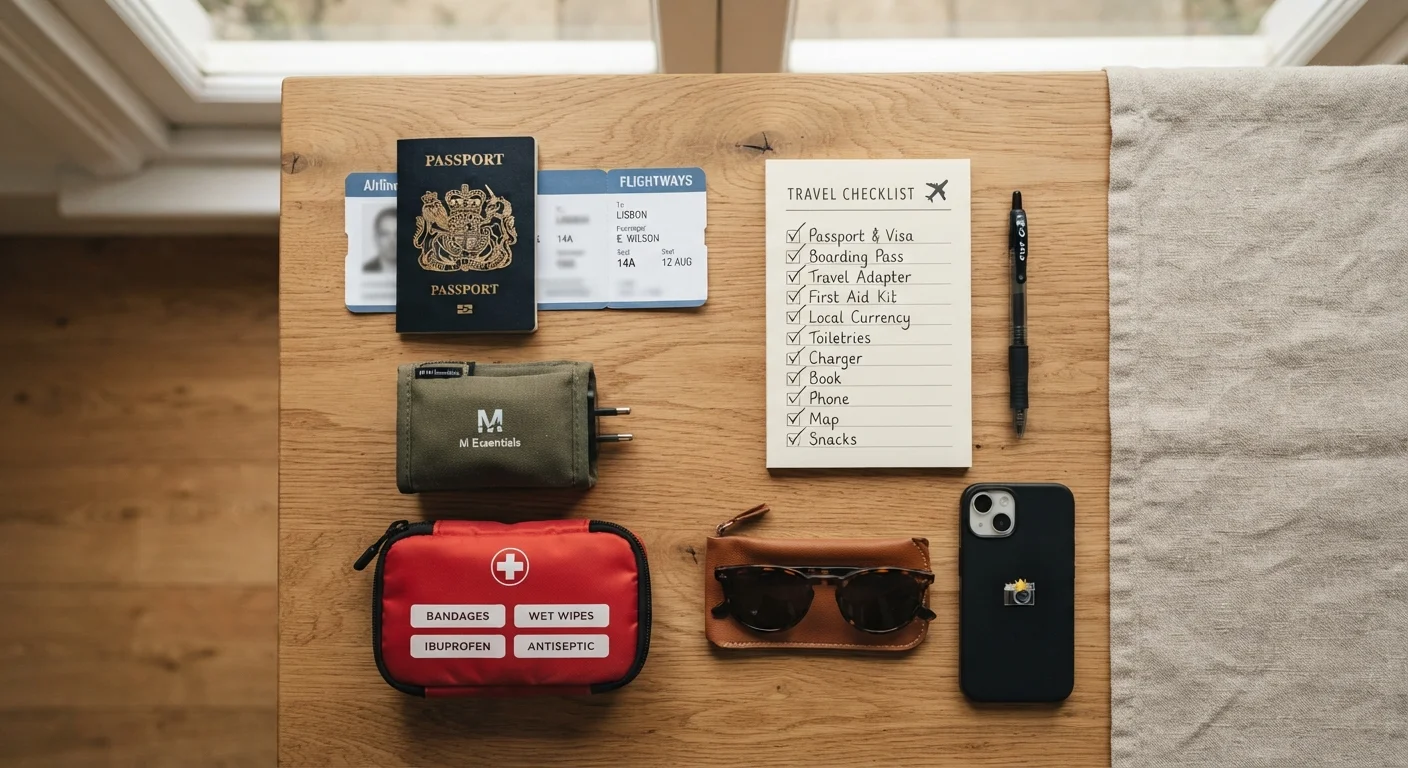
What makes these checks powerful isn't completing them once - it's building them into a routine that runs automatically before every departure. Experienced travelers don't rely on memory; they maintain a personal checklist that evolves with each trip. The goal isn't paranoia - it's confidence. When these boxes are ticked, you can board the plane focused on the experience ahead rather than wondering what you might have forgotten.
Make your checklist a living document
After each trip, add any surprises or near-misses to your personal pre-departure checklist. Over time, this document becomes far more valuable than any generic list - it's shaped by your specific travel style, destinations, and past experiences. Storing it in a notes app you always have on your phone means it's ready whenever the next trip starts taking shape.
For travelers managing costs alongside logistics, our pre-trip budget planning checklist helps catch hidden fees and financial surprises before they surface mid-journey. And if you're still weighing how to pack efficiently around all this preparation, packing strategies that work across every trip type is worth a read before you zip up.