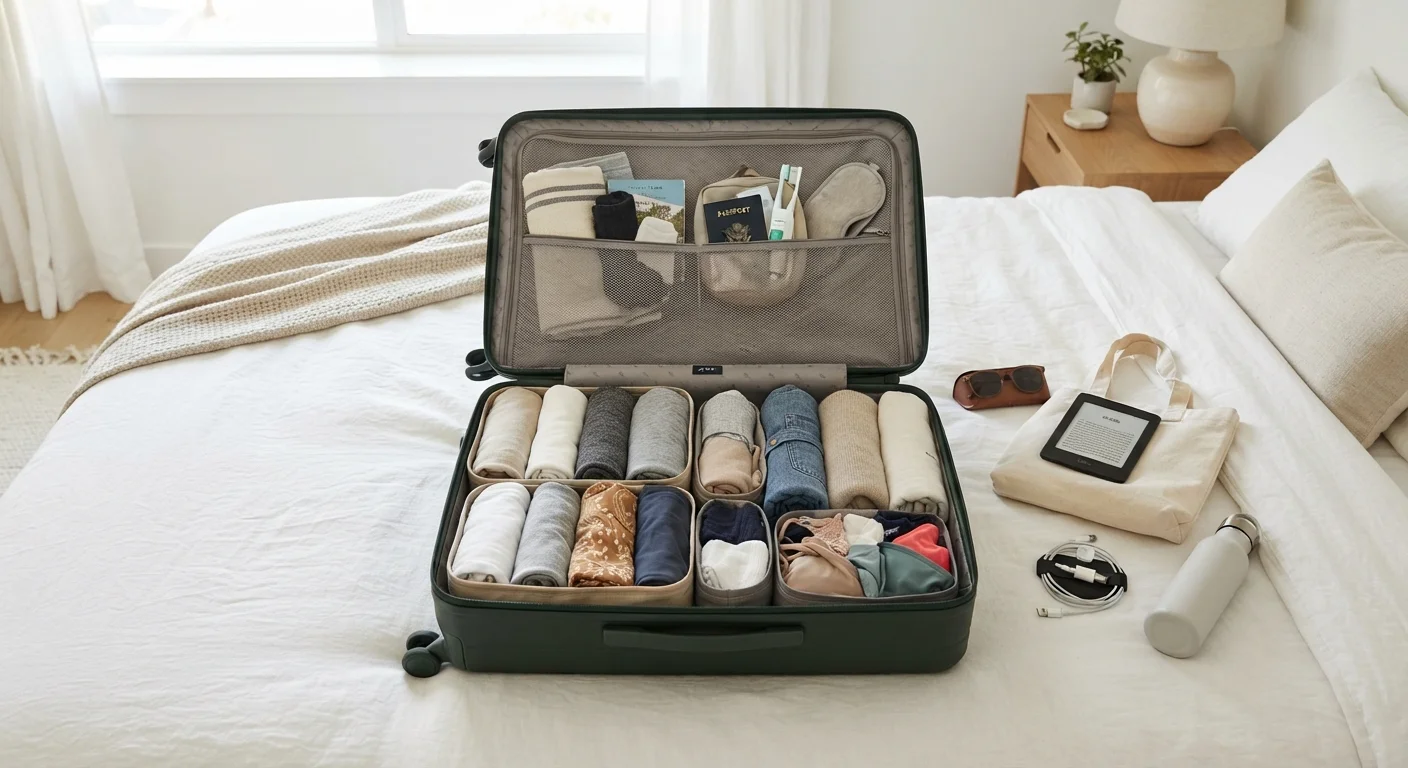
Think in Zones, Not Categories
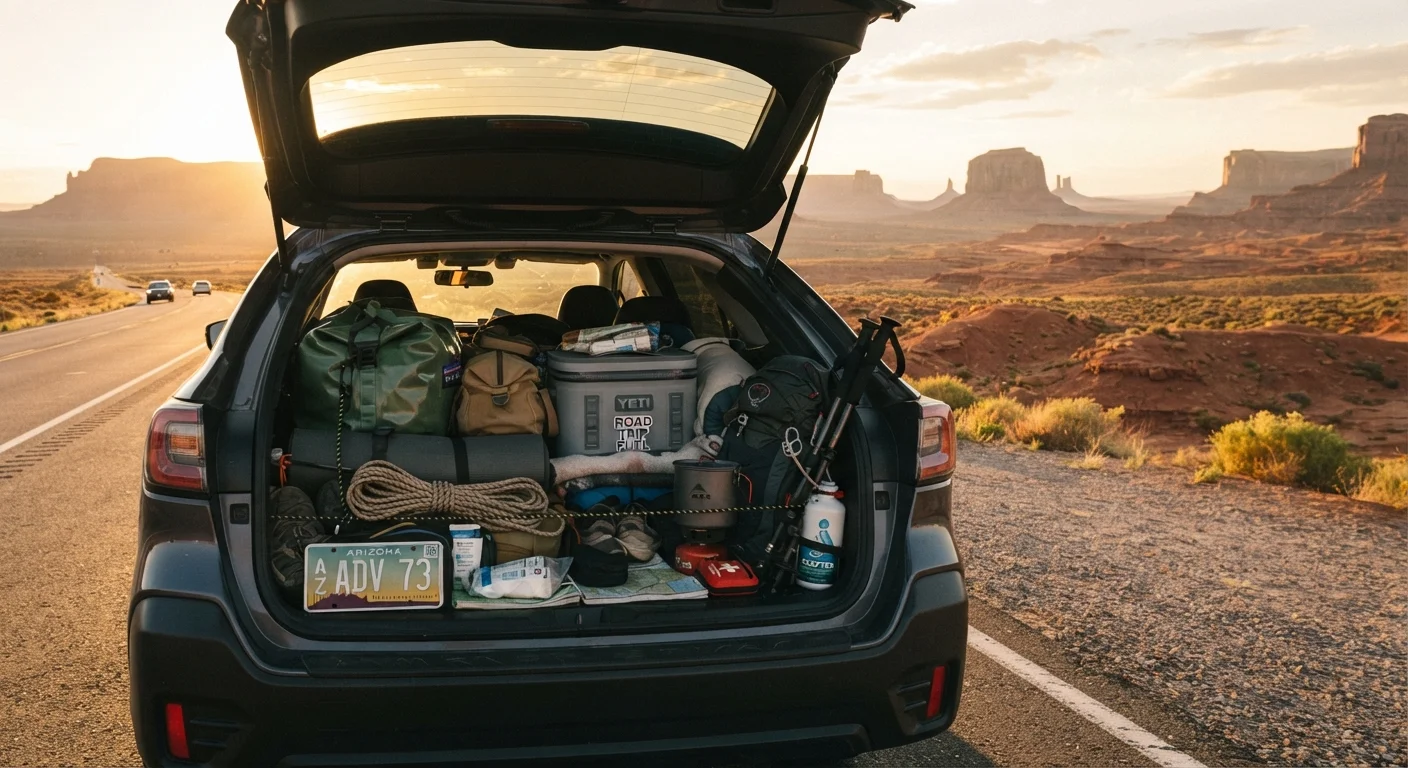
The single most common road trip packing mistake isn't bringing too much - it's loading the car with no spatial logic. Before you pack a single bag, mentally divide your vehicle into three zones: daily access (front seat and footwells), overnight access (rear seat or top of trunk), and deep storage (bottom of the trunk or under the bed of a truck).
Daily access holds your water bottles, snacks, phone chargers, sunglasses, and anything you'll reach for while rolling. Overnight access holds the toiletry bag, a change of clothes, and your accommodation confirmation. Deep storage is for bulky gear - sleeping bags, extra shoes, the full first-aid kit - that you won't touch until you stop for the night.
This zoning approach means you're never unpacking the entire car at a rest stop to find your lip balm. It also forces you to interrogate each item: which zone does this belong in, and does it justify the space? For a deeper look at this mindset applied across all trip types, see general packing strategies that scale from weekends to multi-week adventures.
The Non-Negotiables (And Why They Earn Their Seat)
Some items belong in every road trip car regardless of destination or season. Here's what genuinely pulls its weight:
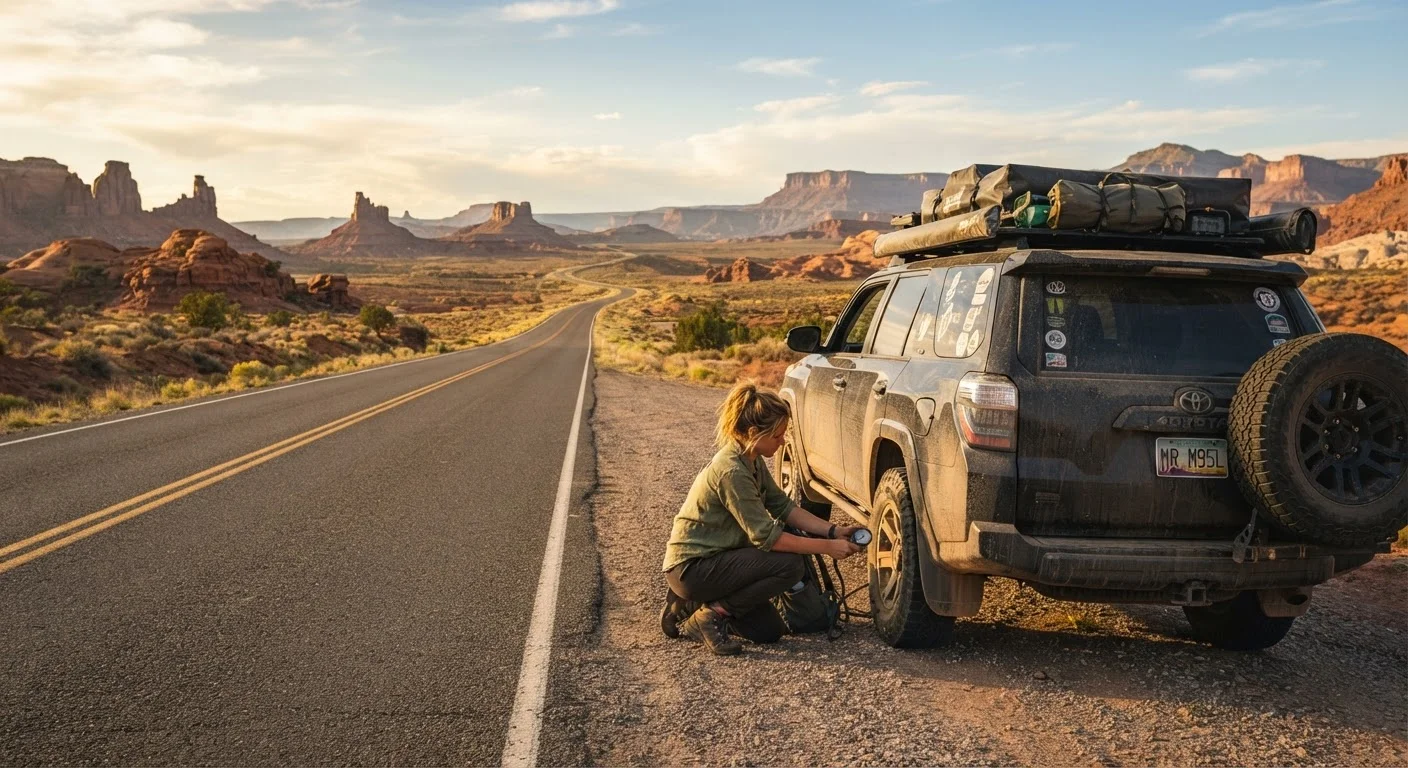
Beyond the vehicle itself, make sure your car is mechanically ready before any of this matters. The pre-trip vehicle checklist covers exactly what to inspect and when to hand things off to a mechanic.
Climate Layers and Terrain-Specific Additions
A route through the Pacific Northwest in April demands rain gear and quick-dry layers. The same trip through the Sonoran Desert in June needs serious sun protection, electrolyte packets, and at least an extra gallon of water per person. Packing "generically" for a road trip is a trap - pack specifically for your actual route.
If you're crossing multiple climate zones (say, coastal California into the Sierra Nevada, then down into Nevada), build a transition bag: a small duffel with your weather-dependent swaps - a fleece, a rain shell, sandals - that you can access without digging. Keep terrain-specific extras compact: a small microspike set for icy trails, a dry bag for kayaking detours, or a compact sun umbrella for desert stops.
Solo drivers have different spatial math than groups. Whether you're flying solo or splitting the car with three others changes packing priorities significantly - weigh those trade-offs before you load up.
Food, Documents, and the Stuff That Saves the Trip
A soft cooler or a quality hard-sided cooler pays for itself within two days by cutting convenience-store and fast-food spending on long driving days. Stock it with easy proteins, fruit, and pre-made wraps rather than items that require prep. Budget-conscious travelers consistently cite food prep as one of the highest-leverage cost controls on any road trip.
Documents deserve their own small zipper pouch in the daily-access zone: driver's license, vehicle registration, proof of insurance, and any reservation confirmations printed as backup. If you're crossing into national parks, keep your pass accessible - rummaging for it while a line forms behind you is an avoidable stress. Store digital copies in a cloud folder you can reach offline by downloading before departure.
A Note on National Park Passes and Entry Documents
If your route crosses multiple national parks, an America the Beautiful annual pass can cover entry fees at hundreds of federal recreation sites. Keep your pass and any reservation timed-entry permits printed and within easy reach. Entry requirements and timed-entry systems vary by park and can change seasonally - always verify current requirements directly with the National Park Service before your visit.
Finally, don't underestimate what a first-time road tripper doesn't know going in. The surprises that catch drivers off guard - from 80-mile fuel gaps to sudden altitude changes - often connect directly back to whether you packed the right things for the unexpected.