Why the Owner's Manual Is the Right Starting Point
Generic maintenance advice - the kind printed on oil-change reminder stickers or offered unprompted at a quick-lube counter - is, by definition, not specific to your vehicle. Your car's owner's manual contains service intervals developed by the engineers who designed that exact powertrain. That makes it the most reliable guide available.
Many drivers skip the manual entirely, either because they've never located the maintenance schedule section or because they assume it's redundant with what a mechanic will tell them. In practice, manufacturer schedules and shop recommendations can differ. Some service intervals have lengthened considerably as engine technology and lubricant quality have improved - meaning following the manual may actually reduce how often you need certain services, and reduce unnecessary spending in the process.
Understanding your routine maintenance fundamentals gives the manual's schedule meaningful context, helping you recognize why each item appears and what it protects.
What you will need
How to Use the Schedule Effectively
Once you've worked through the steps above, the schedule becomes a practical planning tool rather than a wall of fine print. A few principles make it easier to stay on track:
- Set reminders proactively. Don't wait until you're at a service counter to wonder what's due. Enter upcoming milestones as calendar reminders tied to approximate date ranges based on your average monthly mileage.
- Don't let shop upsells override the manual. If a service adviser recommends something not yet due per your manual, ask to see why - wear inspection results, a fluid sample, or a specific symptom are legitimate reasons. "It's been a while" is not.
- Revisit after major changes. If you start towing, change your commute significantly, or move to an area with very different climate conditions, re-evaluate which schedule track applies to you.
Check the Manual After Any Dashboard Warning
If a warning light appears, your owner's manual often includes a dedicated section describing what each light means and what action to take. Consulting it before calling a mechanic can help you communicate the issue clearly and avoid unnecessary alarm. For a broader reference, our warning lights guide covers the most common dashboard indicators.
For tasks that appear on the schedule and fall within safe DIY territory - such as replacing a cabin air filter or engine air filter - our DIY maintenance guide can help you assess what's reasonable to handle yourself. For tasks that involve brakes, fluids under pressure, or electrical systems, always defer to a qualified mechanic.
Building these habits around the manual - and keeping clear records of what's been done - supports the kind of long-term vehicle reliability that protects both your investment and your safety on the road.
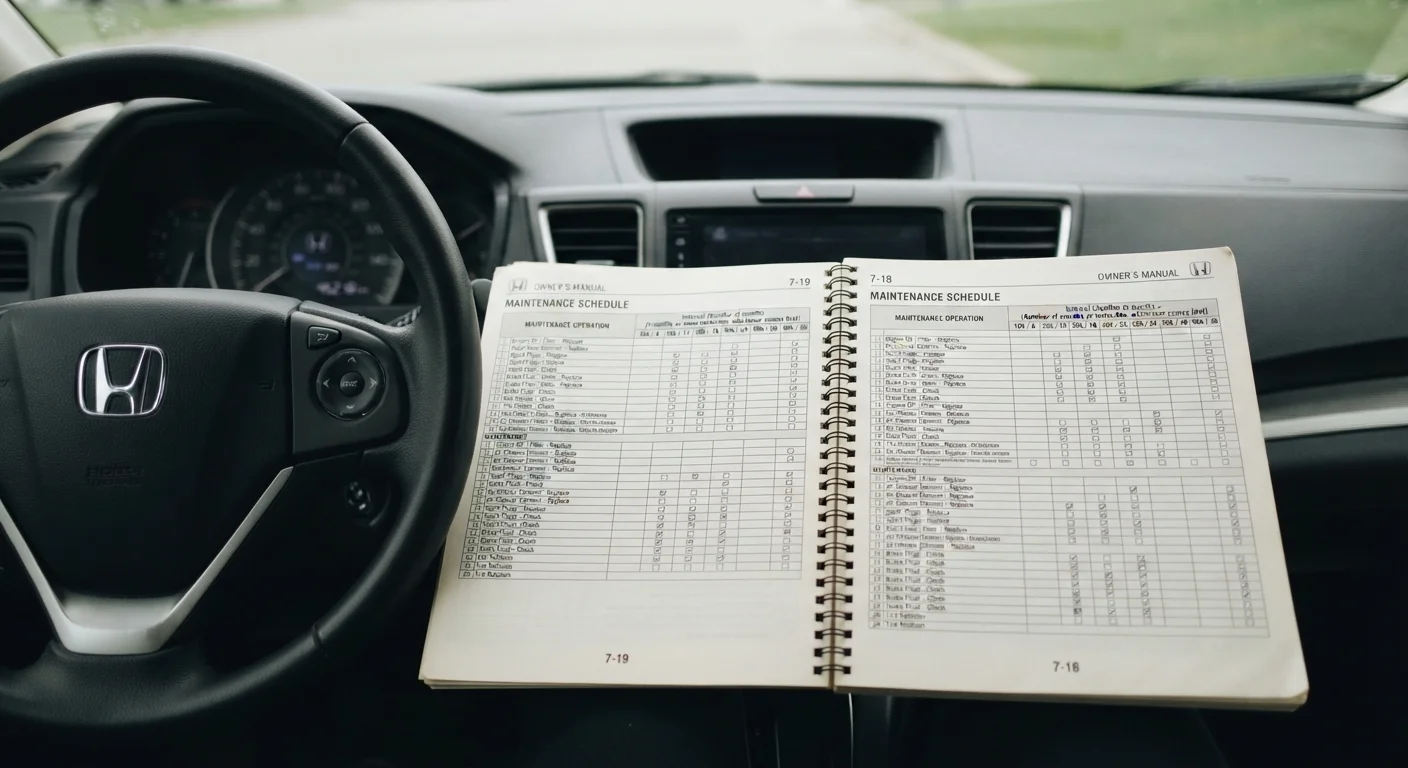
Owner's Manual
Contains the manufacturer-specified maintenance schedule, fluid specifications, and service intervals.
Pen and notepad (or notes app)
Record upcoming service milestones so you can track them against your odometer.
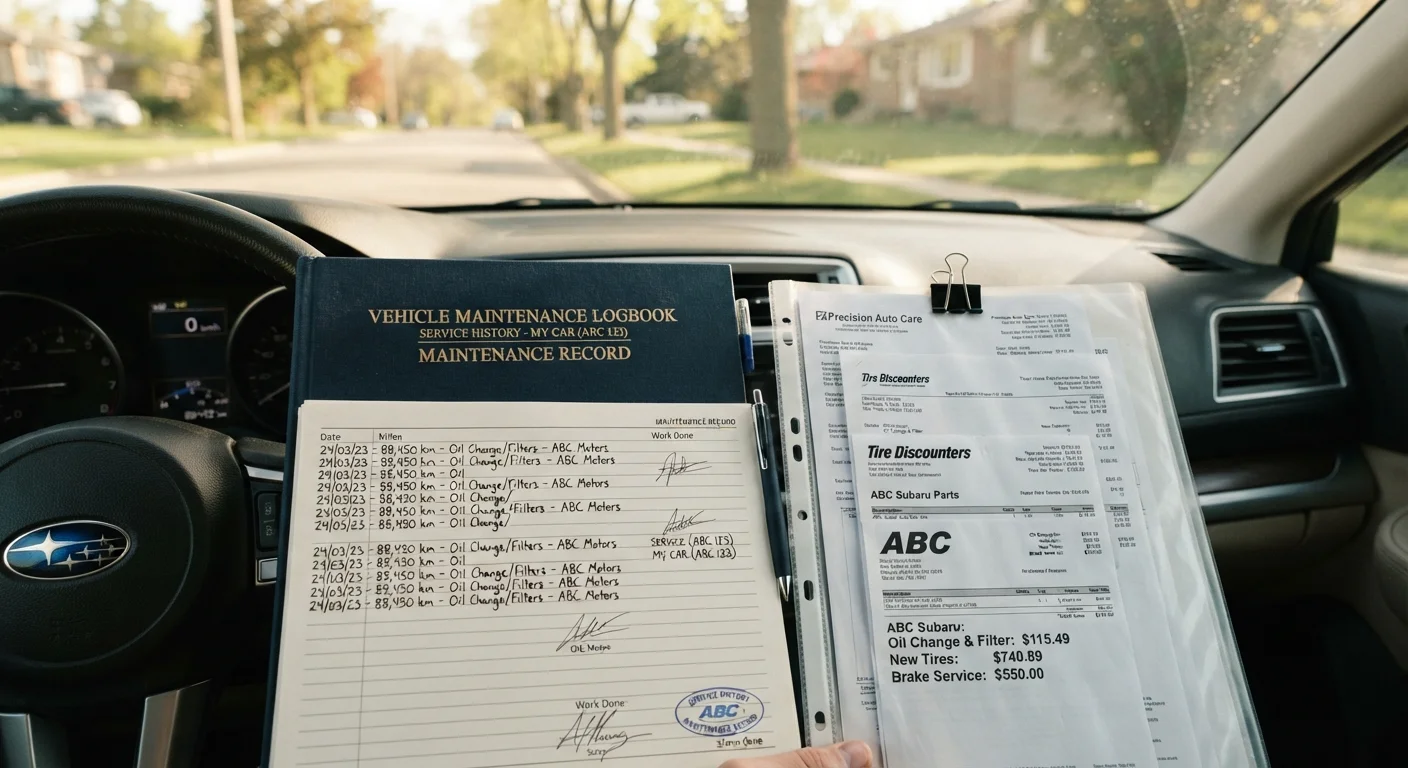
Service history folder or digital log
Store completed service records alongside the schedule to build a verifiable maintenance history.