Why Maintenance Matters From Day One
A car is one of the most complex and expensive things most people own - yet many new drivers treat maintenance as something to deal with only when something goes wrong. That reactive approach tends to be far more costly than staying ahead of a simple schedule.
Consistent, preventive care keeps mechanical components working within their design tolerances. When fluids break down, filters clog, or tires wear unevenly, every other system works harder. That chain reaction quietly shortens a vehicle's useful life and raises repair costs over time.
Beyond cost, well-maintained vehicles are safer. Brakes, tires, and steering components that are regularly inspected are far less likely to fail unexpectedly. For new drivers especially - still building confidence and situational awareness - a reliable car removes one serious variable from an already demanding task. See our guide to road safety at every stage for more on developing skills alongside good vehicle habits.
New Car or Used - Start the Same Way
Whether you just bought a brand-new vehicle or a used one, your first step should be the same: locate your owner's manual and read the maintenance schedule. For used vehicles, try to gather whatever service records are available so you know what's already been done - and what may be overdue.
Your Owner's Manual: The Most Useful Book in Your Glove Box
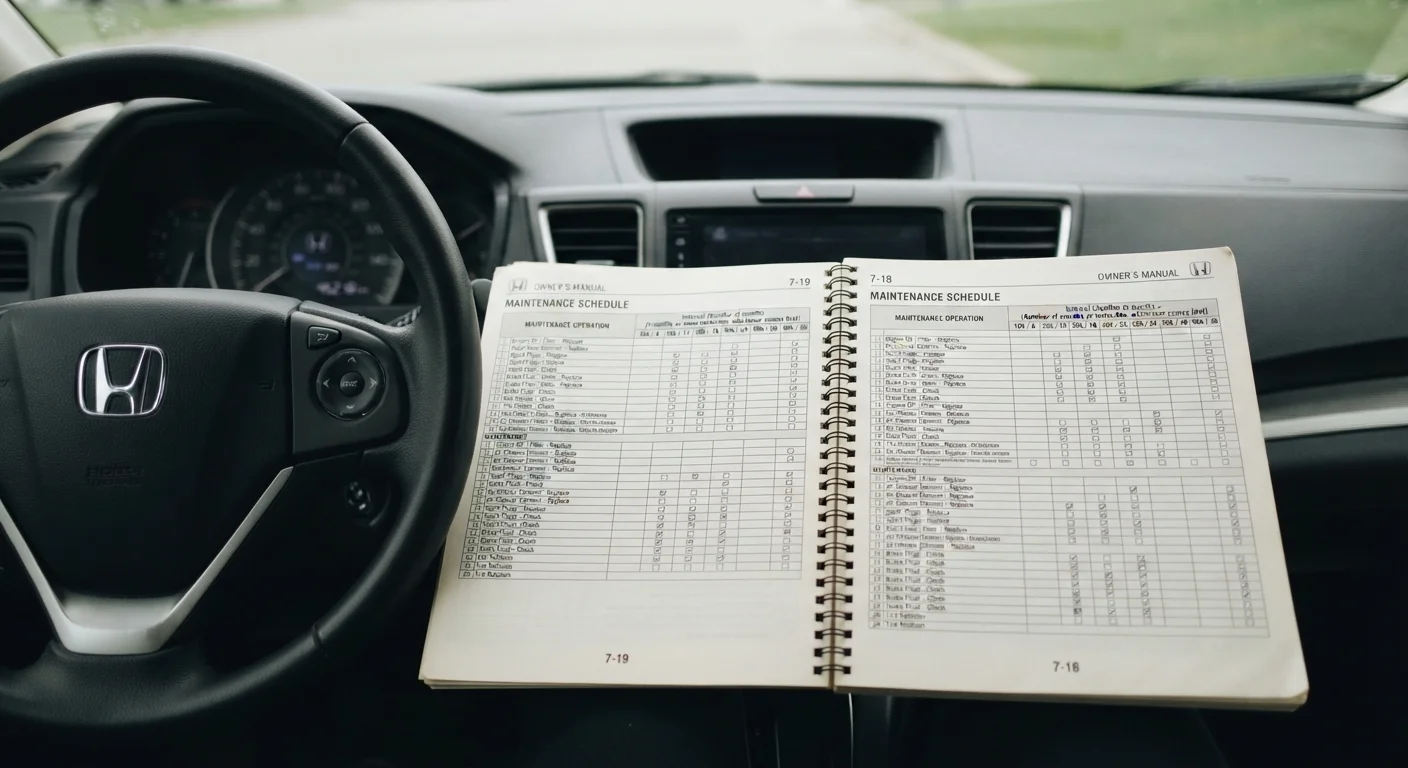
The owner's manual is the single most authoritative source of information about your specific vehicle. Automakers publish it to communicate exactly how the car was engineered to be maintained - the correct oil grade, tire pressures, fluid specifications, and service intervals are all inside.
The maintenance schedule section is particularly valuable. It lists every service item - oil changes, filter replacements, fluid flushes, belt inspections - organized by mileage or time intervals. Following this schedule, rather than generic advice, is the most reliable way to care for your car correctly.
Many drivers never open the manual. Those who do consistently avoid the most common and expensive surprises. For a detailed walkthrough of how to use your schedule effectively, see reading your owner's manual.
Service interval
The mileage or time period after which a specific maintenance task - like an oil change or filter replacement - should be performed, as set by the manufacturer.
Dipstick
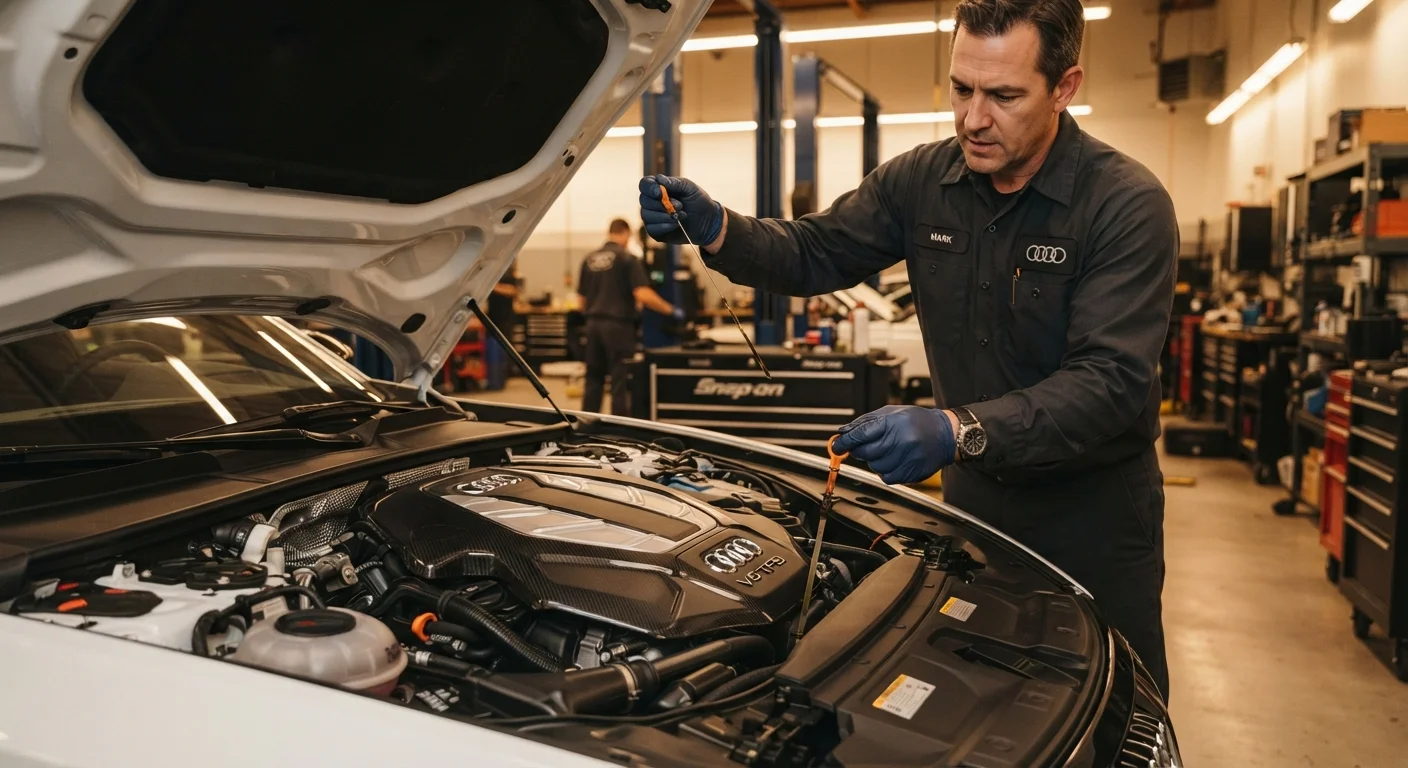
A long, thin rod inserted into the engine that lets you check the oil level and condition without opening any sealed components.
Tread depth
The measurement of how much rubber remains on a tire's surface. Adequate tread is critical for gripping the road, especially in wet conditions.
Coolant (antifreeze)
A liquid that circulates through your engine to regulate its temperature, preventing both overheating in summer and freezing in winter.
Brake fluid
A hydraulic fluid that transmits the force of your foot on the brake pedal through the braking system to slow or stop the vehicle.
Tire rotation
Moving tires from one position on the vehicle to another on a regular schedule so they wear evenly and last longer.
The Core Fluids and Checks Every Driver Should Know
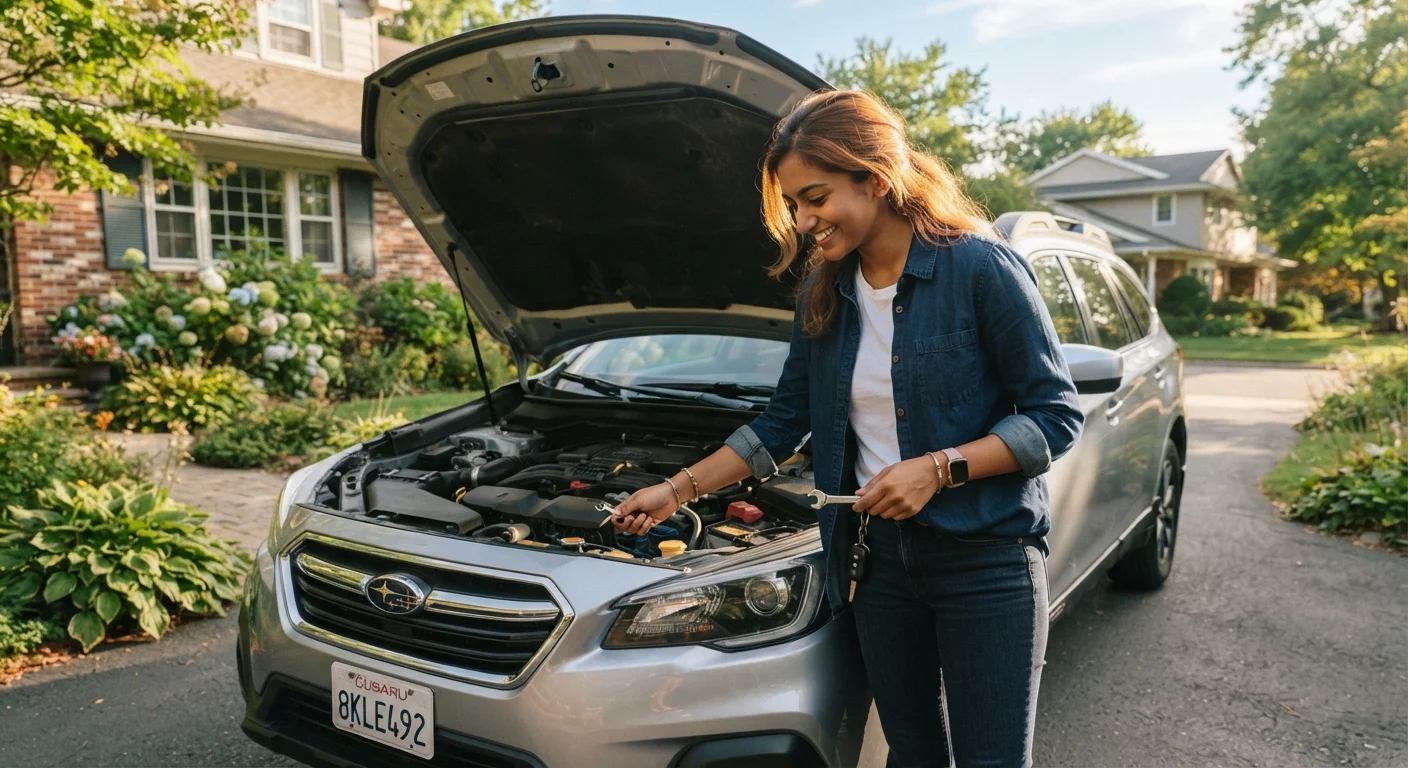
Five fluids keep your car running and safe. Learning to check each one takes about ten minutes and requires no tools beyond a clean rag.
- Engine oil: Lubricates moving parts and prevents overheating. Check with the dipstick when the engine is cold; the level should fall between the two marks.
- Coolant (antifreeze): Regulates engine temperature. Check the reservoir when the engine is completely cool - never open a hot radiator cap.
- Brake fluid: Transfers force through your braking system. Inspect the reservoir; a low level may signal a leak or worn brake pads and warrants a mechanic's attention.
- Power steering fluid: Present on vehicles without electric steering; keeps steering smooth and responsive.
- Windshield washer fluid: The one fluid you can top off yourself without any mechanical concern.
Beyond fluids, watch your dashboard. Warning lights are your car's way of signaling a problem before it becomes serious. Never ignore a red warning light, and address yellow ones promptly. See our complete vehicle maintenance overview for a deeper look at every system you'll encounter.
Synthetic vs. Conventional Oil: What the Difference Means
Many modern vehicles specify full synthetic engine oil, which lasts longer and performs better at temperature extremes than conventional oil. Using the wrong oil type or viscosity can reduce engine protection. Always check your owner's manual for the manufacturer's specified oil grade - not just the grade recommended at a quick-lube shop.
Tires, Brakes, and Lights: Your Safety Essentials
These three systems are directly responsible for your ability to control the car and be seen by others - making them the highest-priority safety checks for any driver.
Tires
Check tire pressure monthly using an inexpensive gauge. Correct pressure is listed on a sticker inside the driver's door jamb - not on the tire sidewall. Under- or over-inflated tires wear unevenly, handle poorly, and reduce fuel efficiency. Rotate tires roughly every 5,000-7,500 miles (confirm in your manual) to promote even wear. Inspect tread depth using the penny test described in the FAQ below.
Brakes
Squealing, grinding, or a soft brake pedal are signals to have brakes inspected by a mechanic promptly. Brake components involve hydraulic and friction systems that require professional assessment - this is not a DIY task for beginners.
Lights
Walk around your car periodically and verify that headlights, taillights, brake lights, and turn signals are all working. A burned-out bulb is inexpensive to replace and, in many states, a reason for a traffic stop. For a broader look at managing vehicle ownership, including insurance and registration, our car ownership hub is a useful starting point.
Never Ignore a Brake Warning Light
A illuminated brake warning light can indicate low brake fluid, a system pressure problem, or engaged parking brake - all of which affect your ability to stop safely. If the light comes on while driving and the parking brake is not engaged, have the vehicle inspected by a qualified mechanic before driving further distances.
Building Habits That Protect Your Car Long-Term
Good car care is less about individual tasks and more about consistent habits. A few simple practices, done regularly, compound into significantly better vehicle reliability over time.
- Log every service: Record the date, mileage, and work done after each visit. This history matters for warranty claims, resale, and diagnosing patterns. Learn why in our article on keeping good service records.
- Don't ignore small issues: A minor vibration, an unfamiliar smell, or a new noise rarely fixes itself. Catching problems early almost always costs less than addressing them after they worsen.
- Adapt for seasons and conditions: Cold weather affects tire pressure, battery performance, and fluid viscosity. Hot climates stress cooling systems. Adjust your checks accordingly.
- Stay current on registration and inspections: Many states require periodic safety or emissions inspections. Keeping these current isn't just legal compliance - it's a built-in checkpoint for your vehicle's condition. See how vehicle registration and emissions work for a state-by-state overview.
For a deeper dive into long-term ownership habits, keeping a car running well for the long haul and routine maintenance every car owner should know about are natural next reads.