Why These Three Services Get Confused
Walk into any tire shop and you'll likely hear all three terms in the same breath - sometimes offered as a bundle, sometimes used almost interchangeably. That's understandable: all three involve your tires and all three support longer tread life. But conflating them leads drivers to skip one when they actually need it, or assume that having one done covers the others.
Think of it this way: rotation is about position, balancing is about weight, and alignment is about angle. Each targets a completely different mechanical issue. Understanding the distinction helps you ask better questions, recognize warning signs earlier, and manage routine maintenance with more confidence.
45%
Drivers who can't define wheel alignment
Industry surveys consistently find that a significant proportion of drivers conflate alignment with balancing or rotation, leading to missed service appointments.
~25%
Potential tire life lost from skipped rotation
Tire manufacturers estimate that irregular or skipped rotation can reduce usable tire life by roughly 25% due to uneven wear patterns.
1 in 5
Vehicles with measurable wheel misalignment
Automotive service data suggests roughly one in five vehicles that come in for other service has alignment angles outside manufacturer specifications.
Tire Rotation: Evening Out the Wear
Your tires don't all wear at the same rate. Front tires carry the weight of the engine and handle most steering forces, so they typically wear faster - especially on front-wheel-drive vehicles where they also deliver power. Rear tires on rear-wheel-drive cars face their own stress patterns. Rotation solves this by periodically moving tires to different positions so the wear distributes more evenly across all four.
The most common rotation patterns move front tires straight back and cross the rear tires forward, though your vehicle's drivetrain and whether you have a directional or non-directional tread pattern determines which pattern is correct. Always consult your owner's manual or a qualified mechanic before assuming a rotation pattern.
Tie Rotation to Your Oil Change Schedule
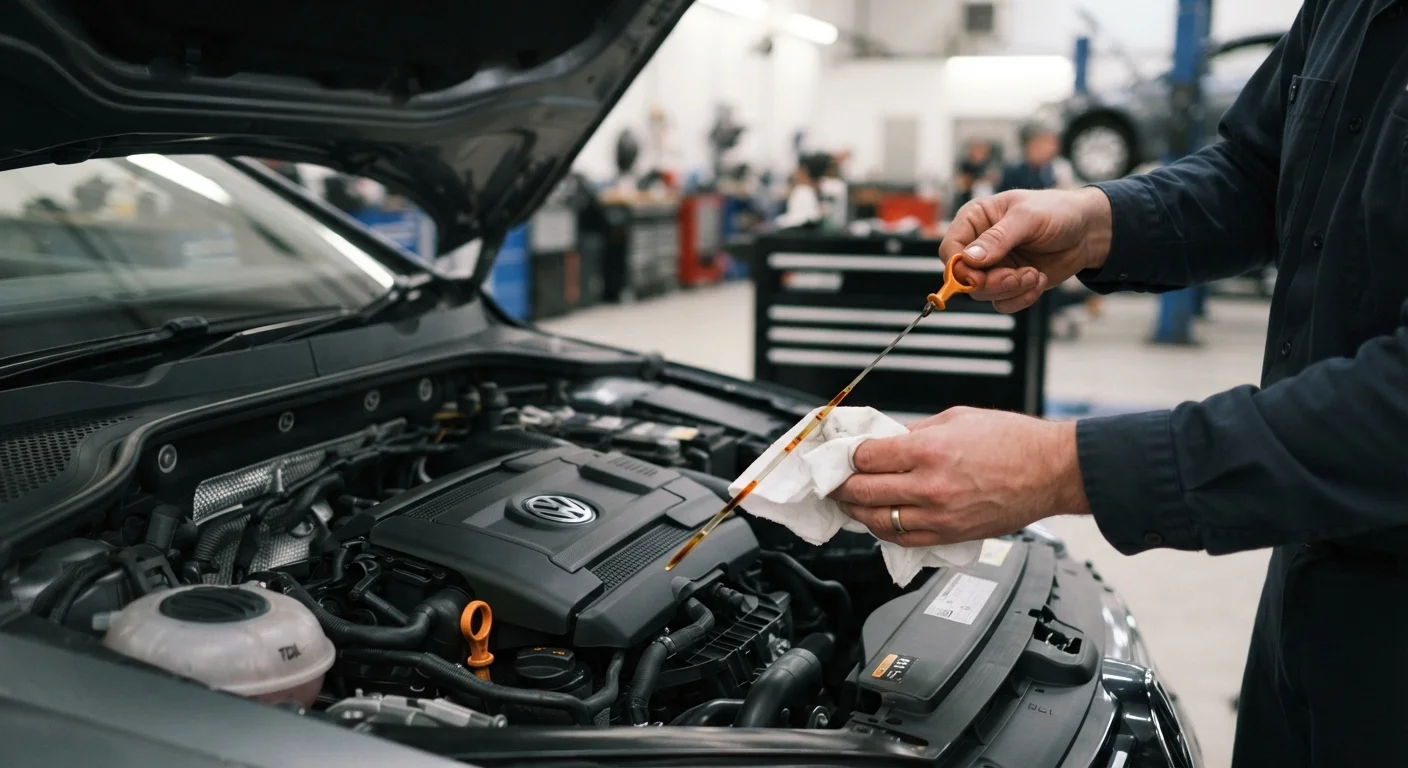
A simple way to remember tire rotation is to schedule it with every other oil change. Many shops offer it as an add-on service. Staying consistent with the interval means no single tire gets pushed into premature, uneven wear before the next check.
Most manufacturers recommend rotation every 5,000 to 7,500 miles. Many drivers simply schedule it with every other oil change. If you let it go too long, one or two tires may wear so much faster than the others that you can't safely rotate them at all - and you end up replacing tires prematurely.
Wheel Balancing: Eliminating Vibration
Even a brand-new tire isn't perfectly uniform. Small variations in the rubber compound, the steel belts inside, and the wheel itself mean the assembly rarely has perfectly even weight distribution around its circumference. When that imbalance is significant enough, the wheel wobbles as it spins - and at highway speeds, you'll feel it as a vibration through the steering wheel, floorboard, or seat.
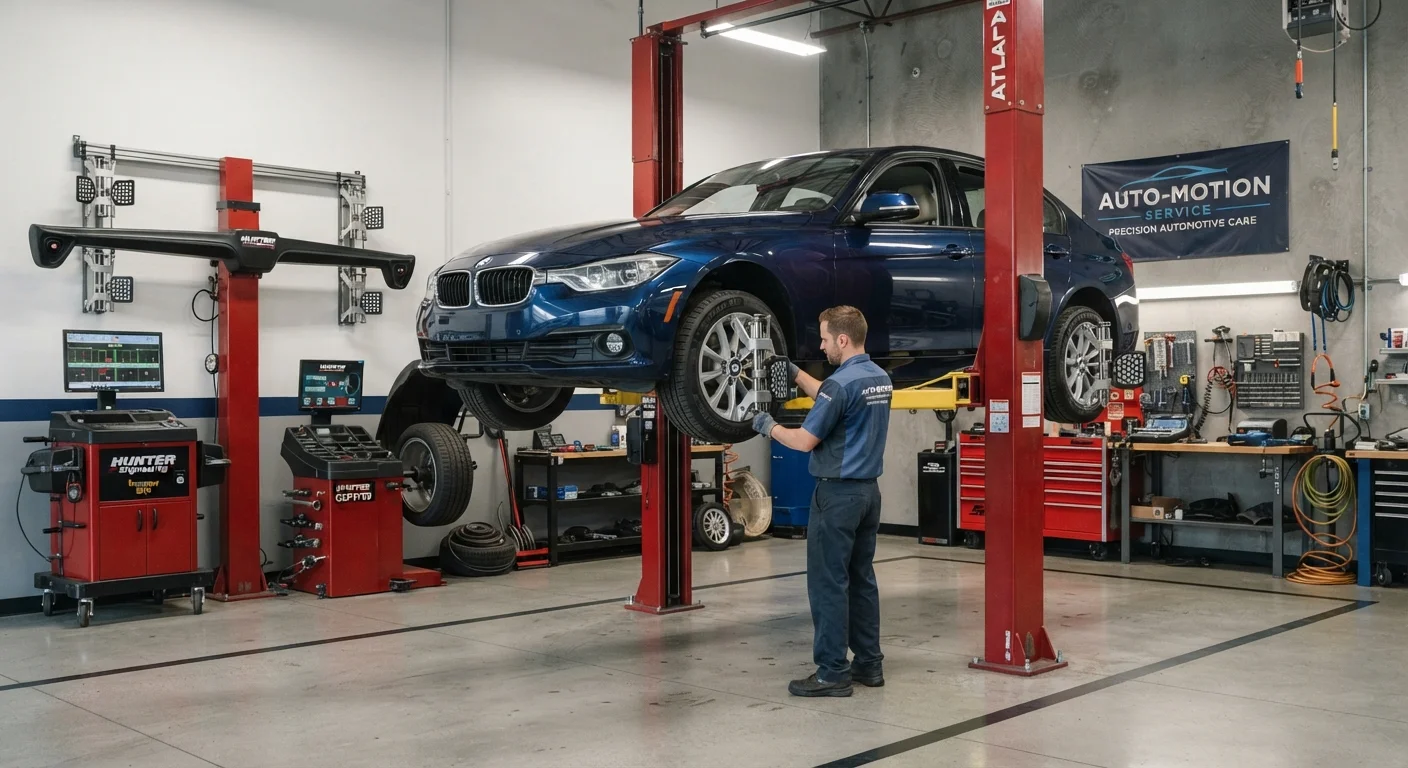
Balancing is done on a machine that spins the tire-and-wheel assembly and measures where the heavy spots are. A technician then attaches small counterweights to the rim to correct the imbalance. It's a precise, equipment-dependent job - this is not a DIY task, and it's worth noting in our guide to DIY maintenance boundaries.
Tires can go out of balance from normal use, after hitting road hazards, or when a wheel weight falls off. Many shops recommend balancing whenever you mount new tires, and it's a sensible check whenever you feel unexplained vibration.
Wheel Alignment: Correcting the Angles
Alignment has nothing to do with moving tires between positions or adding counterweights. It's about geometry - specifically the angles at which your wheels sit relative to each other and to the road surface. The three main angles technicians measure are camber (the inward or outward tilt of the wheel when viewed from the front), toe (whether the fronts of the tires point inward or outward), and caster (the angle of the steering axis).
When these angles drift out of specification, your car may pull to one side, the steering wheel may sit off-center on a straight road, and your tires will wear unevenly - often showing rapid wear on just one edge. Alignment can go out after hitting a pothole or curb, after suspension repairs, or simply from the gradual wear of steering and suspension components over time.
Proper alignment is part of the broader picture of vehicle health that a complete vehicle maintenance overview covers in detail. Most manufacturers suggest checking alignment annually or after any significant impact, but warning signs - pulling, uneven tread wear, an off-center steering wheel - are reason enough to have it checked immediately.
“Alignment isn't just about tire wear - it's about how the entire chassis interacts with the road. A vehicle that's even slightly out of alignment is working against itself every mile it travels.”
— ASE-certified automotive technician (composite expert perspective), Automotive Service Excellence Certified Technician
Putting It Together: When You Need Which
Because these services solve different problems, they have different triggers. Here's a practical summary:
- Rotation: Every 5,000-7,500 miles, or per your owner's manual. No symptoms required - this is purely preventive.
- Balancing: When you feel vibration at speed, when mounting new tires, or after a significant road impact.
- Alignment: After hitting a pothole or curb, after suspension or steering work, if the car pulls to one side, or if you notice uneven tread wear. Annual checks are also reasonable.
You can (and often should) ask a shop to check all three during a single visit - but don't assume that having one done means you don't need the others. Each stands on its own. Staying current on all three is one of the most effective ways to protect your tire investment and keep your car handling safely. For a broader look at where maintenance effort pays off, see our guide to what a full tune-up actually involves.