How Depreciation Works - and Why It's Invisible
Unlike a fuel bill or a repair invoice, depreciation never arrives in your mailbox. It accumulates silently in the background of every mile you drive. Yet for most car owners, it represents a larger annual expense than gasoline, insurance, or routine maintenance combined.
When you purchase a vehicle - new or used - you're paying for an asset that will be worth less in the future than it is today. The gap between what you paid and what the market will give you back is depreciation. It's a cost you've already paid; you simply collect it at the point of sale or trade-in.
For a fuller picture of every financial layer that comes with ownership, see everything that goes into the real cost of car ownership.
~20%
Average new car value lost in year one
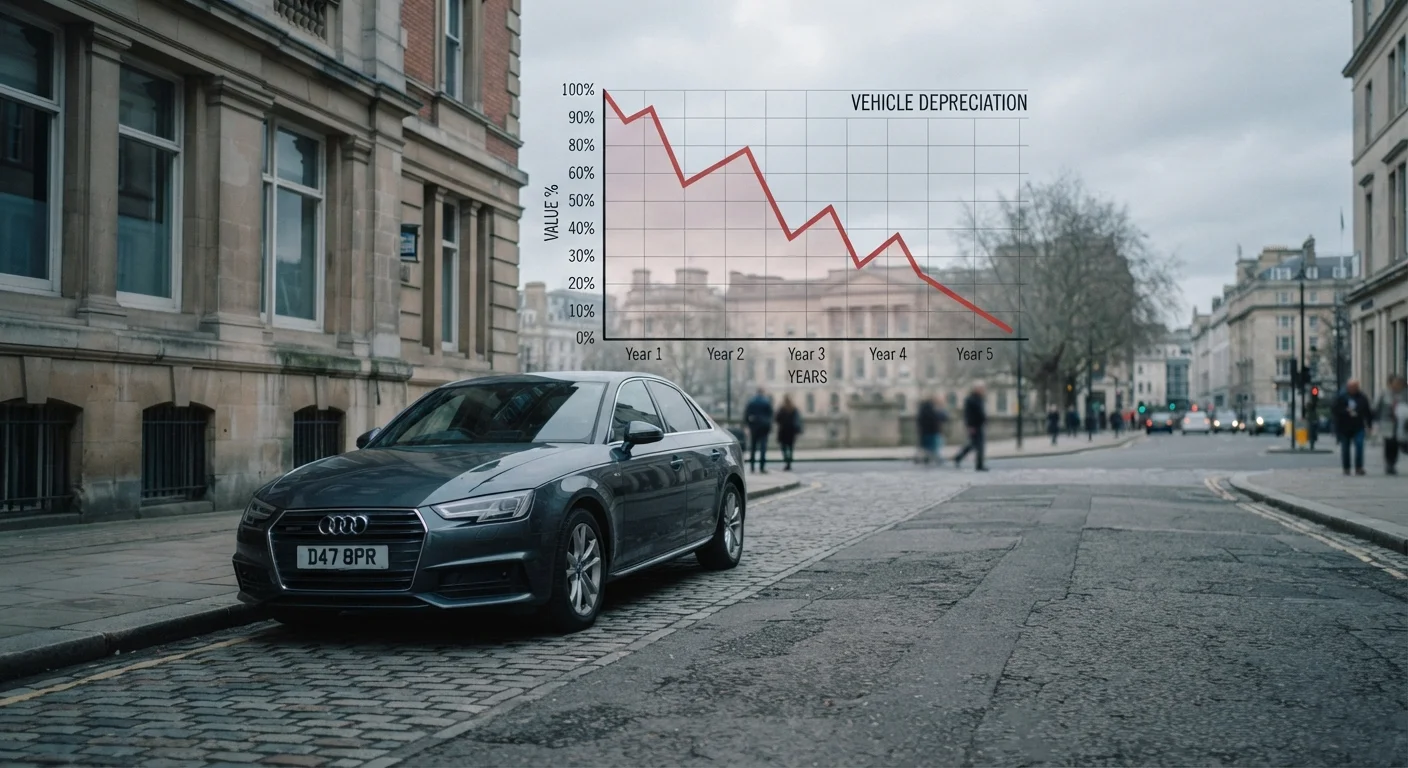
Industry estimates consistently show new vehicles lose roughly 15-25% of their value within the first 12 months of ownership.
~50%
Value lost by year five for many vehicles
After five years, many new vehicles retain only around half their original purchase price, according to general automotive valuation data.
#1
Depreciation as a car ownership cost
Automotive financial analysts commonly identify depreciation as the single largest component of total vehicle ownership cost over a five-year period.
The Factors That Accelerate Value Loss
Not all vehicles depreciate at the same rate. Several well-documented factors push a car's value down faster than average:
- Age and mileage: The older the vehicle and the more miles on the odometer, the lower the market value. High annual mileage is one of the strongest predictors of accelerated depreciation.
- Make and model reputation: Vehicles with a track record of reliability and strong demand tend to retain value better. Conversely, models with higher reported maintenance costs or weaker consumer demand lose value more quickly.
- Condition: Dents, faded paint, worn interiors, and a patchy service history all reduce what a buyer will pay. Consistent, documented routine maintenance directly supports resale value.
- Market forces: Fuel prices, shifting consumer preferences (such as rising demand for electric vehicles), and regional supply all influence how quickly specific vehicle types lose value.
- Color and trim: Unusual colors or limited-appeal trim packages can make a vehicle harder to sell, pushing the price down at resale.
Service Records Are Worth Keeping
Maintaining a complete record of all services - oil changes, tire rotations, brake work, and inspections - provides documented evidence of vehicle care. When it's time to sell or trade in, verifiable service history can support a stronger appraisal. Store receipts digitally so they're easy to access and share.
What Depreciation Actually Costs You
The financial impact of depreciation depends heavily on when you sell or trade in, and how you financed the purchase.
Consider a vehicle purchased for $35,000. Industry data suggests that car could be worth roughly $26,000 after one year, around $20,000 after three years, and possibly $14,000 after five years - though the exact trajectory varies by model, mileage, and market conditions. That's a loss of $21,000 over five years, or more than $4,000 per year on average, just in depreciation.
The depreciation curve is steepest in the early years and flattens over time. This has a direct implication: drivers who hold onto a vehicle for eight to ten years spread that total value loss across far more years, lowering the annual depreciation cost significantly compared to those who trade in every two to three years.
For drivers who financed their purchase, rapid early depreciation creates a specific risk. If you owe more on the loan than the car is currently worth, you're in a negative equity position. This complicates trading in or selling the vehicle before the loan is paid off. Understanding these dynamics is essential context for decisions covered in financing vs. leasing vs. buying outright.
Using Depreciation Knowledge to Make Smarter Decisions
Awareness of depreciation doesn't eliminate the cost, but it does change how you approach vehicle purchases and long-term planning.
Buying a vehicle that's two to three years old rather than brand new allows a previous owner to absorb the steepest part of the depreciation curve. The buyer gets a vehicle that still has substantial useful life, often at a meaningfully lower price per year of remaining ownership.
Keeping a well-maintained vehicle longer is one of the most effective ways to reduce the average annual cost of depreciation. A vehicle fully paid off at year five but driven reliably to year ten costs nothing in additional depreciation during those final years - the loss has already been absorbed.
Depreciation is also one of the expenses that drivers most commonly underestimate when budgeting for transportation. Including a realistic depreciation figure in your annual car cost calculation gives you a far more accurate picture of what you're actually spending - and helps you plan accordingly.
“The most expensive car you can drive is one you trade in every two or three years. Depreciation front-loads the cost of ownership - and most people don't see it until it's already gone.”
— Cars & Driving Editorial Team, Automotive ownership and finance analysts