Why Reduced-Speed Zones Keep Catching Drivers Off Guard
Most drivers understand that posted speed limits are legal minimums, not suggestions. Yet in special-use zones - work zones, school zones, hospital corridors, and others - violations spike precisely because drivers misjudge what the rules actually require. The boundaries aren't always obvious, the posted hours can be variable, and the hazards extend well beyond the speed itself.
Compounding the problem, many states double or triple fines in these areas, and in work zones, a single violation can carry points, surcharges, or license consequences that outlast the construction project itself. Understanding what distinguishes each zone type - and why its rules are written the way they are - is the foundation of driving safely through them. The zones below are among the most routinely misread by otherwise careful drivers.
For a broader look at how different road environments demand different skills, see our guide to highway versus city driving hazards.
Active Construction Work Zones
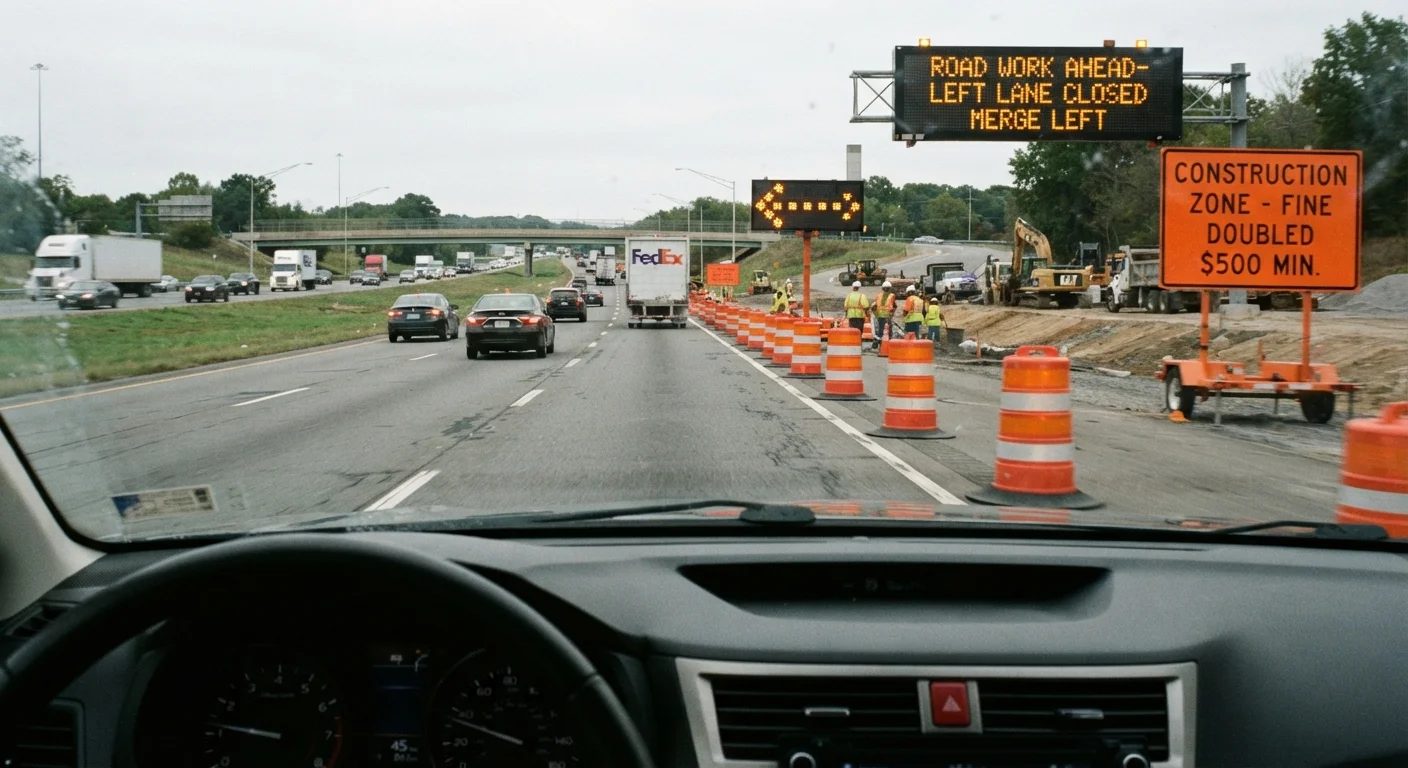
Work zones are the most heavily enforced reduced-speed areas on US roads, and for good reason: the Federal Highway Administration has consistently documented elevated crash rates in these areas, with rear-end collisions being the most common type. The reduced speed limit applies the moment a driver passes the first regulatory sign - not when they see a worker or piece of equipment.
A critical misunderstanding many drivers carry is that the lower limit only matters when workers are present. In virtually every state, the speed reduction applies around the clock, including nights and weekends when crews are not on site. Enforcement cameras, which many states have authorized specifically for work zones, operate continuously regardless of shift schedules.
Enhanced fines - often double the standard penalty - apply in most states, and some add mandatory court appearances for speeds significantly over the posted limit.
Work zone speed limits apply 24/7 - not only when crews are visibly on site.
School Zones During Active Hours
School zone rules are more nuanced than a single fixed-speed sign suggests. Reduced speed limits are typically only enforceable during specific hours - often before and after school sessions - and those windows can shift with early dismissals, delayed openings, or year-round schedules. Many jurisdictions now use electronic signs that activate only when the lower limit is in effect, which reduces confusion but also means drivers must read signage actively rather than assume a blanket rule.
Pedestrian risk in these zones is distinctly high: children cross mid-block, dart from between parked cars, and don't reliably follow crossing signals. Drivers should also be aware that school zone boundaries can begin a significant distance from the school building itself - sometimes a full block away - meaning the reduced limit applies well before the building is visible.
School zone hours vary by district and can shift with dismissal changes - electronic signs are the authority.
Hospital and Emergency Facility Zones
Hospital zones occupy a middle ground that drivers frequently treat as ordinary city streets. Many states and municipalities designate a reduced-speed area around hospital entrances and emergency department access points, recognizing that patients, medical staff, and emergency vehicles all converge in unpredictable patterns.
Unlike school zones, hospital zone speed reductions often apply continuously - 24 hours a day, seven days a week - because patient transport and emergency access don't follow a schedule. Additionally, drivers should understand that yielding to emergency vehicles exiting hospital grounds follows the same rules as yielding to those on public roads: pull to the right and stop when lights and sirens are active, even inside the zone's boundary.
Hospital zone speed limits commonly apply around the clock, not just during business hours.
Marked Pedestrian Crosswalk Zones
Crosswalks at unmarked intersections carry legal pedestrian right-of-way in most states, but marked crosswalk zones - particularly mid-block crossings or those at locations with high pedestrian volumes - impose specific driver obligations that go beyond simply yielding when someone steps off the curb.
In many states, drivers must stop for pedestrians who have entered the crosswalk or are clearly waiting to cross, and passing a vehicle already stopped at a crosswalk is prohibited. Failing to observe this rule has resulted in serious crashes when a second vehicle in an adjacent lane continues through while a pedestrian is mid-crossing.
Speed near marked crosswalks should be reduced preemptively, not reactively. Pedestrians may be obstructed from view by parked vehicles, delivery trucks, or other obstructions until they are directly in a driver's path.
Passing a stopped vehicle at a crosswalk is illegal in most states and is linked to serious pedestrian crashes.
Residential Neighborhood Speed Zones
Many drivers default to a 25 mph mental model for residential streets without reading the actual posted limit, which can vary considerably by state or municipality. Some urban residential streets carry limits as low as 20 mph, particularly in jurisdictions that have adopted traffic calming programs or vision-zero safety frameworks.
Residential zones are also distinct in the nature of their hazards. Children playing near the road, residents reversing from driveways, cyclists sharing the lane, and on-street parking all require slower, more anticipatory driving than the speed limit alone implies. The posted number sets a legal ceiling; prevailing conditions often call for speeds below it.
Understanding right-of-way in these environments matters equally - our article on common right-of-way mistakes addresses the intersections and yielding rules that generate the most driver confusion.
Residential speed limits vary more than drivers assume - and conditions often call for going slower than the posted number.
Emergency Vehicle Staging Areas and Incident Zones
When emergency vehicles are stopped on or adjacent to a roadway - whether at an accident scene, roadside medical emergency, or traffic stop - most US states require passing drivers to either change lanes away from the scene or slow to a significantly reduced speed if a lane change is not safely possible. These laws, often called "Move Over" statutes, apply to police, fire, EMS, tow trucks, and highway maintenance vehicles in most jurisdictions.
The hazard in these areas extends beyond the obvious: responders move around vehicles, bystanders may be disoriented, and debris from crashes can be scattered across lanes. Drivers who slow early, scan the full scene before passing, and don't rubberneck contribute to a safer environment for everyone involved. Violations of Move Over laws carry escalating penalties in most states and have been linked to preventable responder fatalities.
Move Over laws require a lane change or significant speed reduction when passing stopped emergency vehicles in most states.
Navigating These Zones With Confidence
Each zone type covered here operates under its own logic - shaped by the specific vulnerabilities of the people and workers within it. Treating them as interchangeable is the root cause of most violations and near-misses. Slowing down meaningfully, staying alert to signage changes, and understanding that enforcement is active even when no one appears to be watching are the habits that separate genuinely safe drivers from those who get lucky.
Scan Beyond the Speed Sign
In any reduced-speed zone, the posted number is only one piece of information. Look for flashing lights, flaggers, dynamic message boards, and temporary lane markings that may require a response beyond just slowing down. In work zones especially, traffic patterns can change daily as construction progresses - what was true last week may not hold today.
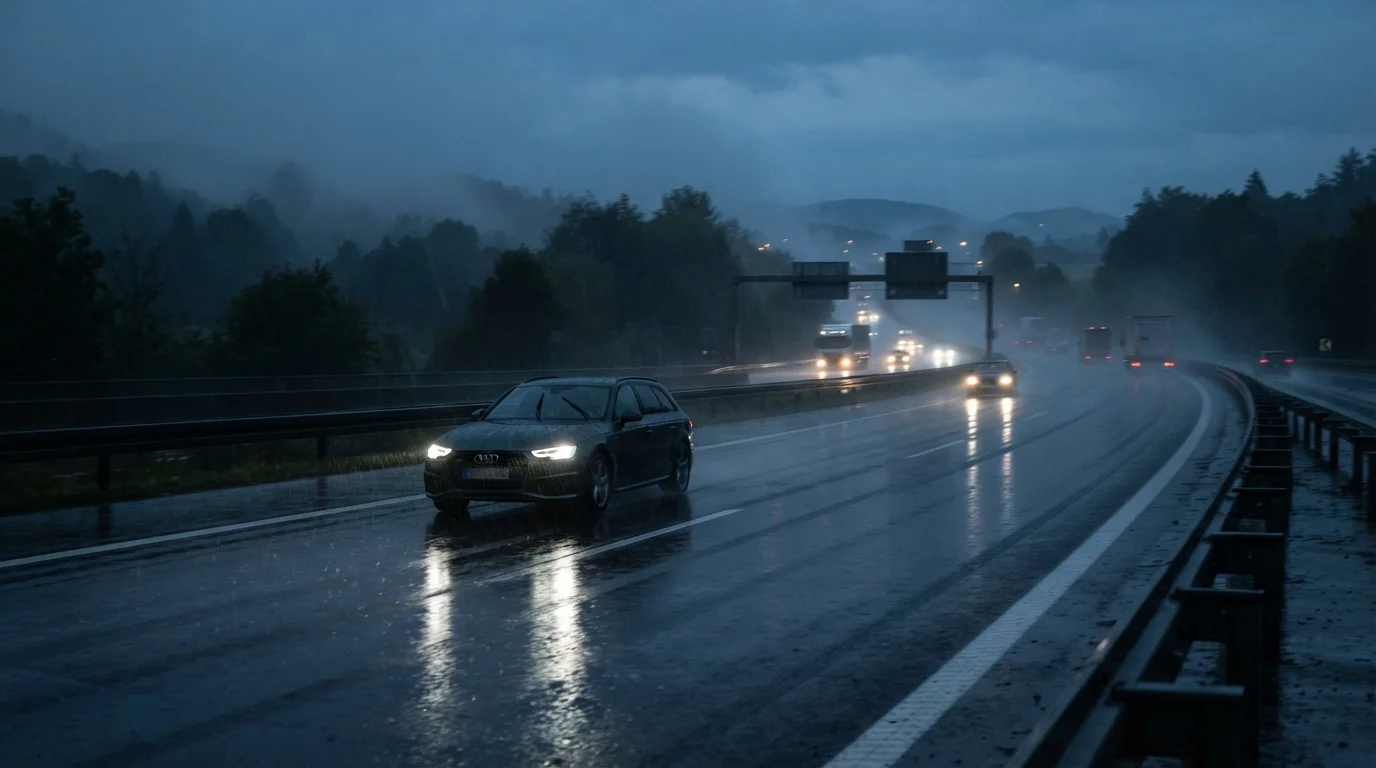
Adverse conditions add another layer of complexity in these zones. Rain, fog, and reduced nighttime visibility all extend stopping distances and shrink reaction time - factors that matter even more when workers or children are nearby. Our article on driving in rain, snow, ice, and fog covers how to adapt your approach when conditions deteriorate.