The Core Physics That Change in Every Adverse Condition
Whatever the weather - rain, snow, ice, or fog - three variables shift simultaneously: traction, stopping distance, and visibility. What changes between conditions is how much each variable degrades and in what order. Understanding this before you encounter a condition is far more useful than reacting to it in the moment.
On dry pavement, a typical passenger vehicle traveling at 60 mph needs roughly 4-5 seconds to stop. Add water, snow, or ice and that number climbs sharply. Add limited visibility and you've reduced the time you have to identify a hazard before needing to brake. The two problems compound each other.
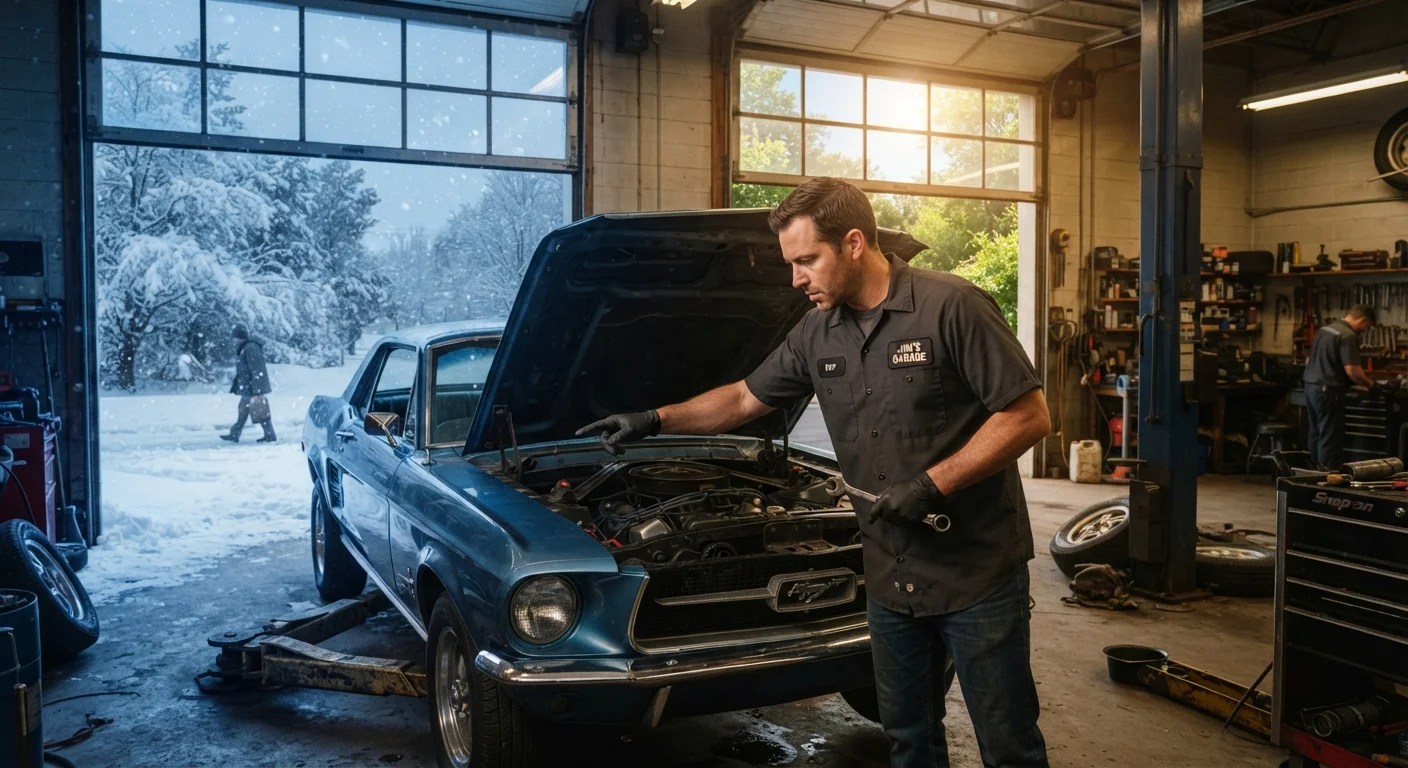
Consistent principles apply across all adverse conditions: slow down earlier than feels necessary, increase following distance substantially, avoid sudden steering or braking inputs, and make sure your vehicle is mechanically prepared before bad weather arrives. See our seasonal maintenance checklist to confirm your tires, wipers, and fluids are ready before conditions deteriorate.
| Stopping distance increase in rain | Up to 2× dry-road distance (Federal Highway Administration general guidance) |
| Stopping distance increase on ice | Up to 10× dry-road distance (NHTSA winter driving safety resources) |
| Hydroplaning risk speed threshold | Approx. 35 mph on wet roads (Tire industry general safety guidance) |
| Fog low-visibility threshold (FHWA) | Under 0.25 miles (Federal Highway Administration) |
| Recommended following distance in adverse weather | 4+ seconds (NHTSA and AAA driving safety recommendations) |
| AWD effect on braking distance on ice | None - no improvement over 2WD (IIHS and NHTSA winter safety literature) |
Rain: The Most Common and Most Underestimated Hazard
Rain reduces traction by introducing a thin layer of water between your tires and the road surface. Light rain can actually be more dangerous than a heavy downpour in the first few minutes - water mixes with accumulated oil and dust to create a slippery film before it's washed away.
Hydroplaning is the critical rain-specific risk. It occurs when a tire rides up on a wedge of water faster than the tread can evacuate it, causing the vehicle to lose contact with the road entirely. This typically happens at speeds above 35 mph on wet surfaces, though worn tires and standing water can trigger it at lower speeds. If you feel the steering go light, ease off the accelerator smoothly - do not brake hard or steer sharply.
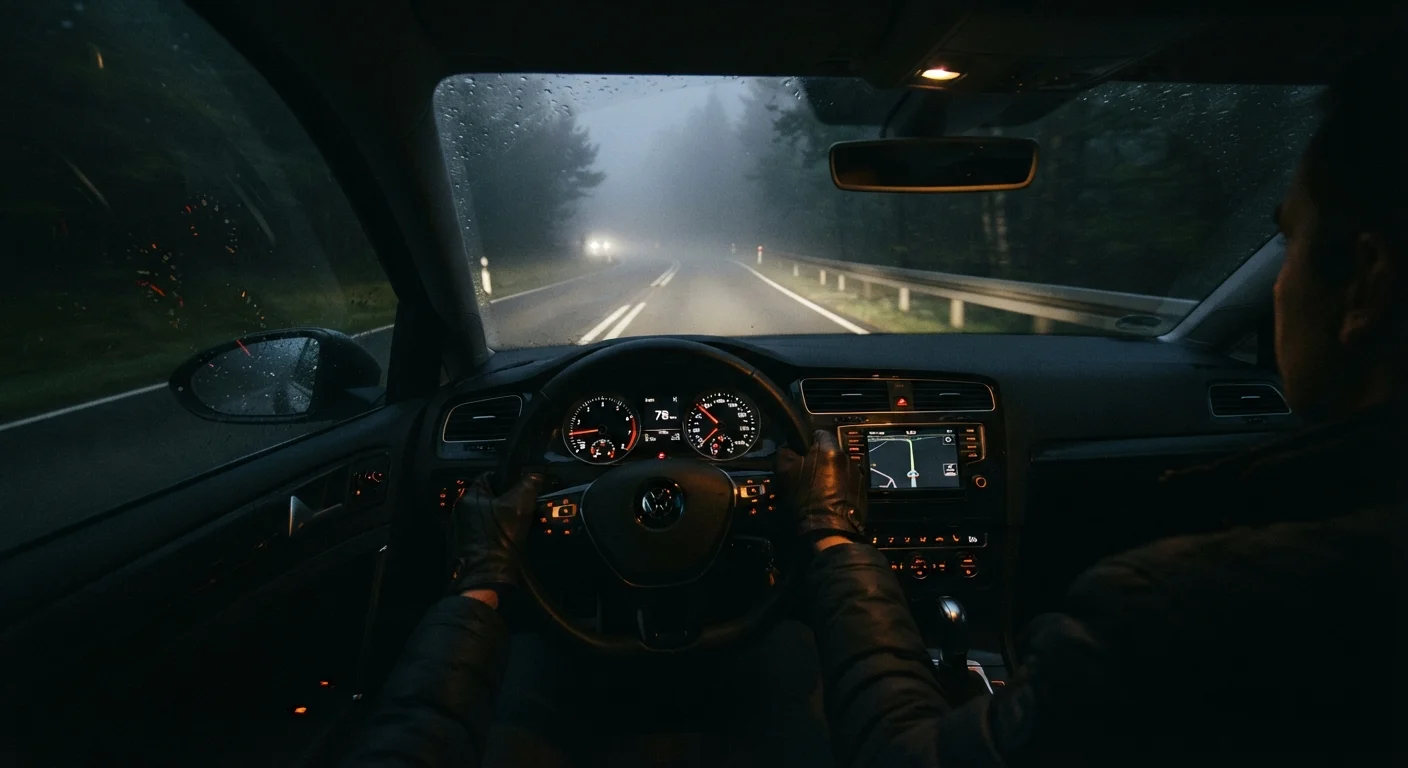
In heavy rain, headlights should be on (many states require this), and following distance should expand to at least 4-5 seconds. Fog lights, if equipped, can help with ground-level visibility but are not a substitute for headlights. For more on managing limited visibility after dark and in poor conditions, see our guide on night driving adjustments.
When Rain and Darkness Combine
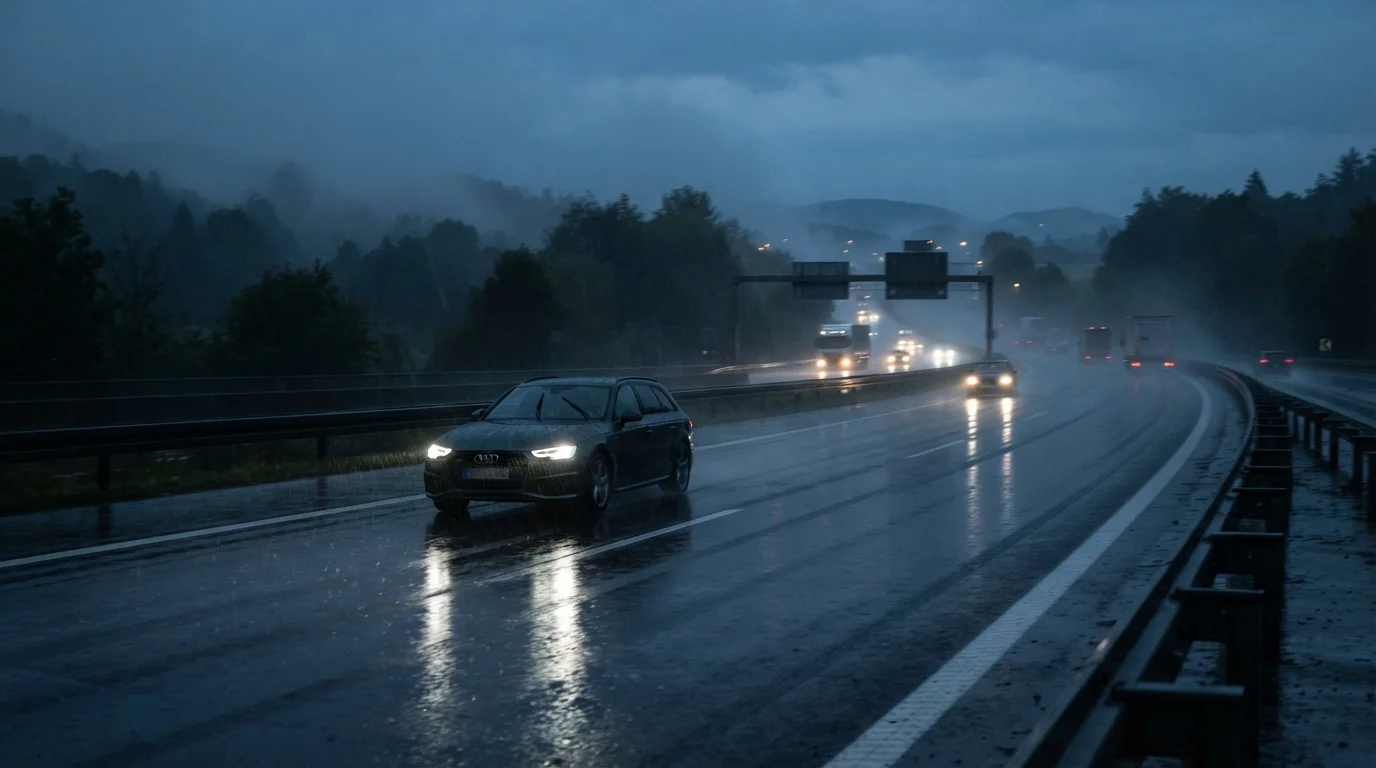
Nighttime rain is more hazardous than either condition alone. Wet roads reflect headlight glare from oncoming vehicles, and contrast between road markings and pavement drops significantly. If you're driving in rain after dark, reduce speed beyond what either condition alone would suggest and clean your windshield inside and out to minimize glare scatter.
Snow and Ice: When Traction Drops to Near Zero
Packed snow reduces traction to roughly 20-30% of dry-road levels. Black ice - a thin, nearly transparent layer of ice - can cut traction to as low as 10%. The danger with both is that they can appear without visual warning, especially on bridges, overpasses, and shaded sections of road that freeze before surrounding pavement.
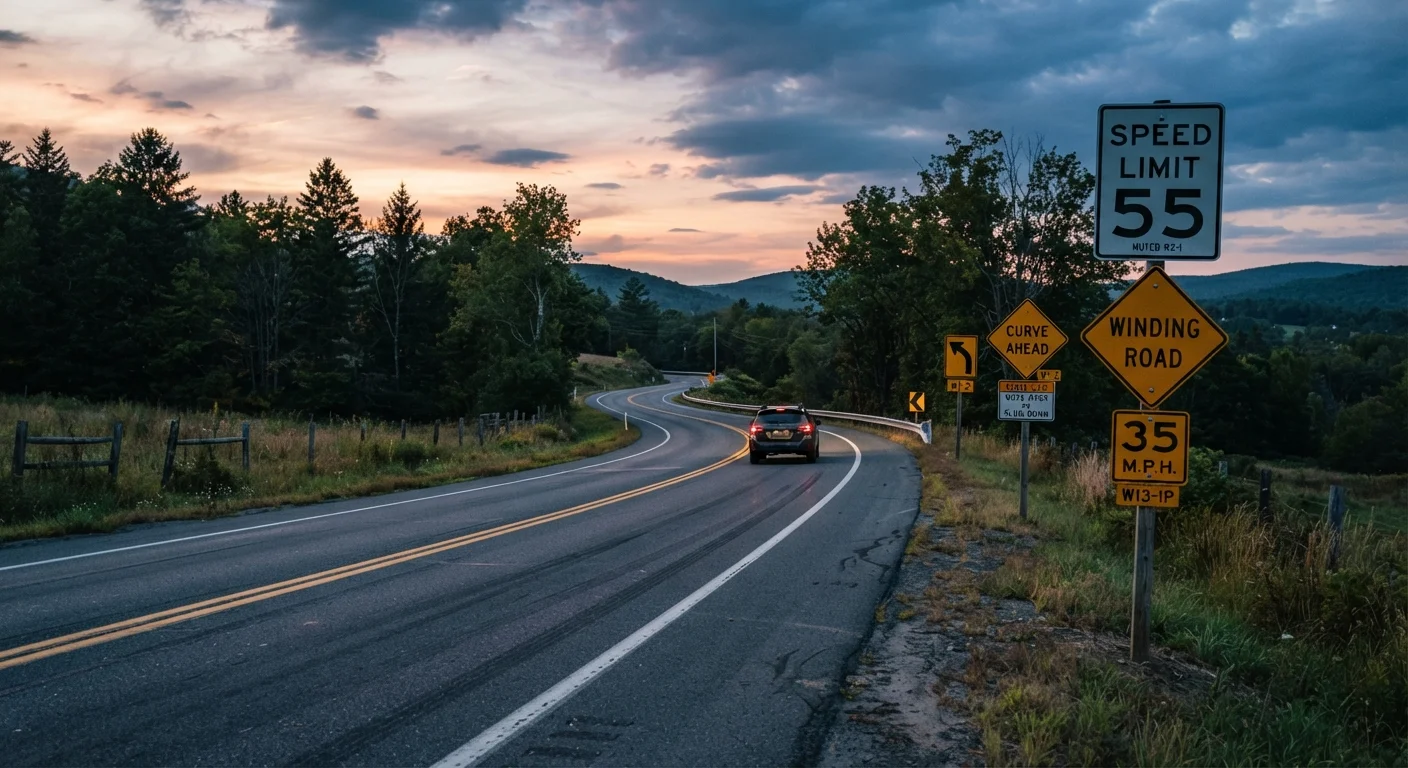
Braking distance on ice at 30 mph can exceed 300 feet - more than the length of a football field. That figure underscores why speed reduction is the single most important adjustment. Posted speed limits reflect normal conditions; advisory speeds and conditions often call for significantly lower travel speeds in winter weather.
All-wheel drive (AWD) and four-wheel drive (4WD) improve traction during acceleration but do not improve braking on ice. Drivers with AWD vehicles who believe they're immune to winter hazards are among the most commonly involved in snowy-condition crashes. Winter tires make a measurable difference in stopping distance on both snow and ice compared with all-season tires. If your vehicle begins to skid, steer in the direction you want the front of the car to go and avoid stabbing the brakes.
Over 1.2 million
Weather-related crashes in the US annually
According to the Federal Highway Administration, weather contributes to roughly 21% of all vehicle crashes each year.
70%
Of weather crashes occur on wet pavement
The FHWA notes that wet pavement - not snow or ice - is the dominant weather-related road hazard by crash volume.
Up to 40%
Stopping distance improvement with winter tires vs. all-seasons on snow
Testing by tire safety organizations has consistently shown winter tires can reduce stopping distances on snow by approximately 25-40% compared to all-season tires.
Fog: When Visibility Is the Entire Problem
Fog is distinct from the other conditions here because it does not directly affect traction - it removes the visual information you need to drive safely. Dense fog can reduce visibility to under 100 feet, while highway closing speeds between vehicles mean a collision can occur in seconds.
The correct lighting response to fog is often counterintuitive. High beams reflect off fog droplets and scatter light back at the driver, reducing effective visibility further. Low beams, angled toward the road surface, are more effective. Dedicated front fog lights are designed specifically for this, projecting a wide, low beam that cuts under the fog layer.
Speed must match visibility - if you can see only 100 feet ahead, traveling faster than allows you to stop within that distance is genuinely dangerous. Pulling off the road entirely and waiting out dense fog, with hazard lights active, is sometimes the safest decision available. The same disciplined approach that characterizes defensive driving - anticipating hazards before they materialize - is exactly what fog demands.
Hydroplaning
A condition where a tire rides up on a layer of water rather than maintaining contact with the road surface. It causes a sudden loss of steering and braking control and typically occurs at speeds above 35 mph on wet pavement.
Black ice
A thin, nearly transparent layer of ice that forms on road surfaces, particularly on bridges, overpasses, and shaded areas. It is difficult to see and dramatically reduces tire traction.
Traction
The grip between a tire and the road surface that allows a vehicle to accelerate, brake, and steer. Traction is reduced by water, snow, ice, and deteriorated tire tread.
Following distance
The gap maintained between your vehicle and the one ahead, typically measured in seconds. Adequate following distance provides reaction time to brake safely before reaching a hazard.
Fog lights
Auxiliary lights mounted low on a vehicle's front, designed to project a wide, flat beam below the fog layer. They supplement - but do not replace - standard low-beam headlights.
What Stays Constant Across All Adverse Conditions
Despite the differences between rain, snow, ice, and fog, several principles hold regardless of the specific condition. Smooth, deliberate inputs - gentle steering, gradual braking, steady acceleration - matter in every situation where grip or visibility is reduced. Sudden movements transfer weight abruptly and can overwhelm tires already working near their limits.
Increased following distance is universally appropriate. The standard two-second gap is a dry-road minimum; adverse conditions call for four seconds at minimum, and more on ice or in fog. Lane discipline matters too - staying toward the center of your lane reduces exposure to road edge hazards obscured by snow or poor visibility.
Vehicle preparation before you drive is equally universal. Tires with adequate tread depth, functional wipers, clear windows and mirrors, and properly aimed headlights all improve your margin in any adverse condition. Run through a pre-trip safety check before departing in questionable weather. And remember: the decision not to drive in severe conditions is always available, and often the safest one.
FHWA Road Weather Management Program
The Federal Highway Administration's Road Weather Management program provides data and safety guidance on how weather affects US roads, useful for understanding regional risk patterns.
NHTSA Winter Driving Safety
The National Highway Traffic Safety Administration publishes practical winter driving guidance covering tires, vehicle preparation, and safe driving techniques for snow and ice conditions.