How Each System Works
Understanding the mechanics of each system makes it much easier to match one to your yard's needs.
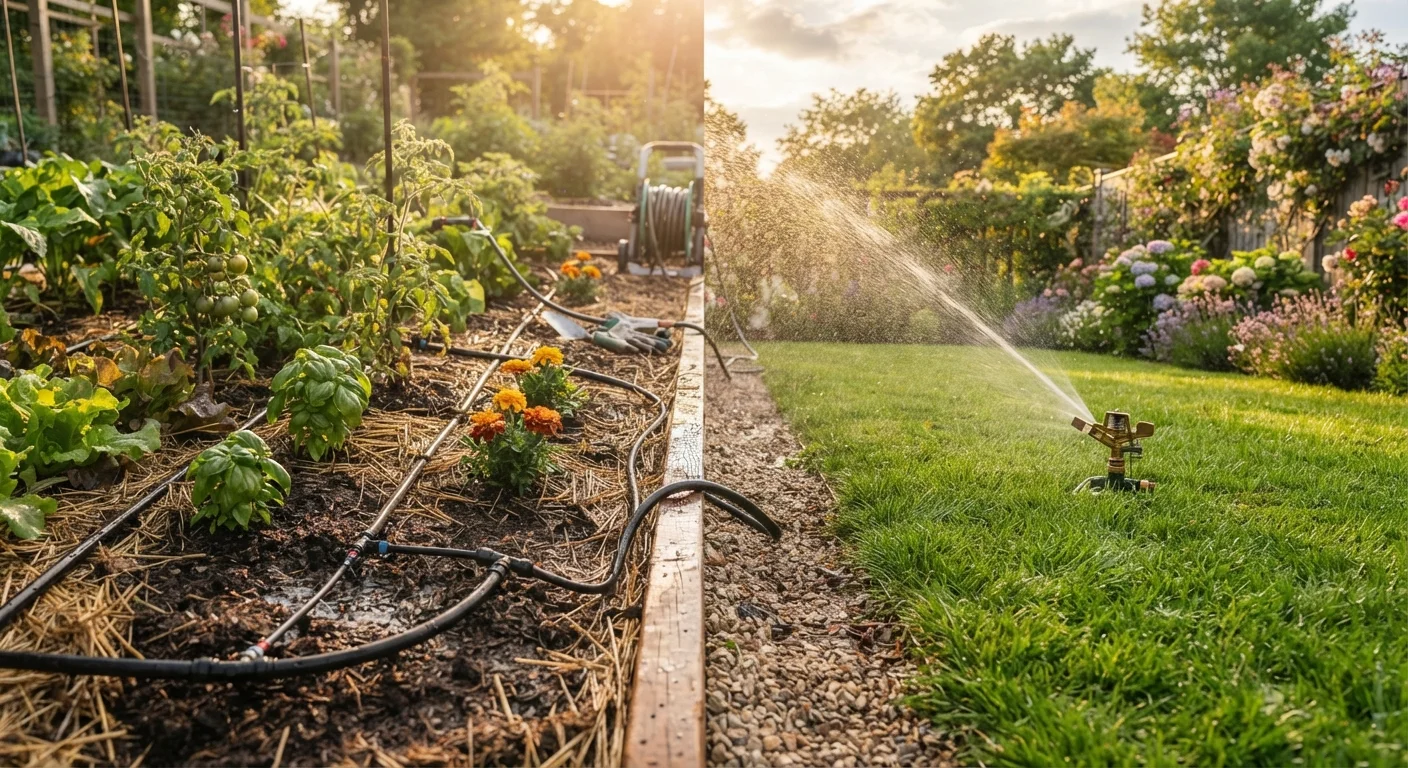
Drip irrigation delivers water through a network of flexible tubing and small emitters placed at or just below the soil surface. Each emitter releases water slowly - typically 0.5 to 2 gallons per hour - directly into the root zone. Because water moves downward into the soil rather than being broadcast through the air, very little is lost to evaporation or wind drift. Drip systems are installed manually and can be adapted to almost any bed shape, but they require thoughtful layout to ensure every plant receives adequate coverage.
Sprinkler systems distribute water overhead using pressurized heads - either fixed, rotating, or pop-up - that spray a defined radius. They're well-suited to uniform areas like lawns, where overhead coverage is the goal. Most residential sprinkler setups are divided into zones, each controlled by a valve, so different areas can be watered on separate schedules. Installation is more involved and often requires trenching for underground supply lines, but the coverage per head is broad.
Both systems can be connected to timers and soil moisture sensors for automated scheduling, which significantly improves efficiency regardless of which type you choose. For gardeners interested in how watering choices interact with soil and plant health, our guide to common watering myths offers useful context on what plants actually need.
Comparing Performance Across Key Factors
No single system wins on every dimension. Here's how they compare across the factors that matter most to home gardeners and yard owners.
| Criterion | Drip Irrigation | Sprinkler Systems |
|---|---|---|
| Water efficiency | High - minimal evaporation | Moderate - wind and heat loss |
| Best plant type | Vegetables, shrubs, trees | Turf grass, groundcovers |
| Coverage area | Targeted, per-plant | Broad, uniform radius |
| Foliage wetting | None - root zone only | Yes - overhead spray |
| Installation complexity | Low to moderate (DIY-friendly) | Moderate to high (often professional) |
| Upfront cost | Generally lower | Generally higher |
| Maintenance | Check emitters for clogging | Winterize lines; adjust heads |
| Automation potential | High - timer and sensor compatible | High - timer and sensor compatible |
Drip systems shine on water efficiency and plant health for sensitive crops. Sprinklers win on convenience for large, uniform areas. Installation complexity and cost vary by yard size and existing infrastructure - a small drip kit for a raised bed can cost under $40, while a full in-ground sprinkler system for a mid-sized lawn can run into the hundreds or thousands of dollars, depending on whether professional installation is needed.
30-50%
Water savings with drip vs. sprinklers
The US Environmental Protection Agency estimates that drip irrigation can be 30-50% more efficient than conventional sprinkler systems when properly installed.
50%
Outdoor water use lost to inefficiency
According to EPA WaterSense data, about half of the water used for residential irrigation is wasted due to evaporation, wind, or poor system design.
~9 billion gallons
Water used daily for US landscape irrigation
The EPA estimates US households use roughly 9 billion gallons of water per day on landscape irrigation, making system efficiency a meaningful conservation issue.
Which System Suits Your Yard?
The strongest predictor of which system will serve you better is the type of plants you're growing and the layout of your outdoor space.
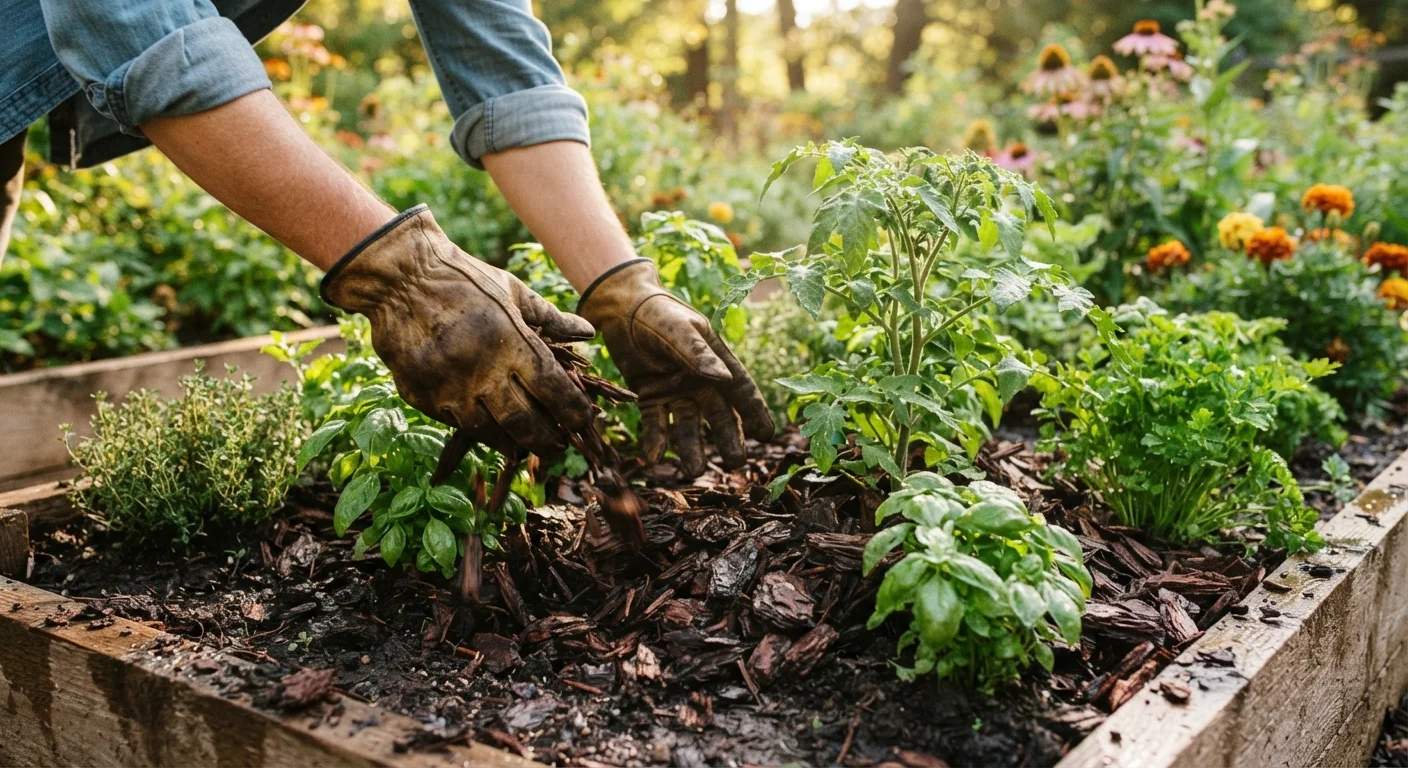
Choose drip irrigation if: Your yard has defined planting beds, rows of vegetables or shrubs, container gardens, or areas where keeping foliage dry matters. Drip is also the practical choice in regions with water restrictions, since it minimizes waste. It pairs especially well with mulched beds - the mulch slows evaporation further and keeps drip lines protected. See how mulch and irrigation work together in our guide to mulching correctly.
Choose sprinklers if: You have a lawn that needs even surface coverage, or a large landscape with mixed groundcovers where laying individual drip lines would be impractical. Sprinklers are also easier to adjust seasonally using a central controller.
Consider using both: Many yards benefit from a hybrid approach - drip for garden beds and sprinklers for lawn zones. Modern irrigation controllers can manage multiple zone types on one system, making this combination both manageable and efficient.
Check Local Water Restrictions First
Many municipalities across the US impose seasonal or permanent watering restrictions that affect which days and times you can irrigate. Some jurisdictions also offer rebates for switching to drip systems. Before investing in any irrigation setup, verify local ordinances through your water utility or city website - rules vary significantly by region and drought status.
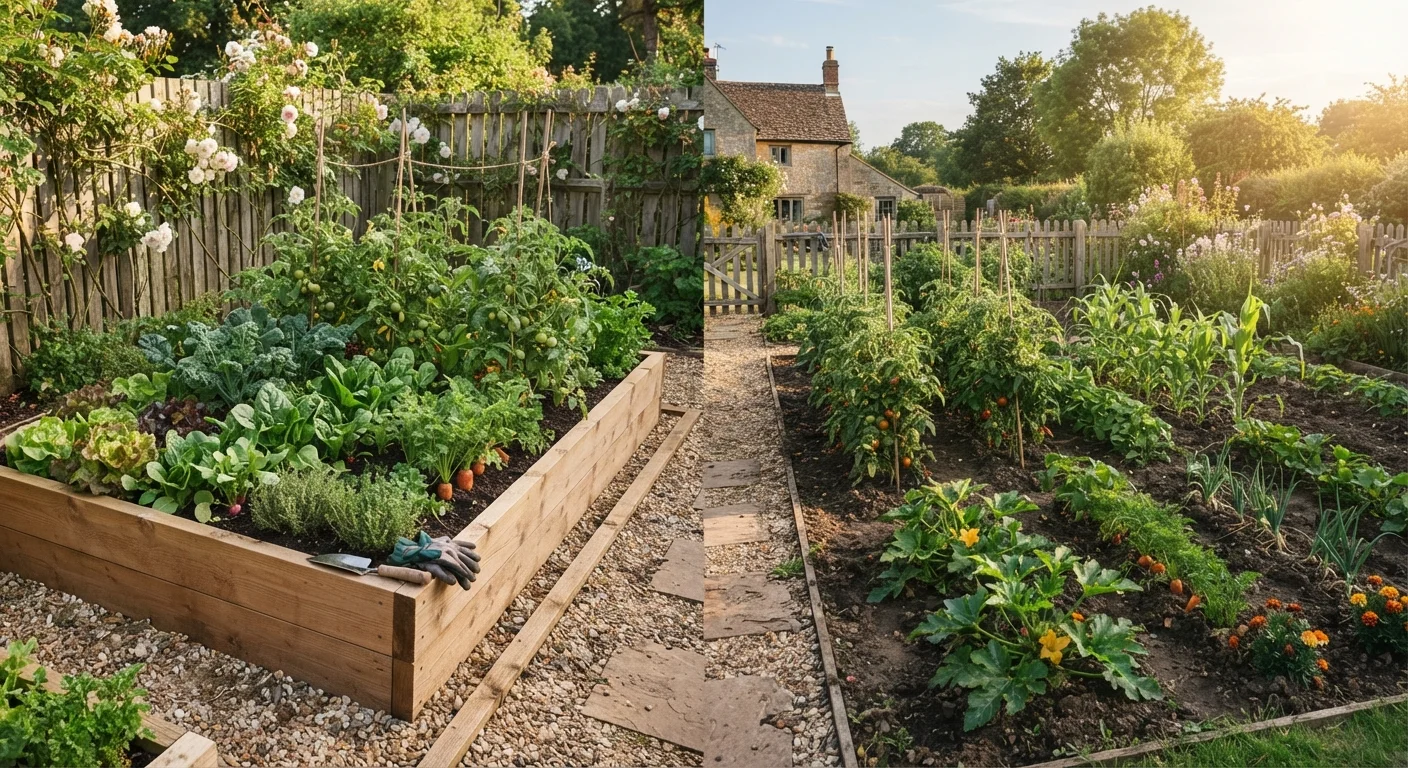
If you're deciding how to structure your growing space alongside your irrigation setup, our comparison of raised beds versus in-ground planting can help you think through the full picture.