Why Mulching Mistakes Are So Common
Mulch looks simple - spread it and walk away. In practice, the details determine whether it benefits your garden or creates problems. Overly deep mulch can trap moisture against stems, inviting rot and fungal disease. Too-thin a layer lets weeds push right through. And the wrong material for your planting context can work against soil health rather than support it.
Understanding a few key variables - depth, material, placement, and timing - takes the guesswork out of mulching and turns it into a reliable tool for building healthier soil over time. Paired with smart watering habits (see common watering misconceptions), correct mulching can significantly reduce the maintenance your yard demands season to season.
Choosing the Right Mulch Material
Mulch falls into two broad categories: organic (wood chips, shredded bark, straw, shredded leaves, compost) and inorganic (gravel, landscape fabric, rubber). Organic mulches break down over time, feeding soil biology and improving structure - making them the preferred choice for most garden beds and around trees and shrubs.
Fresh Wood Chips and Nitrogen: What to Know
Fresh wood chip mulch is sometimes said to deplete soil nitrogen as it decomposes - a concern worth understanding accurately. Nitrogen tie-up occurs mainly at the soil surface where mulch and soil interface; it's unlikely to affect deeper plant roots significantly unless mulch is tilled into the soil. For vegetable beds where surface roots are more active, consider using aged wood chips, straw, or shredded leaves instead. If you're also amending your soil, see the soil amendments guide for context on how organic matter inputs interact.
Shredded leaves are among the most underused mulch materials available to homeowners. They're free, readily available in fall, and break down into a rich, dark layer that earthworms favor. They work especially well around perennials and in woodland garden settings. For vegetable beds, straw is a practical choice - it's light, easy to move at planting time, and doesn't introduce weed seeds the way hay sometimes does. Coarse wood chips are better suited to pathways and around established trees and shrubs than annual planting beds, where their slow decomposition and temporary nitrogen tie-up can be limiting factors.
Inorganic options like gravel suit arid-climate plantings or areas where you want a permanent solution. Landscape fabric, despite its popularity, often becomes a long-term nuisance as it degrades, prevents soil improvement, and can impede root development. Most extension services and experienced gardeners recommend organic alternatives instead.
Getting Depth and Placement Right
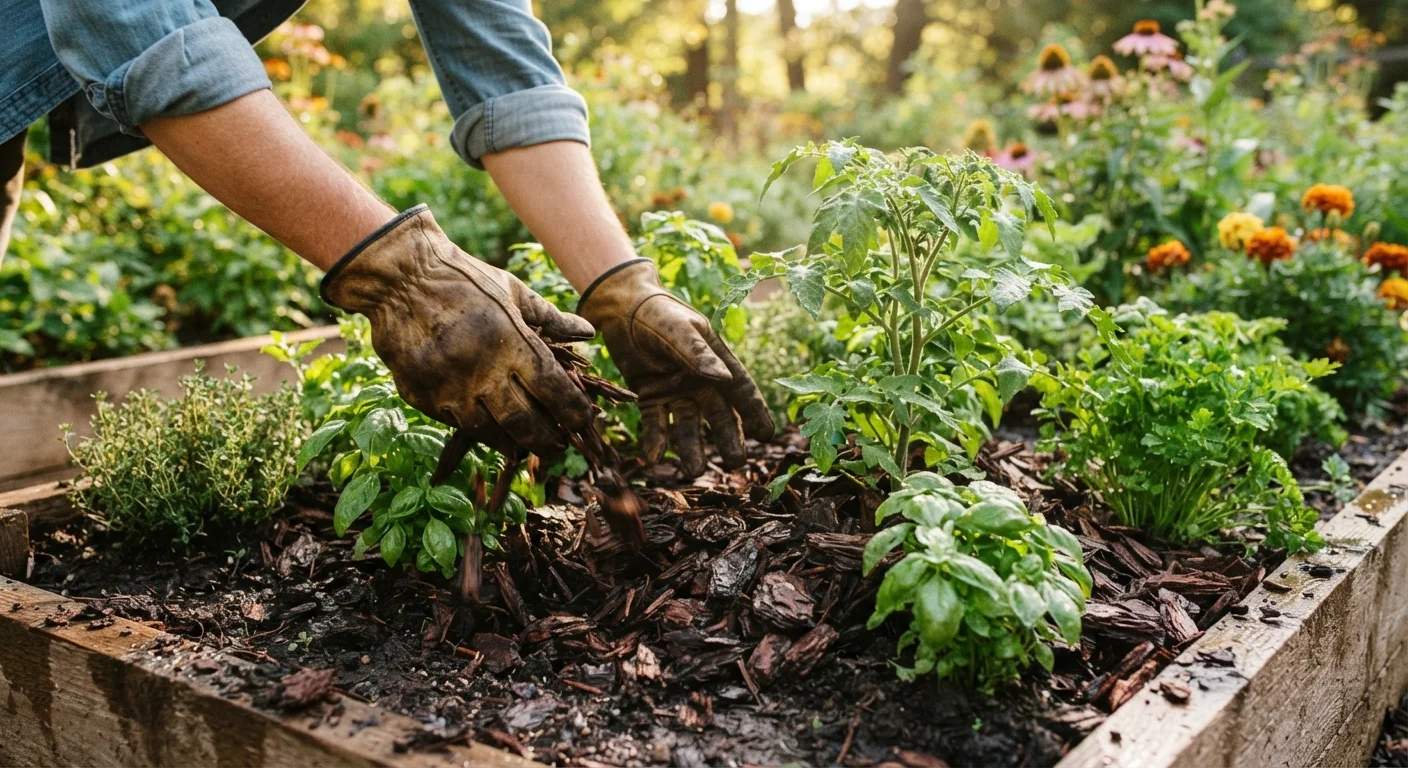
The standard guidance for most garden beds is 2 to 3 inches of mulch. This is enough to suppress annual weeds, moderate soil temperature, and reduce surface evaporation without blocking air and water exchange. Vegetable beds and annual flower borders can work with slightly less - around 1.5 to 2 inches - so that transplants aren't buried and soil warms adequately in spring.
2-3 in.
Recommended mulch depth for most garden beds
University cooperative extension programs across the US consistently cite this range as the functional sweet spot for weed suppression and soil moisture retention.
25-50%
Potential reduction in soil moisture loss with mulch
Research from land-grant university horticulture programs suggests mulched soil can retain significantly more moisture than bare soil under comparable conditions, though results vary by material and climate.
The most common mulching error is piling material directly against plant stems or tree trunks - sometimes called a mulch volcano. This traps moisture and creates ideal conditions for crown rot and bark decay. Always leave a gap of at least 2 to 3 inches around individual plants and 6 inches or more around tree trunks, keeping the root flare (where the trunk meets the soil) visible and exposed.
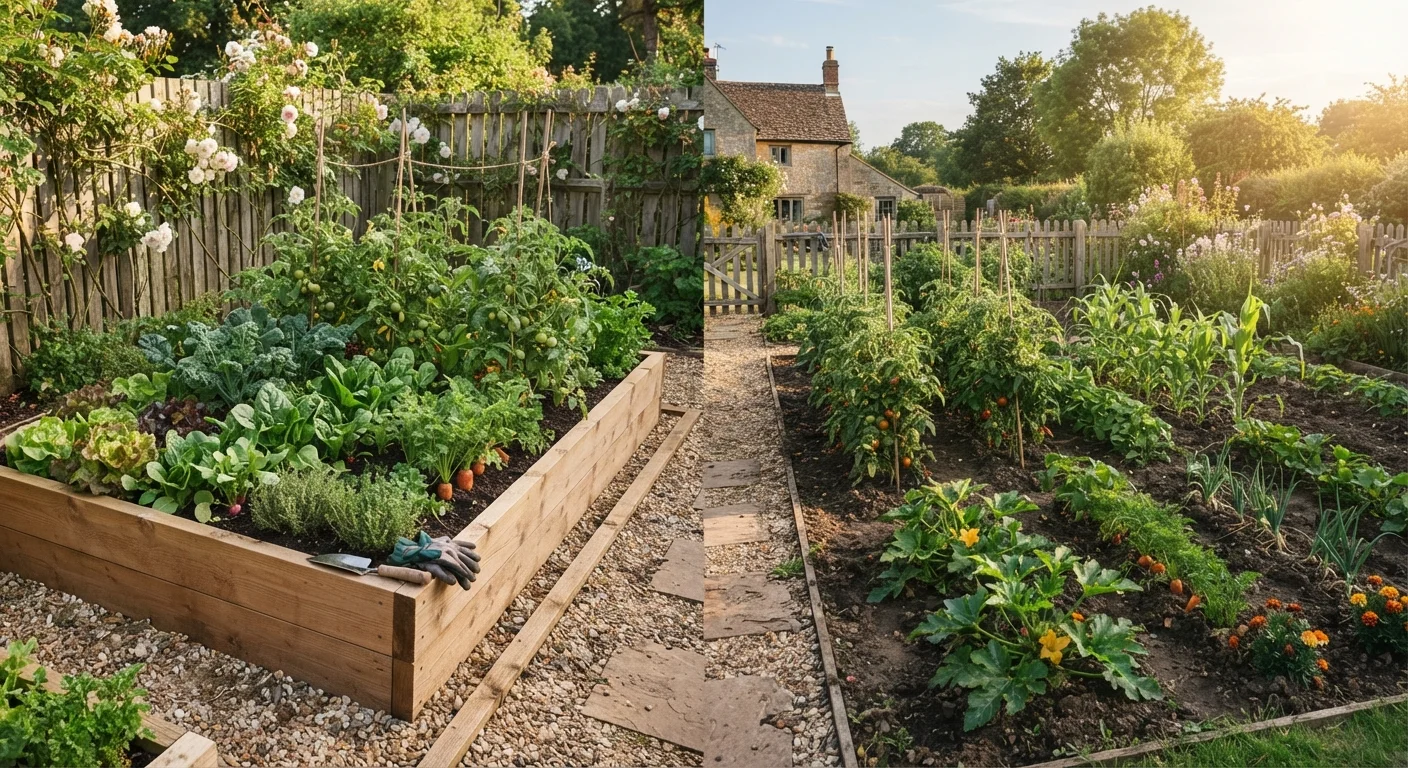
For raised bed gardeners weighing planting approaches, it's worth noting that mulching dynamics differ slightly from in-ground beds - the raised beds vs. in-ground tradeoffs guide covers how soil management differs between the two setups.
Timing Your Mulch Applications
Mulching at the right time amplifies its benefits. Two windows stand out:
- Spring (after soil warms): Apply mulch after the ground has had a chance to warm up - mulching too early in cold climates traps cold soil and delays growth. Mid-spring, once nighttime temperatures are consistently above freezing, is generally the right window.
- Fall (before first frost): A fresh layer of mulch applied in fall helps insulate perennial root systems and moderates the freeze-thaw cycles that heave shallow-rooted plants out of the ground. This is a key step in fall yard preparation.
In hot, dry climates, a mid-summer top-up of mulch around vegetable beds can meaningfully reduce water loss. Top off existing mulch rather than layering heavily on top of compacted old material - rake or fluff the existing layer first to restore air circulation before adding fresh material.
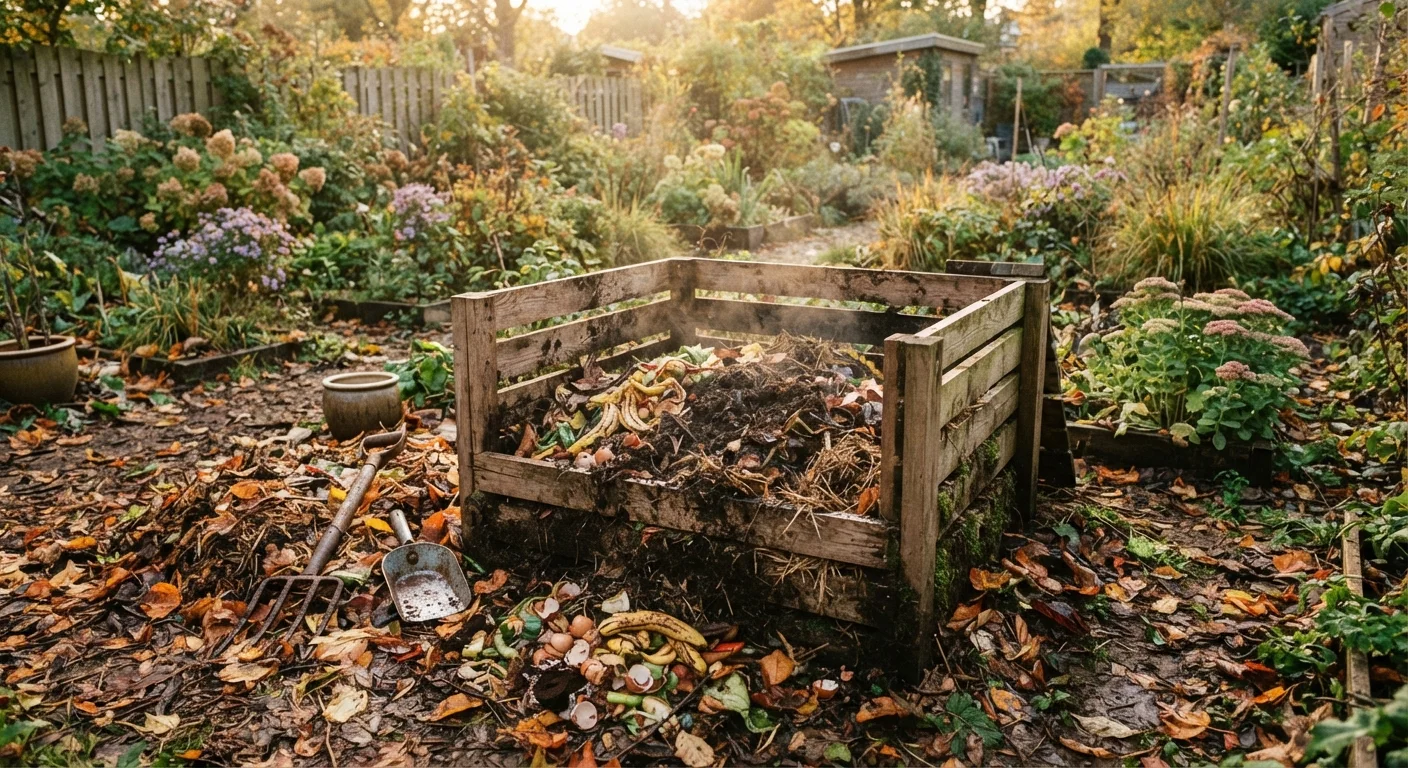
If you're also building compost to enrich your soil, finished compost can double as a light mulch layer. The composting guide explains how to prepare and apply it effectively alongside other organic materials.