
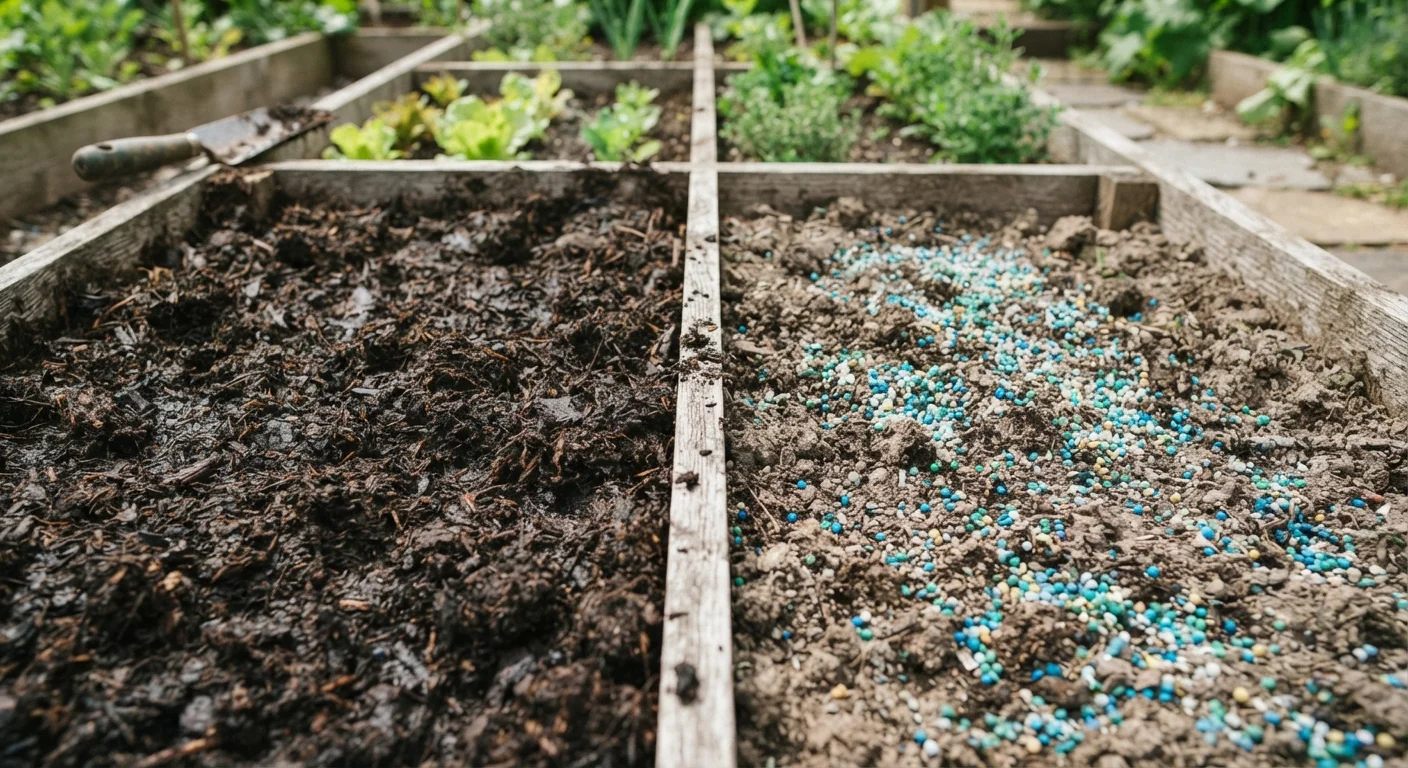
How Each Type Works in the Soil
The core difference between organic and synthetic fertilizers lies in how nutrients reach plant roots. Organic fertilizers - derived from materials such as composted manure, bone meal, kelp, or feather meal - must be broken down by soil microbes before plants can absorb the nutrients. This process is slower, but it also means nutrients release gradually in step with microbial activity, which tends to track naturally with growing conditions.
Synthetic fertilizers are manufactured to deliver nutrients in forms plants can absorb almost immediately. They bypass the soil food web entirely. That speed is useful when you need to correct a confirmed deficiency fast, but it also means the nutrients are more vulnerable to leaching away before plants can use them - especially with overwatering or heavy rain.
Understanding this distinction matters before you reach for either product. If your soil biology is healthy and active, organic amendments work with it. If you are working in poor or depleted soil, you may be trying to feed microbes that aren't there yet. A soil test - available through most university cooperative extension programs - tells you what nutrients are actually missing and at what levels, which is the most reliable starting point for any fertilizer decision. See also soil amendments explained for context on how other inputs interact with your soil.
Comparing Organic and Synthetic Fertilizers
The table below outlines how these two approaches differ across the criteria gardeners most commonly weigh when making a choice.
| Organic Fertilizers | Synthetic Fertilizers | |
|---|---|---|
| Nutrient release speed | Slow, gradual over weeks or months | Fast, available within days |
| Nutrient concentration | Lower, varies by source | Higher, precise and consistent |
| Soil biology impact | Feeds and supports microbial life | Neutral to slightly disruptive at high rates |
| Leaching risk | Lower due to slow release | Higher, especially with overwatering |
| Ease of precise application | More difficult to calculate exact dose | Straightforward with labeled N-P-K values |
| Best use case | Building long-term soil fertility | Correcting confirmed deficiencies quickly |
| Environmental footprint | Generally lower, but not zero | Higher runoff risk if over-applied |
One point the table can't fully capture is variability. Organic fertilizer products vary widely in nutrient concentration depending on their source material and processing. Synthetic products list exact guaranteed analysis (N-P-K values) on every package, making precise application easier to calculate.
Soil Biology and Long-Term Fertility
Repeated use of high-concentration synthetic fertilizers can, over time, reduce the diversity of beneficial soil organisms if organic matter isn't also being added. Healthy soil is a living system - earthworms, bacteria, fungi, and other organisms all contribute to nutrient cycling, water retention, and plant disease resistance. Organic fertilizers, and especially finished compost, actively support this ecosystem.
That said, synthetic fertilizers don't automatically destroy soil biology when used appropriately. The issue arises mainly with over-application or when synthetics become a complete substitute for organic matter rather than an occasional supplement. Gardeners interested in building soil long-term often find it helpful to pair any fertilizer approach with regular compost additions. Our complete composting guide covers how to produce and apply finished compost effectively at home.
Start With a Soil Test
Before purchasing any fertilizer, get a soil test through your local cooperative extension service. It costs very little and tells you exactly which nutrients are deficient, at what levels, and sometimes which amendment type is most appropriate for your soil conditions. Fertilizing without this baseline often leads to over-application, wasted money, and avoidable environmental impact.
Environmental and Practical Considerations
Both fertilizer types carry environmental trade-offs. Excess synthetic nitrogen and phosphorus are a well-documented source of waterway pollution through runoff - a concern especially near stormwater systems or natural water bodies. Organic fertilizers can also contribute to runoff if applied in large quantities or just before heavy rain, though their slower release generally reduces this risk.
Practically speaking, organic fertilizers tend to be bulkier and heavier per unit of nutrient delivered, which affects how you store, transport, and apply them. Synthetic fertilizers are more concentrated and typically less expensive by nutrient weight, though pricing varies by product. For gardeners working in raised beds or containers - where you're managing a finite, contained volume of growing medium - the considerations shift somewhat. Raised beds vs. in-ground planting explores how your chosen growing setup shapes many of these decisions.
Avoid Over-Application of Any Fertilizer
More fertilizer does not mean faster or better plant growth. Excess nitrogen from any source can burn plant roots, promote excessive leafy growth at the expense of flowers or fruit, and contribute to water pollution. Always follow package instructions and, where possible, apply based on soil test recommendations rather than general guidelines.
Ultimately, the most sustainable approach for any garden is applying only what plants actually need, confirmed by a soil test, and avoiding excess regardless of the fertilizer type.