
How to Use This Checklist
This checklist is designed as a room-by-room audit - a structured walkthrough of your home to identify clutter hotspots, unused storage, and opportunities to create more functional spaces. You don't need to complete every room in one session. In fact, tackling one room at a time is one of the most effective strategies for making real, lasting progress.
If you're new to home organization, our guide on getting started when everything feels like a mess explains the core concepts to understand before diving in. For those managing smaller square footage, our smart storage principles for compact homes article offers tailored strategies worth reviewing alongside this checklist.
As you move through each room, note items that need to be donated, relocated, or stored differently. Keep a notepad or use your phone to flag follow-up tasks. The goal isn't perfection - it's clarity about what each space needs.
Notepad or Phone Notes App
Record items to donate, relocate, or follow up on as you move through each room.
Donation Boxes or Bags
Collect items to remove from the home immediately so they don't drift back into the space.
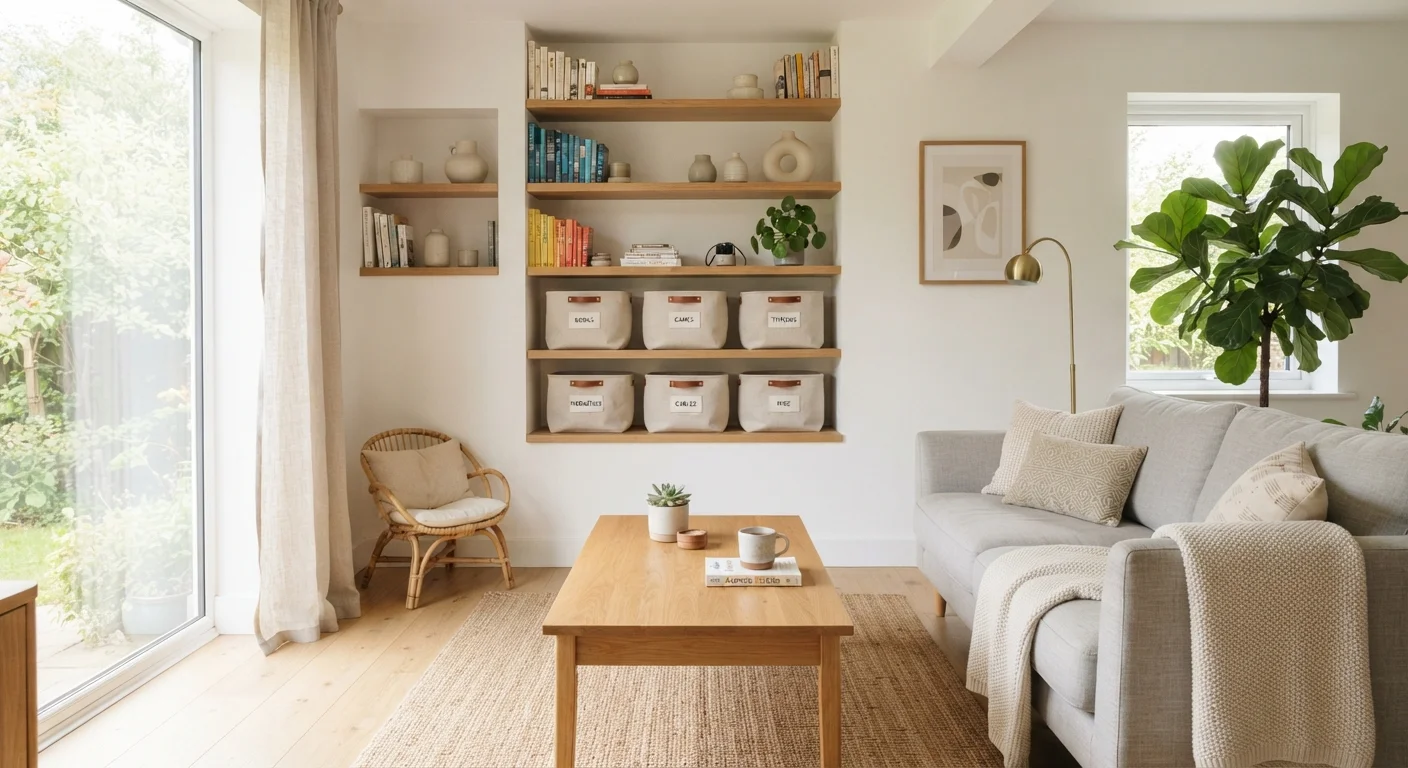
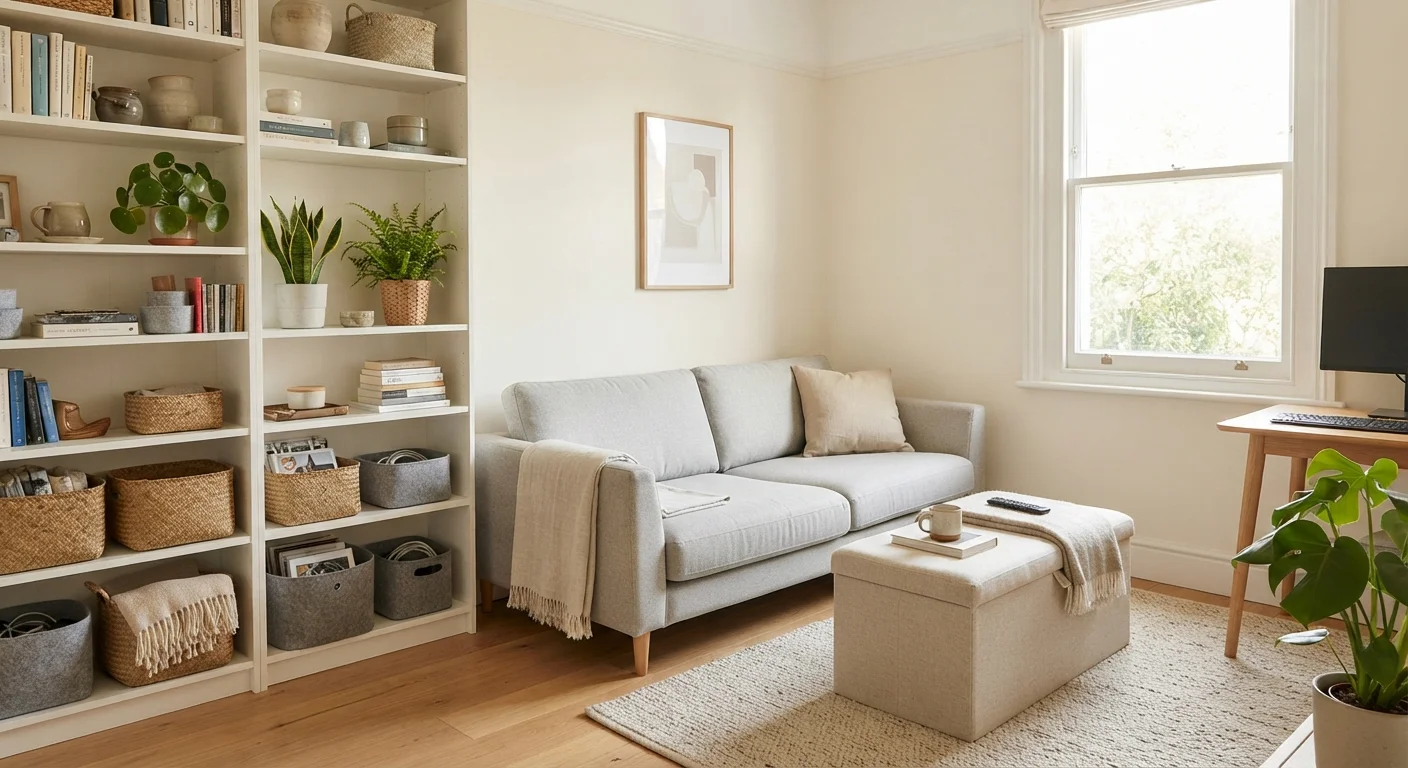
Storage Bins or Baskets
Provide designated homes for grouped items once you've decided what to keep.
Label Maker or Masking Tape and Marker
Label bins, shelves, and containers so every household member knows where things belong.
Measuring Tape
Measure shelves, cabinets, and storage areas before purchasing any new organizers.
Room-by-Room Checklist
Work through these grouped items in whatever order suits your home. Check off each item as you go, and mark anything that needs a follow-up with a simple symbol or note.
Kitchen
Living Room
Bedrooms
Bathroom
Entryway & Mudroom
Storage Areas (Garage, Basement, Closets)
Don't Reorganize Before You Declutter
A common mistake is buying storage solutions before removing unwanted items. If you organize clutter, you're simply rearranging it. Always complete the donate-and-discard step in each room before deciding what storage you actually need. This also prevents wasted spending on bins and baskets that end up being the wrong size or quantity.
Once you've completed the audit, schedule a short follow-up for any rooms that felt overwhelming. Our article on decluttering without getting overwhelmed walks through a gradual, sustainable approach. To keep your results lasting, consider pairing this checklist with a seasonal decluttering routine every few months.
Dispose of Medications Safely
When clearing bathroom cabinets or storage areas, do not flush medications or toss them loose in the trash. Many communities offer drug take-back programs through pharmacies or local law enforcement. Check the FDA's guidance on safe medication disposal or search for a drop-off location near you before discarding any prescription or over-the-counter medications.
Maintaining Organization After the Audit
Completing a room-by-room audit is a strong foundation, but daily habits are what preserve the results. Assign a home to every object you keep - items without a designated place tend to become clutter again within weeks.
For rooms you use as workspaces, the stakes are higher. A cluttered home office, for example, directly affects focus and output. Our guide to organizing a home office for focus and function covers the layout, storage, and routines that keep a workspace productive over time.
Schedule a lighter version of this checklist - perhaps just the kitchen and living areas - every season. Even a 15-minute reset per room can prevent the build-up that makes future audits feel like major projects.