Why Your Brain Can't Simply Ignore Clutter
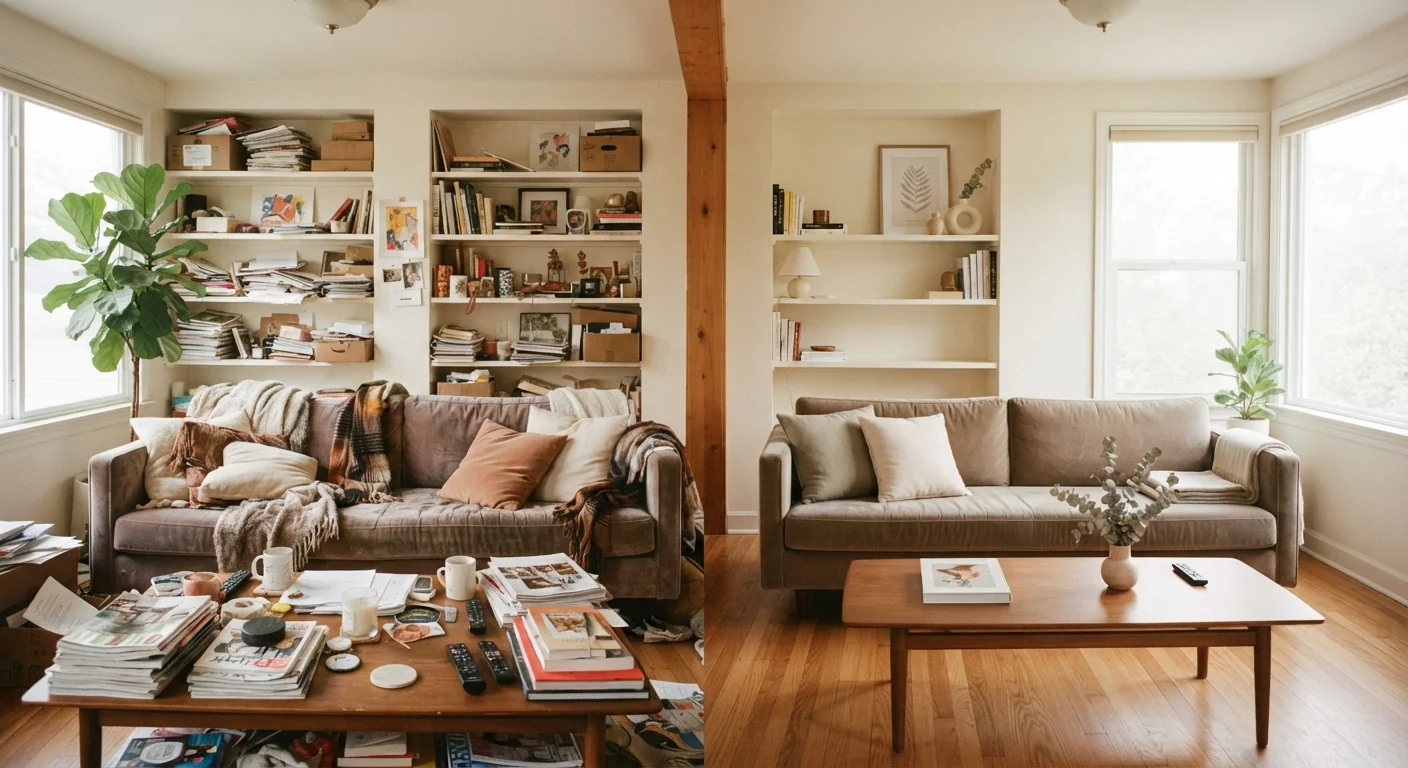
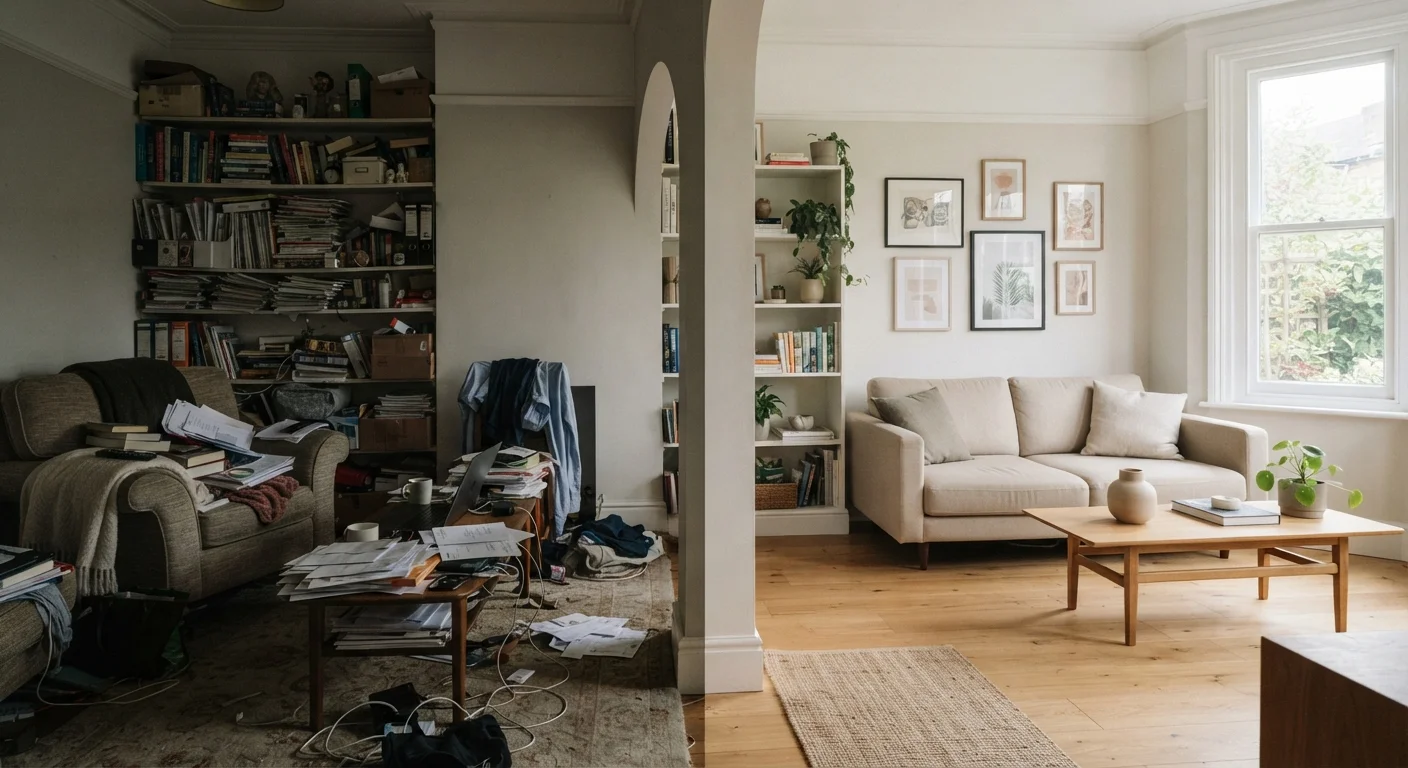
Your brain processes everything in your visual field simultaneously - it cannot selectively switch off background objects the way you might wish it could. Research in cognitive neuroscience has established that competing visual stimuli, such as a pile of unopened mail or a crowded countertop, draw on the same neural resources you need for focus and decision-making. Every item in view sends a low-level signal that demands attention, even when you're not deliberately looking at it.
This phenomenon is sometimes called visual noise - the cumulative effect of many unrelated objects occupying your visual space at once. For most people, this creates a subtle but persistent drain on mental energy. You may not notice it consciously, but your brain is working harder than necessary simply by being in a disorganized room.
Clutter Affects People Differently
Not everyone finds visual clutter distressing. Some individuals feel stimulated rather than drained by layered, object-rich environments, and research in this area reflects group-level averages rather than universal rules. Personal variation is real and valid. If a tidier space doesn't automatically feel calmer to you, your response is a legitimate one - understanding your own preferences matters as much as knowing the general principles.
Clutter, Stress, and the Body's Response
The link between clutter and stress is not merely a feeling - it has measurable associations. Research conducted by the UCLA Center on Everyday Lives of Families found a relationship between higher home object density and elevated cortisol levels (a primary stress hormone) in some participants. While the relationship is complex and shaped by multiple factors, the findings point to a real connection between disordered environments and the body's stress response.
A well-documented psychological mechanism called the Zeigarnik effect - first described by Soviet psychologist Bluma Zeigarnik - refers to the tendency of the human mind to keep unfinished tasks active in working memory, quietly nagging at attention until they're resolved. A cluttered space is, in many ways, a physical record of unresolved tasks, and the brain registers it as exactly that. See how disorganization costs more than just peace of mind for a broader look at these downstream effects.
The Hidden Mental Burden of Deferred Decisions
Clutter is often described by organizational psychologists as a collection of deferred decisions - each out-of-place object represents a choice not yet made. The stack of books on the stairs, the miscellaneous cables in the junk drawer: each one quietly asks, "What are you going to do with me?" Across an entire home, these micro-decisions accumulate into decision fatigue, a well-documented cognitive phenomenon in which the quality of judgment declines after prolonged mental effort.
This helps explain why clearing even a small area can produce a disproportionate sense of relief. Resolving a cluster of deferred decisions - even minor ones - frees mental bandwidth you didn't fully realize was occupied. If you're unsure where to begin, home organization for beginners offers a structured, low-pressure starting point.
Putting the Psychology to Work in Your Home
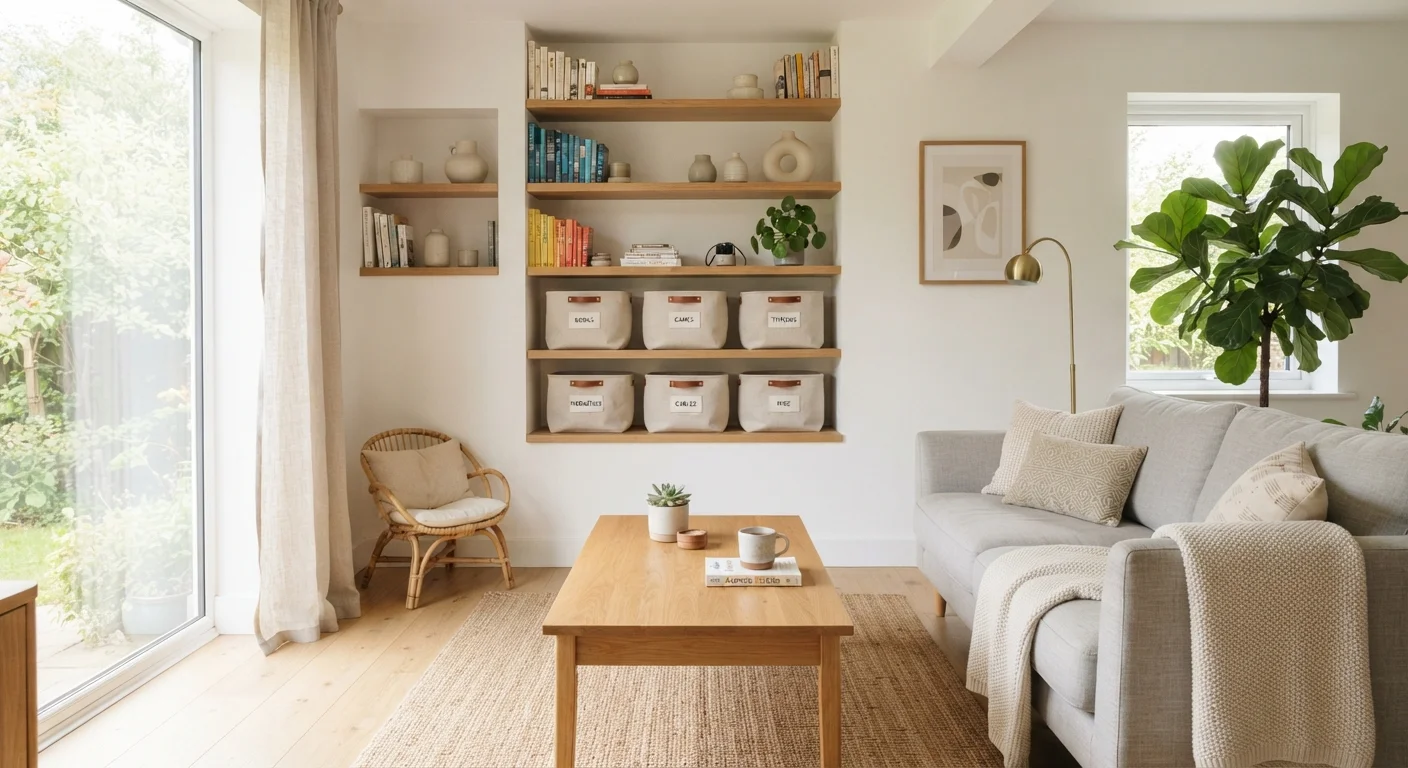
Understanding the cognitive reasons clutter feels overwhelming can shift how you approach organization. Rather than treating tidying as an aesthetic preference or a reflection of your character, you can reframe it as cognitive maintenance - a practical step toward reducing unnecessary mental load so your attention is available for what actually matters.
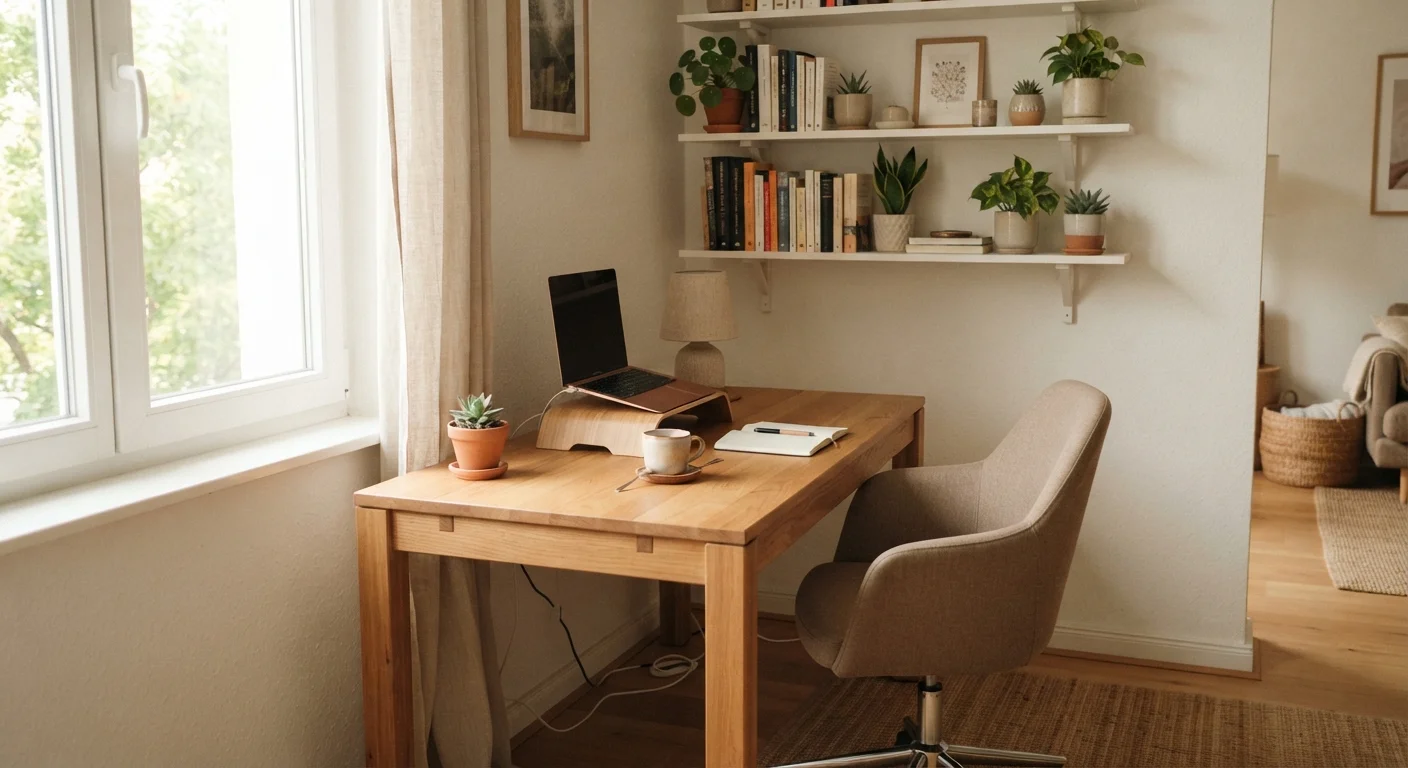
Start with the areas where you spend the most concentrated time. Clutter in a workspace carries an especially high cognitive cost - organizing a home office for focus and function addresses that specific environment in depth. If the overall scale of the task feels daunting, decluttering a home without getting overwhelmed walks through a gradual approach designed to build momentum without burning out.
Target High-Traffic Spaces First
Begin decluttering efforts in the rooms you move through most - the kitchen, entryway, or bedroom. Because you encounter these spaces repeatedly throughout the day, reducing visual noise there has the largest and most immediate impact on daily stress levels. Even clearing a single flat surface at a time can produce a noticeable shift in how a space feels to be in.