What Are Stackable Credentials?
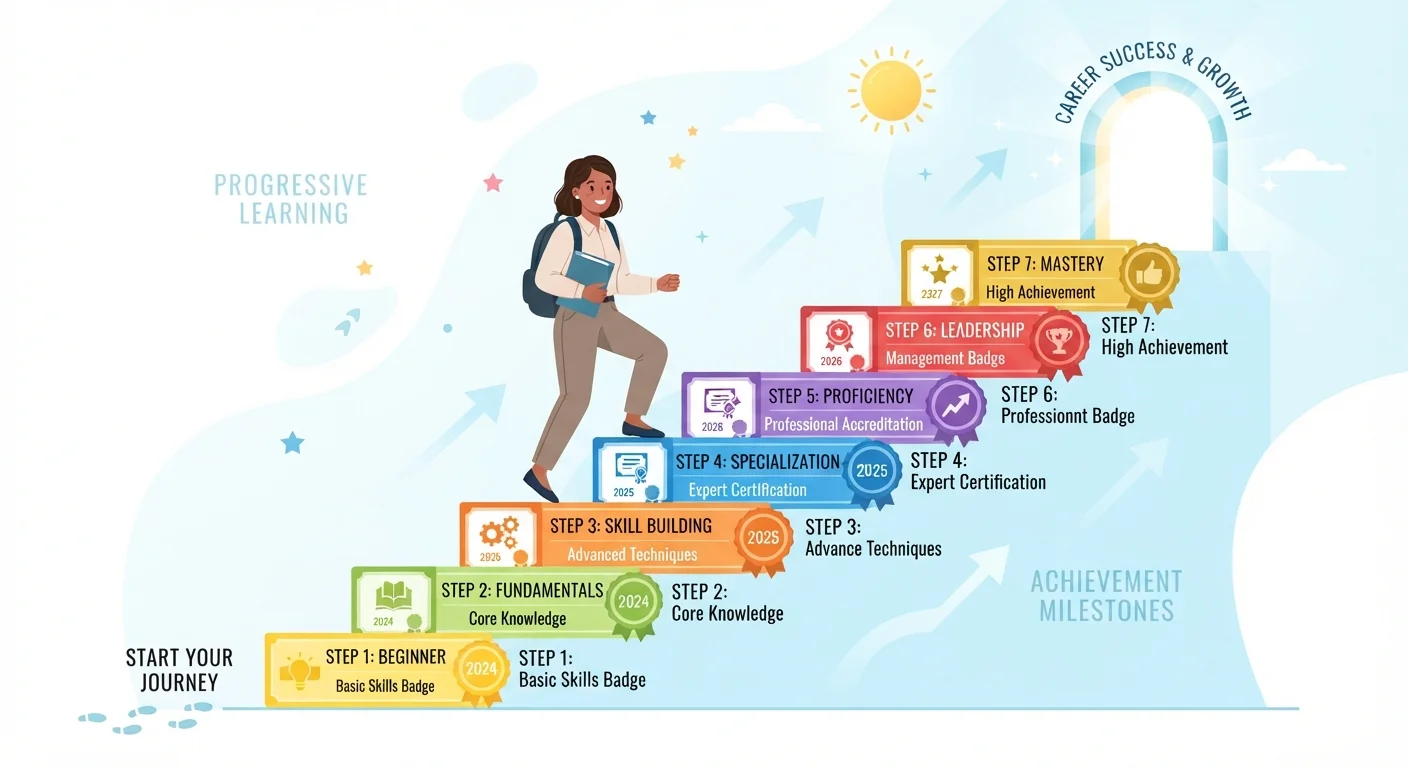
A stackable credential is a short-term certificate, certification, or licensure that is intentionally designed to connect to the next level of learning. Rather than treating each qualification as a standalone achievement, stackable credentials form a sequence - each one building on the skills and knowledge of the one before it.
Stackable credential
A short-term certificate or certification designed to connect sequentially to higher credentials, allowing learners to progress step by step toward a career goal.
Articulation agreement
A formal arrangement between two educational institutions that allows credits or credentials earned at one institution to count toward a program at another.
Prior learning assessment (PLA)
A process through which a college or institution evaluates skills and knowledge a student already has - often from work experience - and may award academic credit for them.
Workforce development program
A government- or institution-run initiative that provides training, credentials, and job placement support, often targeted at in-demand occupations in a region.
Career pathway
A structured sequence of education, training, and work experiences that prepares an individual to advance within a specific occupation or industry over time.
Think of it like a structured career ladder. An entry-level healthcare worker, for example, might start with a basic patient care aide certificate, then add a phlebotomy certification, then pursue a medical assistant credential, working toward an associate degree in nursing - all while remaining employed in the field. Each step is valuable on its own and also positions the learner for the next.
Stackable pathways are commonly offered through community colleges, workforce development programs, and industry associations. They are particularly well-established in fields like healthcare, information technology, advanced manufacturing, and business administration. For a broader look at how different credential types compare in the job market, see how employers interpret credentials.
Why Stackable Credentials Work for Adult Learners
Adult learners - especially those balancing jobs, family responsibilities, and financial constraints - often cannot step away from work to pursue a multi-year degree. Stackable credentials address this reality directly. Each individual credential can be completed in a compressed timeframe, which means learners can begin applying new skills and qualifying for better roles without waiting years for a diploma.
There are several reasons this model is particularly well-suited to working adults:
- Faster return on learning investment: A credential completed in three months can open a door to a promotion or new job much sooner than a two-year program.
- Lower upfront cost: Shorter programs generally cost less, reducing financial risk at each stage.
- Flexibility: Many stackable programs are offered in the evenings, online, or in hybrid formats designed around working schedules.
- Momentum: Earning a credential every few months sustains motivation in a way that a distant graduation date often cannot.
If you are managing the logistics of learning while working, returning to school as a working adult offers a practical framework for balancing those demands.
Check for Employer Tuition Support First
Before paying out of pocket, ask your current employer whether they offer tuition reimbursement or professional development funding. Many companies support credential programs that are relevant to your current role, even if the skills apply more broadly. Some workforce development grants and community college scholarships are also specifically designed for working adults - your institution's financial aid office is the best starting point.
How to Sequence Your Credentials Strategically
The real power of stackable credentials comes not from accumulating certificates at random, but from building a deliberate sequence aligned to a specific career target. Without a clear pathway, you risk spending time and money on credentials that do not connect - leaving you with a collection of qualifications rather than a cohesive professional profile.
A practical approach to sequencing involves four steps:
- Define your career target: Identify the role or industry segment you want to reach within three to five years. Research current job postings to understand what qualifications employers actually list.
- Map the pathway backward: Work from that target role back to your current position. Identify what credentials, skills, and experience appear at each rung of the ladder between where you are and where you want to be.
- Verify articulation agreements: If you eventually want a degree, confirm with your institution which certificates stack into college credit. Not all programs carry transfer credit, so this check is essential before enrolling.
- Align each credential to a tangible outcome: Every certificate you pursue should either qualify you for a specific job, a pay increase, or a prerequisite for the next credential. If you cannot identify that link, reconsider whether the credential belongs in your pathway.
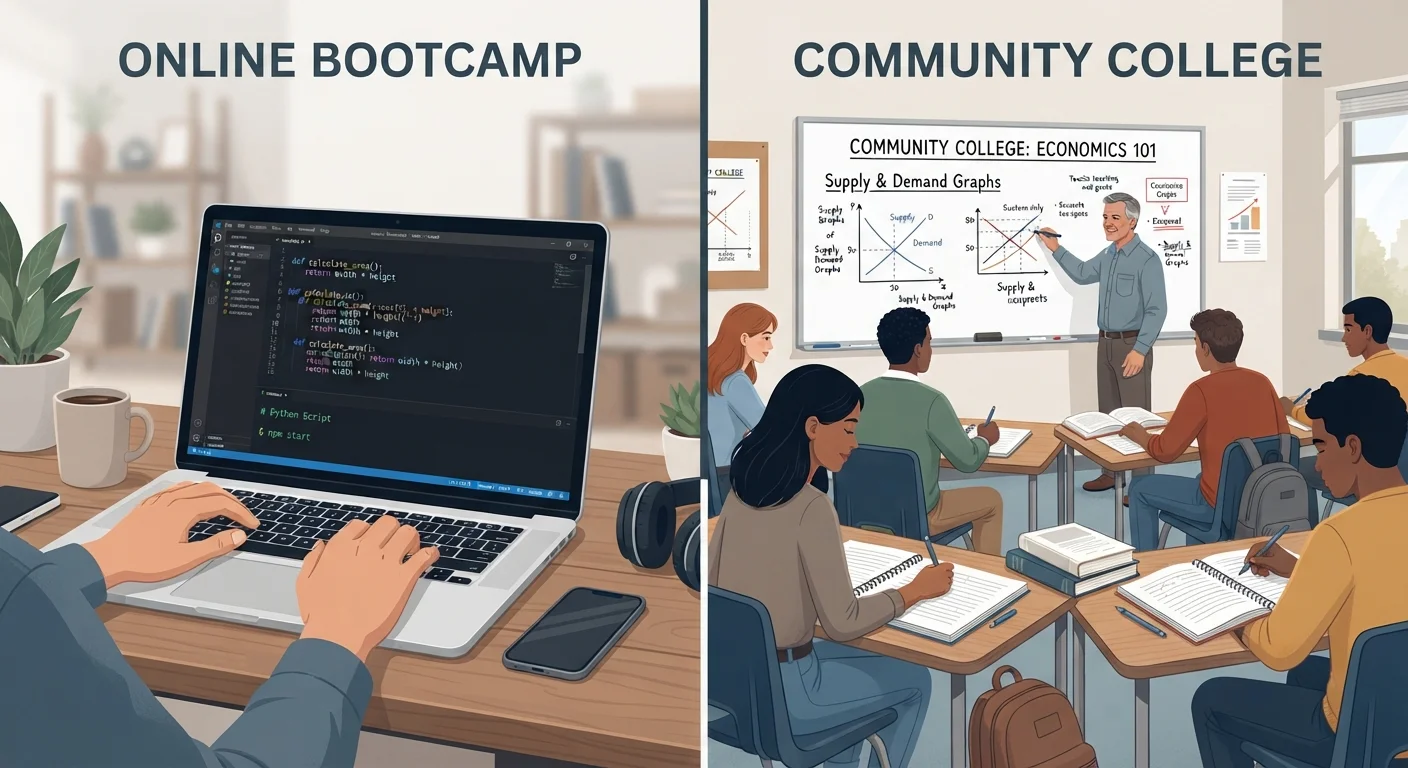
For a side-by-side comparison of program formats that often appear in stackable pathways, bootcamps versus community college certificates can help you choose between delivery options.
Common Pitfalls to Avoid
Stackable credentials are a sound strategy when applied thoughtfully - but there are several common mistakes that can undermine the investment.
Credential Quality Varies Significantly
Not every certificate program is built equally, and some are not recognized by employers in your target field. Before investing time and money, verify that the issuing body is recognized within your industry - whether that is a professional association, a licensed institution, or an employer consortium. A credential from an unrecognized provider may not signal competence to the employers you want to reach.
- Choosing credentials by convenience, not market signal: Not every online certificate carries weight with employers. Before enrolling, research whether hiring managers in your target field recognize the issuing organization.
- Stacking without a destination: Collecting certifications without a defined career goal produces a cluttered résumé, not a clear professional narrative. Sequence with intention.
- Ignoring soft skills: Technical credentials open doors, but advancement typically depends on communication, collaboration, and problem-solving. professional competencies that move careers forward explains why these matter alongside technical credentials.
- Assuming all effort produces progress: Time spent on coursework does not automatically translate to career movement. where professional development goes wrong identifies the patterns that stall learners despite consistent effort.
Getting Started: Your First Steps
Beginning a stackable credential pathway does not require a large upfront commitment. The first step is simply gathering information before spending any money or enrolling in any program.
Start with these concrete actions:
- Talk to people already in your target role. Informational interviews with practitioners reveal which credentials actually matter on the job versus which ones look impressive on paper but go unnoticed.
- Contact your local community college's workforce development office. Many have advisers specifically trained to map stackable pathways for working adults in your region.
- Check your state's workforce agency website. Many states publish approved credential lists and funding programs tied to in-demand occupations.
- Assess your current credentials honestly. Prior learning assessments (PLAs) offered by some institutions can award credit for existing skills and work experience, potentially shortening your pathway.
Building sustainable learning habits alongside formal credentials is also important - building a learning habit that sticks offers practical guidance on maintaining consistency. And if you are exploring which format of learning suits your life best, formal courses, self-study, or mentorship breaks down the trade-offs clearly.
Stackable credentials reward patience and planning. One well-chosen certification, followed by another and another, compounds into a career trajectory that a single degree alone might never produce.