Reading the Tail: Your Cat's Emotional Barometer
The tail is the first place experienced cat owners look when assessing mood. A tail held high and vertical - especially with a slight curl at the tip - is a confident, friendly greeting. Cats that approach you or another cat this way are expressing goodwill. Add a quiver to that upright tail and the cat is actively excited to see you.
A tail tucked low or wrapped tightly around the body signals anxiety or submission. A tail puffed to twice its normal width (the 'bottle brush' posture) means the cat is severely frightened and should be given immediate space. A slow, deliberate side-to-side lash, particularly while the cat is otherwise still, typically signals growing irritation - often seen during petting sessions that have gone on too long.
Watch the Whole Cat, Not Just One Signal
Individual signals like a flicking tail or dilated pupils mean very little on their own. Always assess tail position, ear angle, eye shape, posture, and context together. A cat with dilated pupils in dim light is simply adjusting to the environment; the same pupils in bright light during a tense encounter tell a different story.
Understanding the difference between a flicking tail and a gently waving tail can prevent many accidental scratches. The former is a warning; the latter can indicate relaxed alertness or mild interest.
Ears, Eyes, and Face: The Signals Right in Front of You
Cats have highly mobile ears that rotate independently, giving owners a real-time readout of attention and mood. Forward-facing ears indicate alertness or curiosity. Ears rotated sideways - sometimes called 'airplane ears' - suggest anxiety or mild discomfort. Ears flattened completely against the skull are a clear warning of fear or defensive aggression and should never be ignored during handling.
Eyes communicate just as powerfully. Large, dilated pupils can mean excitement, fear, or low light - context is everything. Slow, deliberate blinking directed at you signals relaxation and trust. Researchers have found that humans who return a slow blink tend to elicit positive responses from cats, suggesting it functions as a mutual trust cue.
Eye Contact Means Different Things to Cats
Prolonged, unbroken eye contact between cats is typically a dominance or threat display. When interacting with an unfamiliar cat, a soft gaze combined with slow blinking appears more welcoming than sustained direct staring. Understanding this distinction can make introductions with new cats significantly calmer.
Prolonged, unbroken eye contact between cats is typically a dominance or threat display. When interacting with an unfamiliar cat, a soft gaze combined with slow blinking appears more welcoming than sustained direct staring.
For more on separating feline fact from fiction, see common cat health myths veterinarians regularly correct.
Posture and Touch: What the Whole Body Is Saying
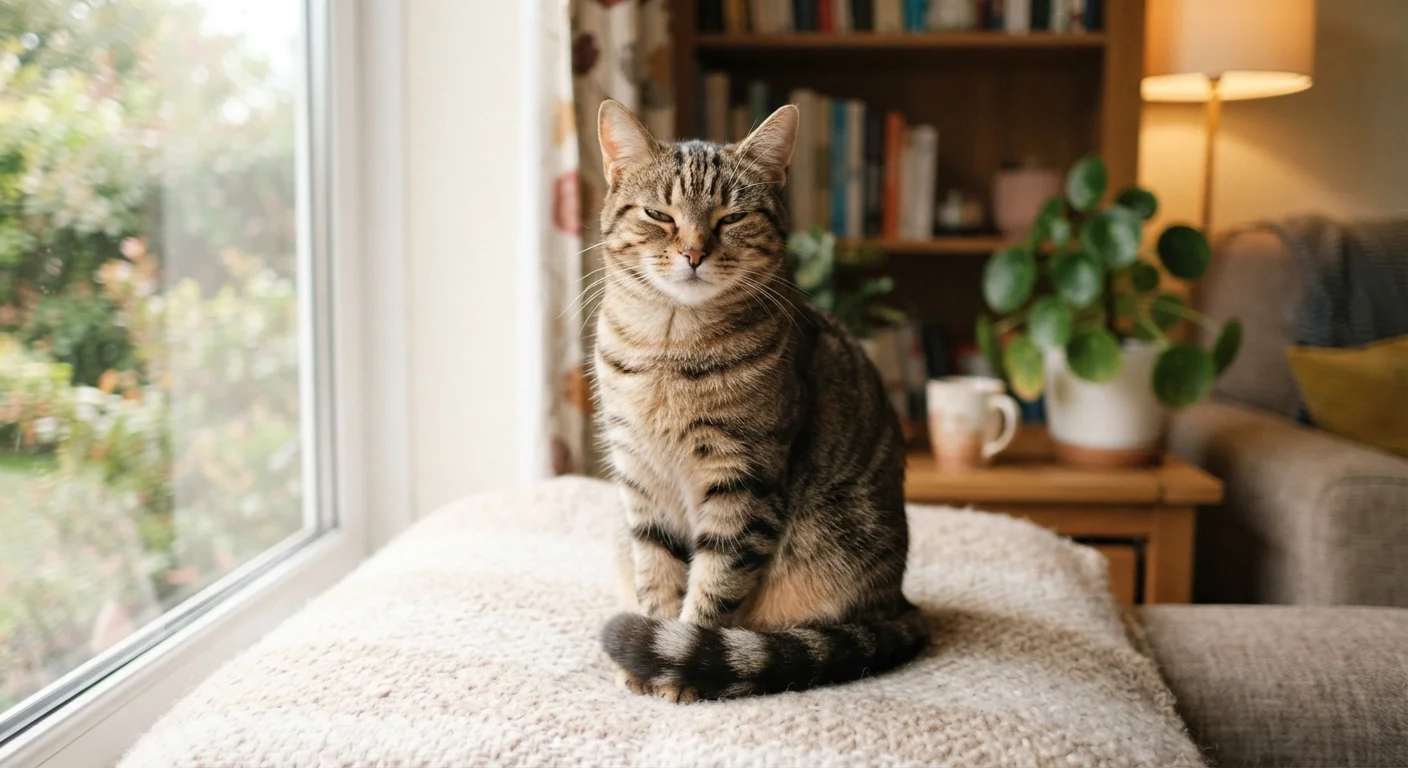
A relaxed cat typically holds a loose, neutral posture - often sitting in a 'loaf' position with paws tucked under the body, or lying on its side. A cat that rolls onto its back in your presence is expressing significant trust; this is a vulnerable position, and the cat feels safe enough to take it. However, as noted by feline behavior specialists, belly exposure is not a universal petting invitation - many cats will react defensively if touched there.
An arched back paired with a puffed coat and sideways stance is classic fear-based defensive posturing, designed to make the cat look larger. A cat crouching low to the ground with a tense body and tucked head is either stalking prey or attempting to make itself invisible due to stress.
Headbutting - known as bunting - is an affectionate, trust-marking behavior. When a cat rubs its head or cheeks against you, it is depositing scent from facial glands, effectively claiming you as part of its social group. Kneading (the rhythmic pushing motion against a soft surface) is a comfort behavior rooted in kittenhood nursing.
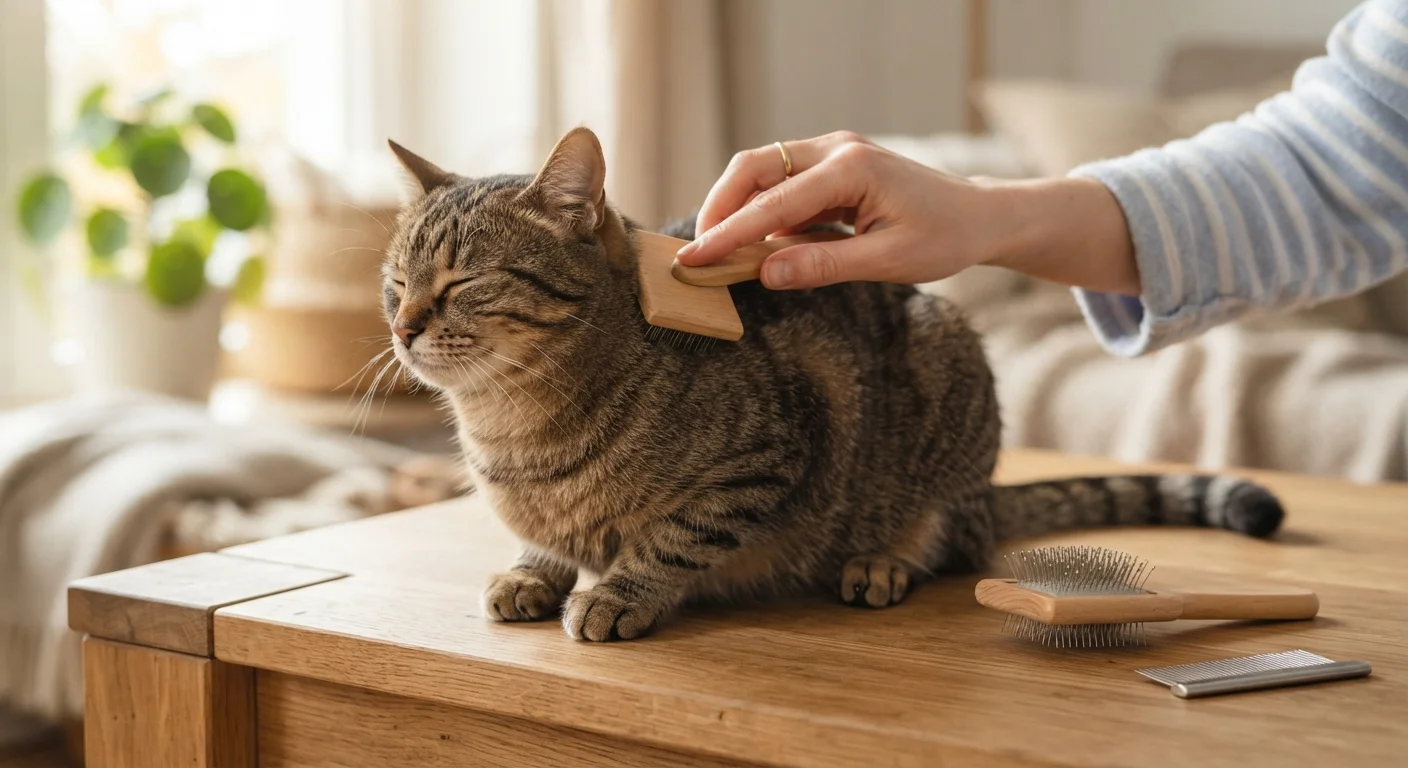
Body language also matters during grooming sessions. A cat that stiffens, twitches its skin, or flicks its tail while being brushed is signaling overstimulation. See our guide to grooming a cat at home for techniques that keep handling low-stress.
When Body Language Signals a Health Problem
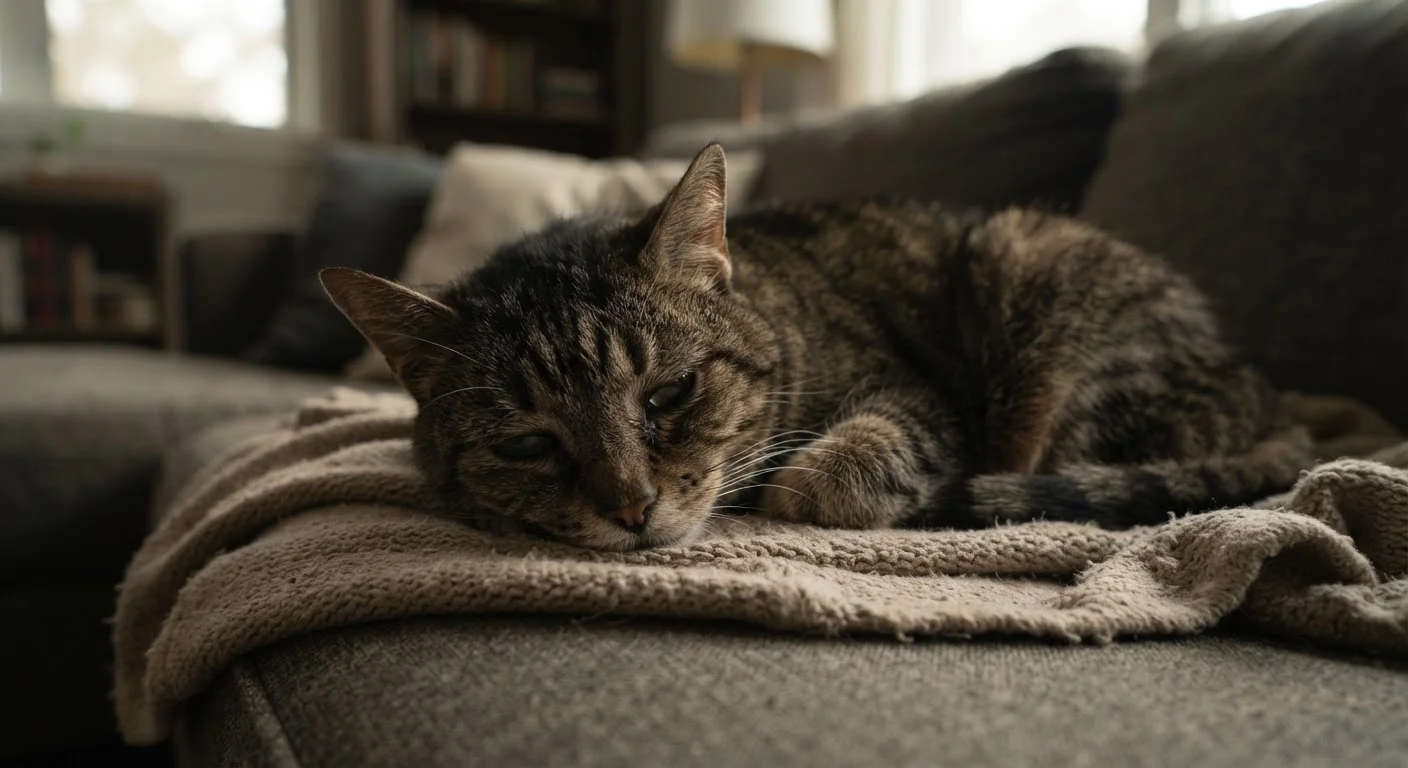
Behavioral changes are often the earliest visible indicator that something is medically wrong. Cats instinctively suppress signs of vulnerability, so by the time a change in body language becomes obvious, it can be significant. Watch for a persistently hunched posture, narrowed or asymmetrical eyes not explained by light levels, unusual hiding, reduced grooming, or sudden aggression in an otherwise calm cat.
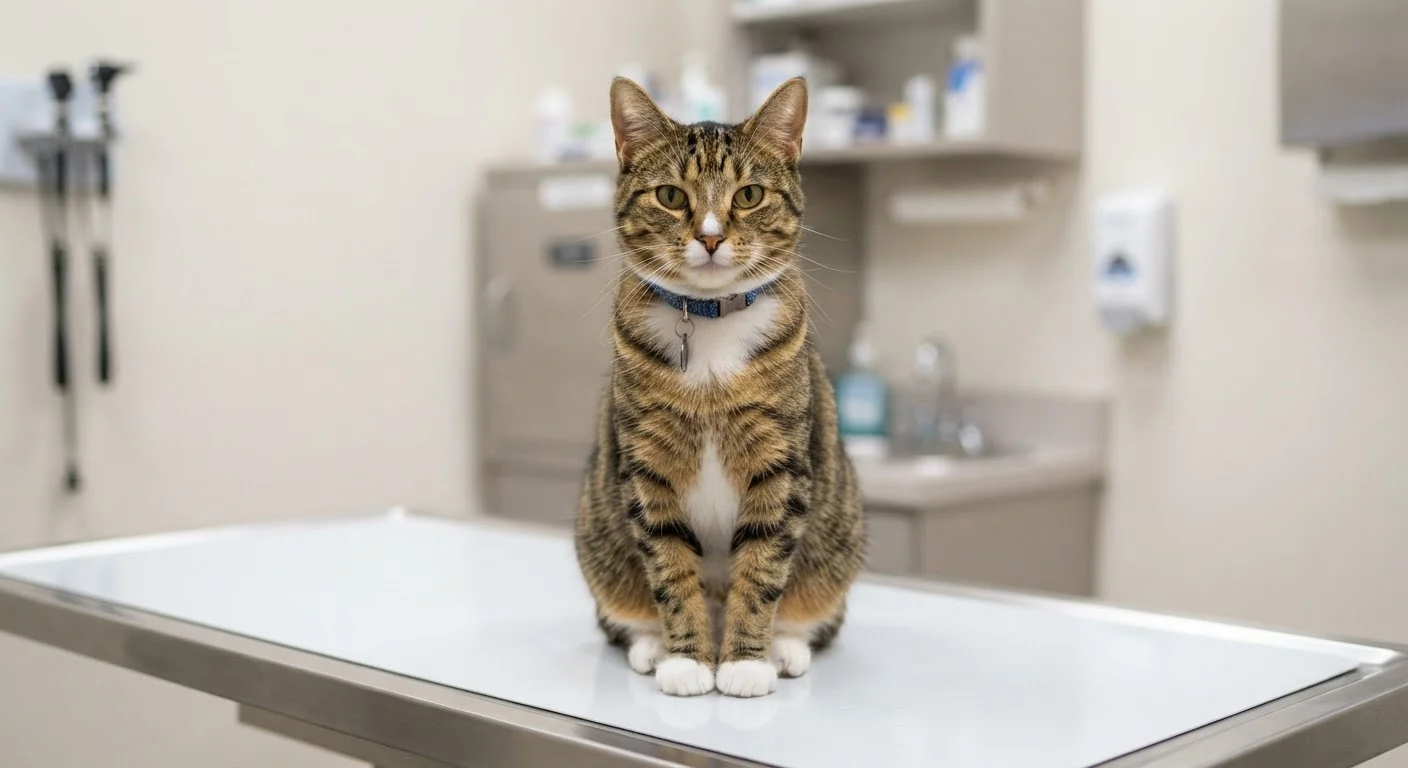
The feline grimace scale - a pain-assessment tool used by veterinary professionals - evaluates ear position, orbital tightening, muzzle tension, and whisker position to gauge discomfort. Even without using formal tools, owners familiar with their cat's baseline can often detect early deviation. If you notice sustained changes, consult a veterinarian. Our related reference on warning signs your cat may need a vet visit covers behavioral and physical changes that warrant prompt attention.
16+
Distinct vocalizations domestic cats use
Research on domestic cat communication suggests cats have evolved a much wider vocal repertoire with humans than with other cats, according to studies reviewed in Applied Animal Behaviour Science.
~25
Facial muscle movements cats can make
Cats possess roughly 25 distinct facial muscle movements, giving them significant capacity for nuanced facial expression, per comparative anatomy research cited in animal behavior literature.
2020
Year slow-blink research was published
A peer-reviewed study published in Scientific Reports confirmed that slow-blinking by humans elicited positive slow-blink responses in cats, supporting the gesture's role as a trust signal.
Knowing your cat's normal is foundational to catching problems early - and that knowledge starts with consistent observation of everyday body language.