Why Preventive Cat Care Gets Deferred - And Why That's Risky
Cats have a reputation for self-sufficiency, and in many ways they earn it. But that independence works against owners when it comes to health: cats are instinctively driven to mask pain and vulnerability. By the time a cat shows obvious signs of illness, a condition may have been progressing quietly for weeks or months.
Preventive care is the countermeasure. It creates regular checkpoints that surface problems early - when treatment options are broader and outcomes are generally better. The challenge is that many of the most important preventive tasks feel low-urgency right up until they aren't. Dental cleanings, annual bloodwork, parasite prevention, and weight monitoring are easy to defer indefinitely when a cat appears comfortable.
This checklist is designed to close that gap. It covers the care areas most commonly neglected by otherwise attentive owners, organized by how frequently each task should be completed. Use it to audit your current routine and identify where you may have drifted. For a broader foundation, see our complete new owner guide if you're just getting started with cat ownership.
Indoor Cats Still Need Parasite Prevention
A common misconception is that indoor cats are safe from fleas, ticks, and heartworm. In reality, fleas can enter on clothing, through window screens, or via other pets. Heartworm is transmitted by mosquitoes, which can get indoors. Talk to your veterinarian about appropriate year-round prevention for your cat's specific environment.
What to Check and How Often
The checklist below spans the full scope of feline preventive care - from daily habits to annual veterinary procedures. Items are grouped by category and tagged with priority levels. Working through each group will help you build a sustainable care schedule rather than reacting to problems after they surface.
Daily Care
Weekly Care
Monthly Care
Dental Health
Annual Veterinary Care
Ongoing Environmental Health
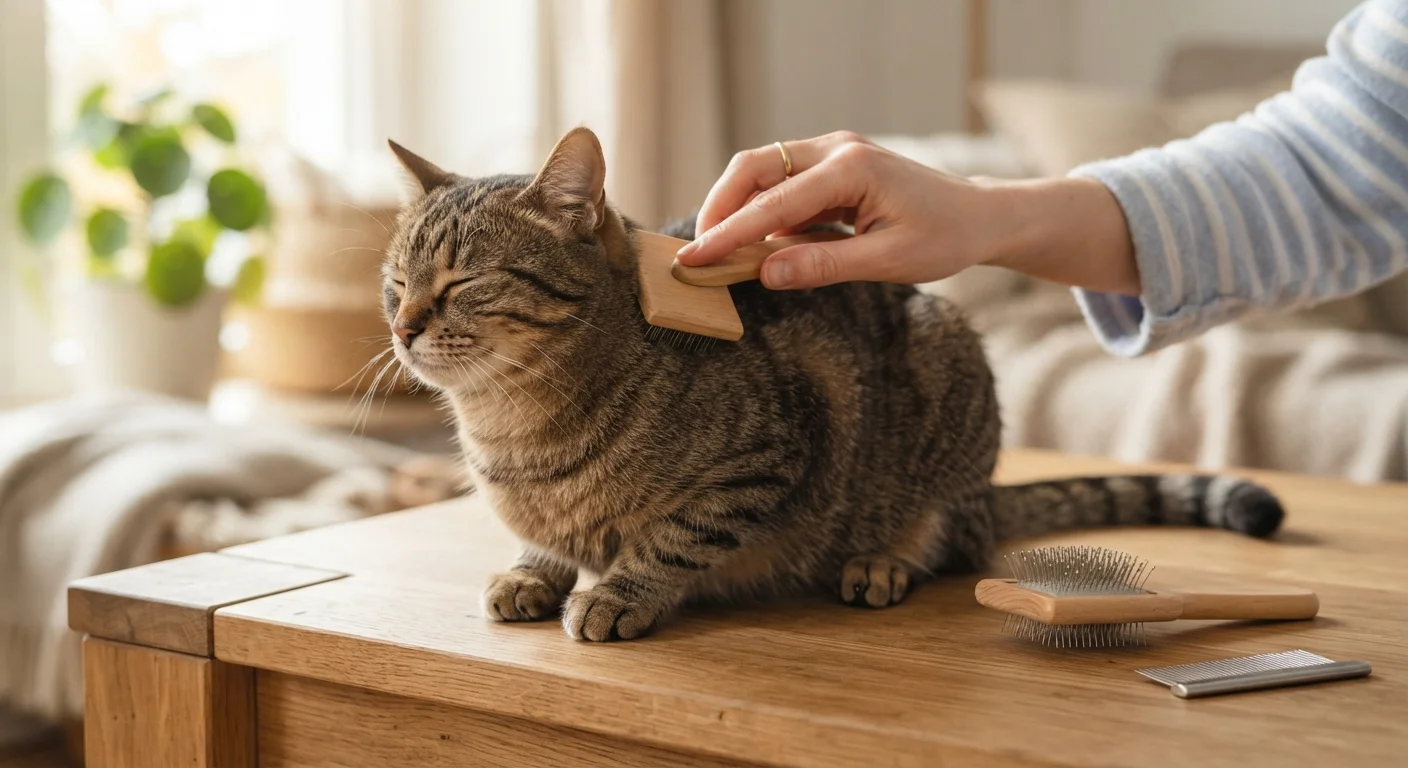
For owners managing grooming tasks at home, our home grooming guide covers brushing technique, nail trimming, and when a professional groomer is worth consulting.
Tools That Make Consistent Care Easier
You don't need an elaborate setup to stay on top of your cat's preventive care, but having the right basics on hand removes friction from daily and weekly tasks.
Cat-specific toothbrush and toothpaste
Required for home dental care - human toothpaste contains ingredients toxic to cats.
Soft slicker brush or deshedding comb
Used for weekly coat brushing to reduce hairballs, detect skin issues, and minimize shedding.
Guillotine or scissor-style pet nail clippers
Enables monthly nail trims at home to prevent overgrowth and paw pad injury.
Digital kitchen or pet scale
Allows regular weight monitoring to catch gradual gain or loss that can signal health changes.
Water fountain
Encourages consistent hydration, which supports kidney and urinary tract health in cats.
Veterinarian-recommended parasite prevention
Provides monthly protection against fleas, ticks, and heartworm - including for indoor-only cats.
Dental Health: The Area Most Owners Underestimate
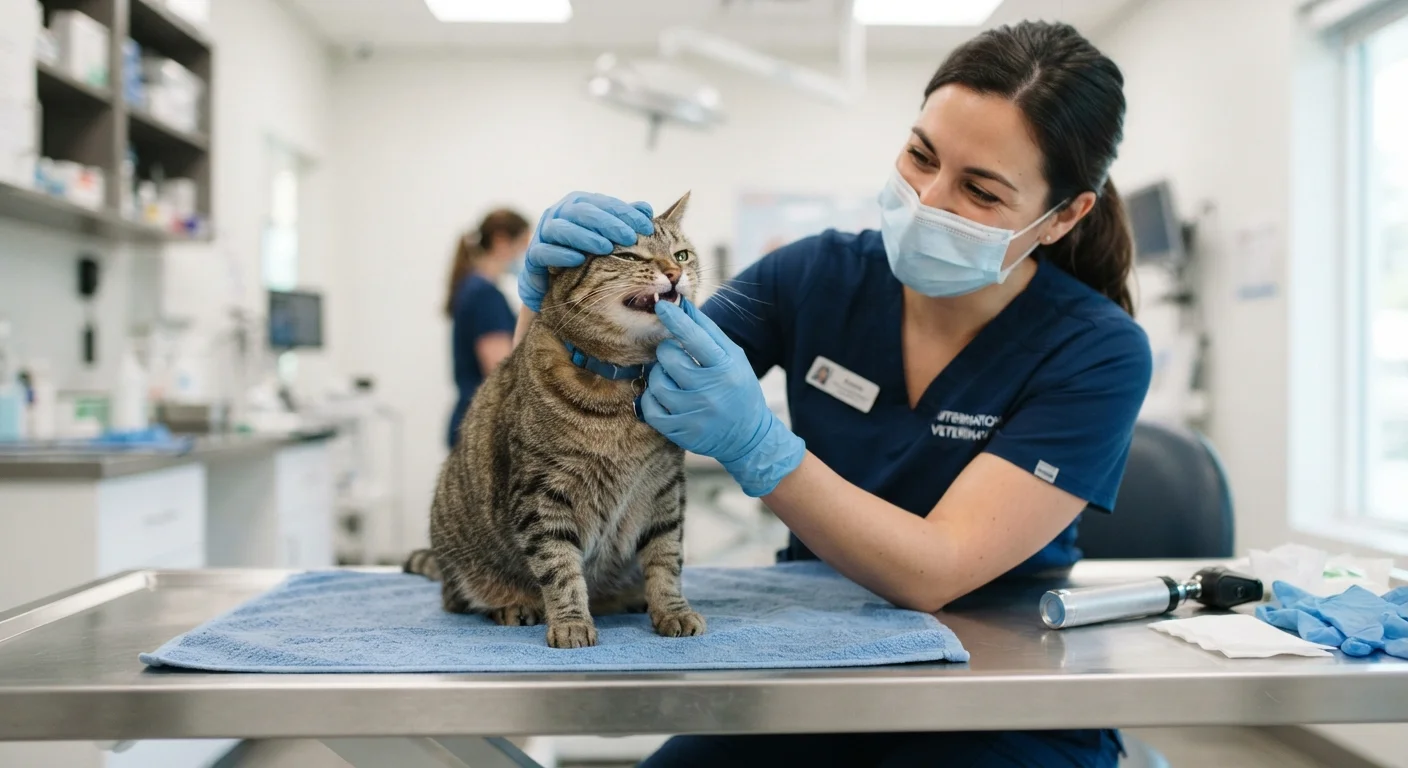
Periodontal disease is among the most prevalent health conditions in adult cats, yet many owners don't discover it until a veterinarian flags it during an exam. The disease progresses in stages: plaque hardens into tartar, gum tissue becomes inflamed, and bacterial infection can eventually spread to the jaw and, via the bloodstream, to organs including the kidneys and heart.
Daily tooth brushing with a cat-specific toothpaste is the most effective home intervention. Cats not accustomed to brushing require gradual desensitization - starting with finger contact on the gums, then introducing a soft brush over days or weeks. Dental diets, water additives, and enzymatic chews offer supplemental support but are not substitutes for brushing or professional cleanings. Your veterinarian can assess your cat's current dental status and recommend a cleaning schedule. For a useful comparison of how food format affects dental health, see our article on wet food versus dry food.
Never Use Human Toothpaste on Cats
Toothpastes formulated for humans typically contain fluoride and xylitol, both of which are toxic to cats. Even a small amount ingested during brushing can cause harm. Always use toothpaste specifically formulated for cats, available through veterinary offices and pet supply retailers.
Cats that resist all home dental care should still receive regular professional cleanings under anesthesia. These are the only way to fully scale tartar from below the gumline. If your cat shows any signs of oral discomfort - pawing at the mouth, dropping food, or reduced appetite - contact your veterinarian promptly. Our reference on warning signs that warrant a vet visit outlines additional symptoms to watch for.
This article provides general information about feline preventive care and is not a substitute for professional veterinary advice. Always consult a licensed veterinarian for guidance specific to your cat's health needs.