Understanding the Grain-Free Trend
Grain-free dog food grew sharply in popularity during the 2010s, largely driven by the assumption that grains are fillers or allergens that dogs evolved to avoid. The logic borrowed from human low-carb dietary trends - but canine nutritional science tells a more nuanced story.
Dogs are not wolves. Thousands of years of coevolution alongside humans have equipped domestic dogs with additional copies of the amylase gene, enabling them to digest starch far more efficiently than their wild ancestors. Research published in Nature confirmed this genetic adaptation, indicating that grains are a digestible and appropriate energy source for most dogs. For owners curious about how grain quality factors in, the broader concepts in whole vs. refined grains are also relevant to canine nutrition discussions.
| Criterion | Grain-Free Dog Food | Grain-Inclusive Dog Food |
|---|---|---|
| Carbohydrate source | Legumes, potatoes, tapioca | Rice, oats, barley, corn |
| Research track record | Limited long-term data | Decades of established research |
| DCM risk concern | Under FDA investigation | Not flagged in investigation |
| Appropriate for grain allergy | Yes, if allergy confirmed | Not suitable |
| Digestibility for most dogs | Generally good | Well established and high |
| Taurine considerations | Potential concerns with legume-heavy formulas | Generally not a concern |
The DCM Investigation: What We Know So Far
In 2018, the U.S. Food and Drug Administration (FDA) began investigating a possible association between grain-free diets and dilated cardiomyopathy (DCM) - a serious heart condition - in dogs. The agency received reports of DCM in breeds not typically predisposed to it, with a notable pattern: many affected dogs were eating grain-free foods high in legumes such as peas, lentils, and chickpeas, or potatoes.
As of the FDA's most recent public updates, the investigation has not established a definitive causal link, and the mechanism - if one exists - remains under study. Taurine deficiency has been proposed as one contributing factor, since certain legume-heavy diets may interfere with taurine synthesis or absorption. However, researchers have not ruled out other variables.
~10%
Dogs with food allergies attributable to grains
Veterinary dermatology literature consistently shows animal proteins - not grains - are responsible for the majority of canine food allergies.
500+
DCM cases reported to FDA linked to diet
The FDA received over 500 reports of diet-associated DCM between 2014 and 2019, many involving grain-free, legume-heavy formulas.
7x
More amylase gene copies in dogs vs. wolves
Research published in Nature found domestic dogs carry significantly more copies of the amylase gene, supporting efficient starch digestion.
The veterinary cardiology community has generally advised caution. The American College of Veterinary Internal Medicine issued a consensus statement encouraging discussion with veterinarians before feeding grain-free diets, particularly for at-risk breeds. This is an evolving area of science, and owners should follow guidance from their own vet rather than drawing firm conclusions from incomplete data.
Nutritional Profile Comparison
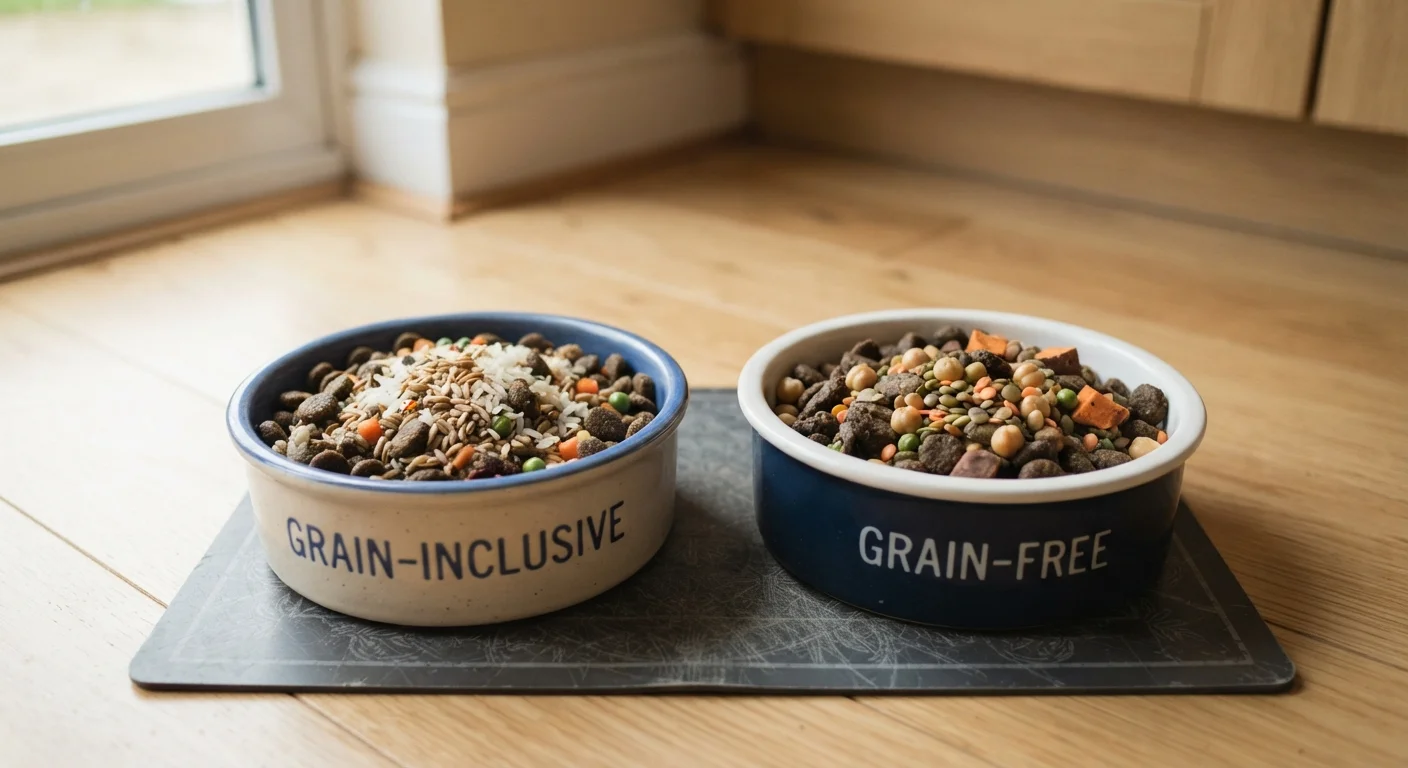
Grain-inclusive foods typically use ingredients like brown rice, oats, barley, or corn as carbohydrate sources. These whole grains contribute fiber, B vitamins, and minerals, and are well-tolerated by the vast majority of dogs. Corn, often dismissed as a filler, is actually a highly digestible source of energy and essential fatty acids when properly processed.
Grain-free formulas replace these with ingredients such as sweet potatoes, peas, lentils, or tapioca. While these aren't inherently harmful, they represent a shorter track record in commercial pet food, and the long-term nutritional implications - especially at the high inclusion rates used to displace grains - aren't fully characterized. Owners interested in broader dietary comparisons may also find our overview of raw vs. commercial kibble useful context.
Food Allergy Testing in Dogs
If you suspect your dog has a food allergy, the veterinary gold standard is a strict dietary elimination trial lasting 8-12 weeks, using a novel protein and carbohydrate source your dog has never eaten. Blood and skin tests for food allergies in dogs are generally considered unreliable by veterinary dermatologists. Always work with your vet to design and interpret an elimination trial properly.
True grain allergies in dogs are rare. According to veterinary dermatology research, the most common food allergens in dogs are animal proteins - beef, dairy, chicken, and lamb - not grains. Switching to grain-free food to address a suspected allergy, without a proper elimination diet trial, is unlikely to resolve the issue and may complicate diagnosis.
When Grain-Free May Be Appropriate
Grain-free diets are not universally harmful, and for a small subset of dogs - those with a confirmed grain allergy or specific intolerance identified through a veterinary elimination diet - avoiding grains may be medically warranted. In these cases, the choice of grain-free formula still matters: ingredient quality, overall amino acid profile, and taurine levels should all be considered in consultation with a veterinarian or veterinary nutritionist.
Dogs with certain gastrointestinal conditions may also benefit from modified-ingredient diets, but these decisions should be made case-by-case with professional oversight. If you have a senior dog requiring a dietary change, it's worth reviewing how nutritional needs shift with age before selecting any specialized formula.
This article provides general educational information about dog nutrition and is not a substitute for veterinary advice. Always consult a qualified veterinarian before making significant changes to your dog's diet.