Why Preparation Matters More with Small Pets
Small companion animals - rabbits, guinea pigs, birds, hamsters, and their kin - are often assumed to be low-maintenance alternatives to cats and dogs. In practice, many have highly specific environmental, dietary, and social needs that can be easy to overlook without deliberate preparation. A rabbit not provided with unlimited hay, or a guinea pig without a companion and sufficient space, can develop serious health and behavioural problems within weeks.
This checklist is designed to help you work through the four most critical preparation areas before your pet arrives: research and decision-making, veterinary access, housing, and home safety. If you are still weighing your options, our comparison of guinea pigs and rabbits can help you identify which species fits your lifestyle. For a sense of how small-pet preparation differs from bringing home a dog, see our guide to bringing a dog home for the first time.
Non-stick cookware fumes can kill birds
Polytetrafluoroethylene (PTFE), found in many non-stick coatings, releases odourless fumes when overheated that are rapidly fatal to pet birds. If you keep a bird, remove non-stick cookware from your kitchen or ensure the bird's living area is completely separated and thoroughly ventilated. Scented candles, air fresheners, and aerosol sprays pose similar respiratory risks.
Not all vets treat small exotic animals
Many general veterinary practices do not accept rabbits, guinea pigs, or birds as patients. Waiting until your pet is ill to search for a qualified vet wastes critical time. Call ahead, confirm the practice's experience with your species, and keep the clinic's emergency contact on hand from day one.
What You'll Need Before Day One
Having the right supplies in place - fully set up and tested - eliminates the stress of scrambling once your pet is already home. Use the tool list below as your shopping framework, then cross-reference with the species-specific notes in the checklist.
Appropriately Sized Enclosure
Provides a safe, species-correct living space that supports natural behaviours and physical health.
Paper-Based or Fleece Bedding
Creates a comfortable, low-irritant substrate for rabbits and guinea pigs; avoid cedar or pine.
Heavy Ceramic Food Bowls and Water Bottle
Delivers stable, hygienic food and water access that resists tipping and is easy to sanitise.
Species-Appropriate Enrichment Items
Reduces boredom and stress by encouraging natural foraging, chewing, or exploration behaviours.
Vitamin C Supplement (guinea pigs only)
Prevents scurvy by supplementing a nutrient guinea pigs cannot produce on their own.
Small-Animal First Aid Reference
Helps owners recognise early illness signs and know when to seek immediate veterinary attention.
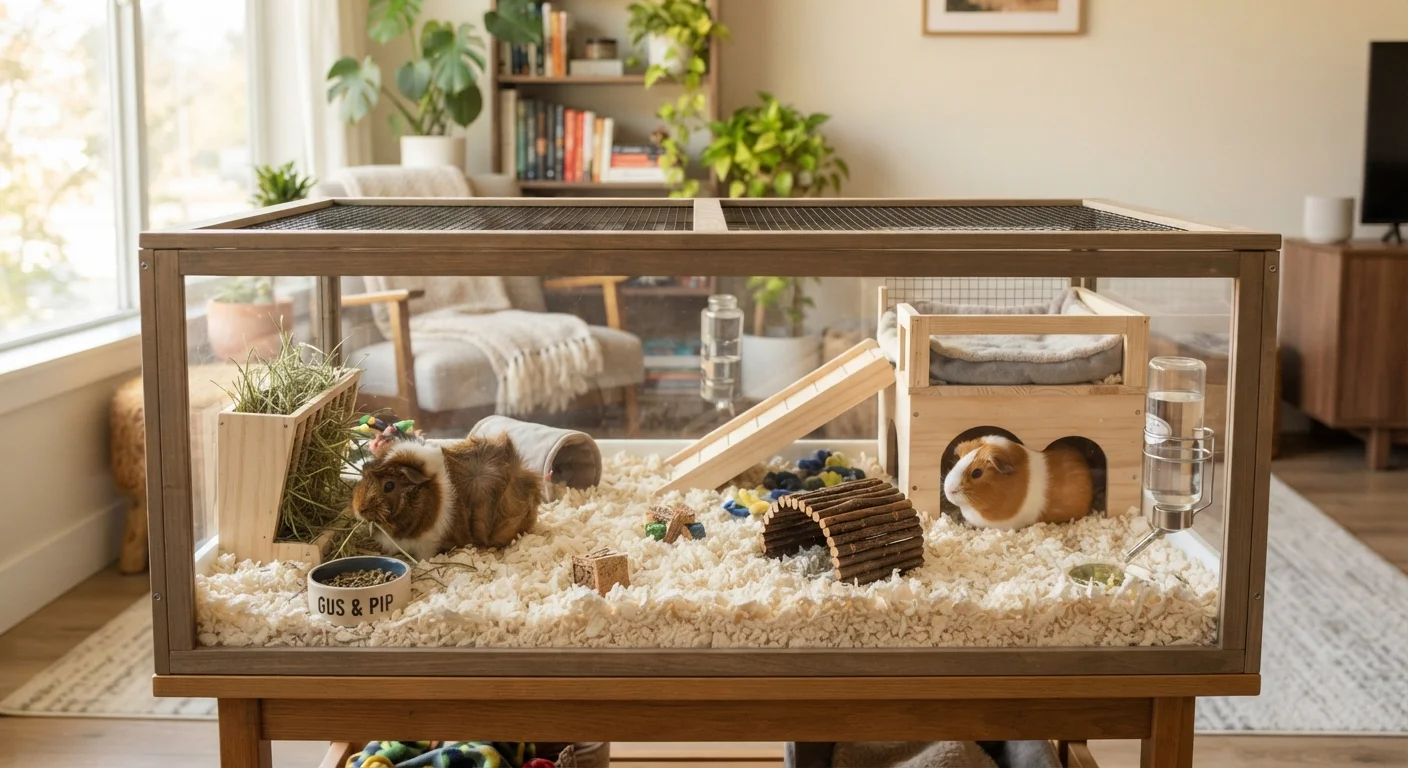
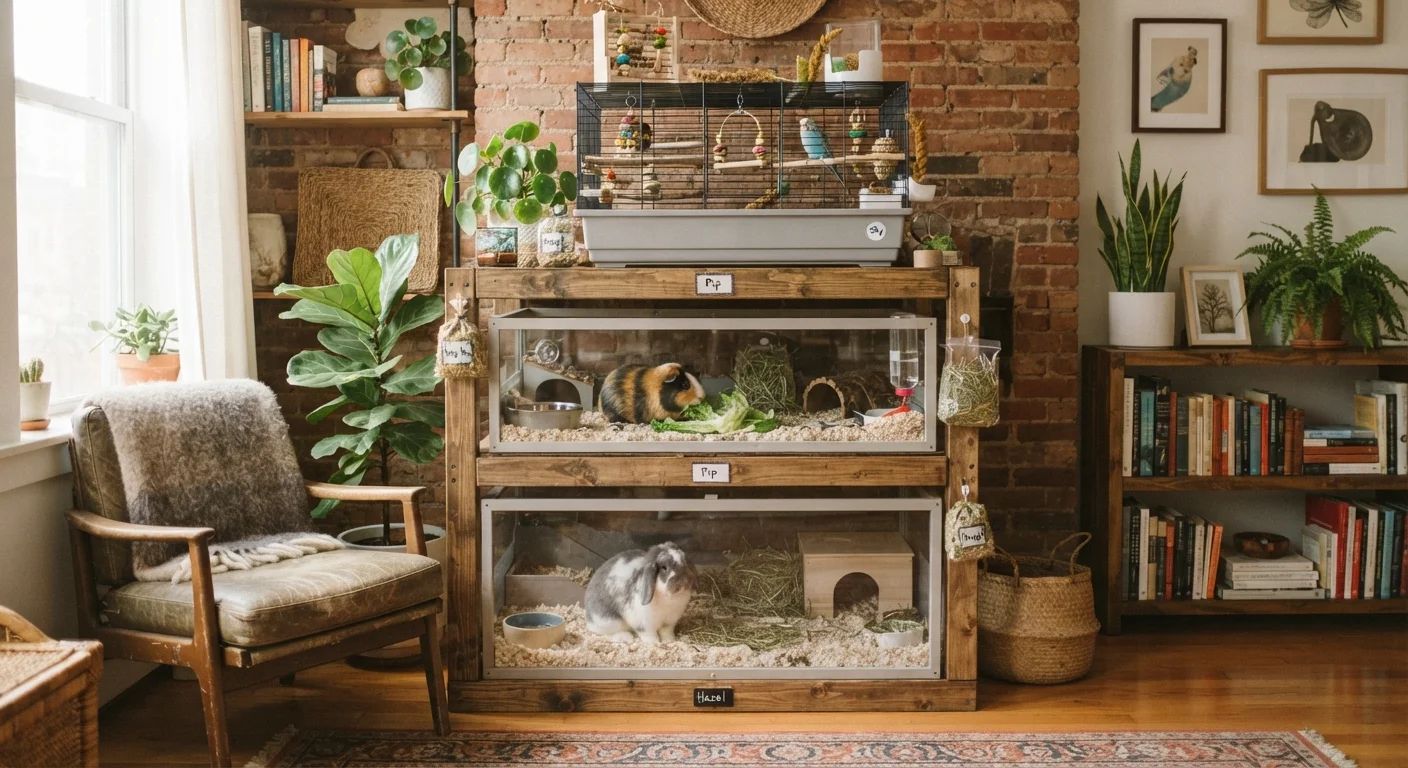
Housing setup deserves particular attention. Enclosure size is one of the most common places new owners underestimate their pet's needs. For a detailed breakdown of what guinea pigs specifically require, our guide to guinea pig housing, space, and bedding covers minimum dimensions, safe materials, and enrichment essentials.
The Complete Preparation Checklist
Work through each group below systematically. Items marked must are non-negotiable for your pet's health and safety. Should items are strongly recommended and will meaningfully improve your pet's welfare. Complete as many as possible before pick-up day.
Research & Decision-Making
Veterinary Care
Housing & Enclosure Setup
Diet & Supplies
Home Safety
Daily Care Planning
Guinea pigs require daily vitamin C
Unlike most mammals, guinea pigs cannot synthesise vitamin C and must obtain it through diet every day. Deficiency causes scurvy, which leads to joint pain, lethargy, and can become life-threatening. Fresh leafy greens such as romaine lettuce and bell pepper are excellent dietary sources; discuss supplementation options with your exotic-animal veterinarian.
Once your small pet is settled in, understanding their social behaviour becomes the next priority. Guinea pigs, for instance, are social animals that generally do better in pairs, while hamsters are typically solitary. Our article on socialising small pets explains the social dynamics that work - and those that don't - across common species.
This article provides general educational information about small pet care and is not a substitute for advice from a qualified veterinarian familiar with your specific animal.