Why Enclosure Size Matters More Than Most Owners Expect
One of the most common mistakes new owners make is choosing an enclosure based on the animal's physical size rather than its behavioral needs. Guinea pigs are active, exploratory animals that naturally roam several miles daily in the wild. Confining them to a small cage doesn't just limit movement-it directly contributes to obesity, muscle weakness, boredom-related behaviors, and stress.
The widely cited minimum is 7.5 square feet of usable floor space for one guinea pig, and 10.5 square feet for a pair. Vertical space does not substitute for floor space-guinea pigs are not climbers. Multi-level cages with ramps can supplement, but the ground-level footprint is what matters most.
Many enclosures marketed specifically for guinea pigs in pet retail settings fall below these minimums. A popular and welfare-conscious alternative is the C&C cage (constructed from storage cube grids and a coroplast base), which allows owners to build a custom, appropriately sized enclosure at a reasonable cost. Large plastic storage bins with ventilated lids are another DIY-friendly option. If you're still evaluating whether a guinea pig is the right pet, the starter's overview for small pet owners is a helpful starting point.
Measure Before You Buy or Build
Before purchasing or constructing an enclosure, calculate the usable floor area in square feet (length × width ÷ 144 if working in inches). Subtract space occupied by large fixed accessories. If the result is under 7.5 square feet for one guinea pig or 10.5 for two, size up. A habitat that looks large can still fall short once accessories are added.
Choosing and Managing Safe Bedding
Bedding performs three jobs: it cushions sensitive feet, absorbs urine, and controls odor. Not all materials do these equally well-and some common options carry real health risks.
- Paper-based bedding (unscented, processed paper fiber) is the most widely recommended option. It's highly absorbent, dust-low, and free of the aromatic compounds found in wood shavings.
- Fleece liners are a reusable fabric option that sits over an absorbent layer. They require more frequent washing but produce less waste and can be cost-effective over time.
- Kiln-dried aspen shavings are generally considered safe, though less absorbent than paper bedding. Avoid cedar and untreated pine entirely.
- Scented or dusty bedding of any kind should be avoided-guinea pigs have sensitive respiratory systems.
Bedding depth should be at least 2-3 inches to allow natural burrowing behavior and adequate moisture absorption. Spot-clean daily; do a complete change at least once per week.
7.5 sq ft
Minimum floor space for one guinea pig
Recommended by exotic-animal veterinarians and major guinea pig welfare organizations as the baseline for a single cavy's enclosure.
70-80%
Portion of diet that should be grass hay
Veterinary nutrition guidance consistently identifies unlimited timothy hay as the dietary foundation for adult guinea pigs.
65-75°F
Safe ambient temperature range
Guinea pigs are vulnerable to heat stress above 80°F and cold stress below 60°F; maintaining this range supports baseline health.
Essential Habitat Components Beyond the Enclosure
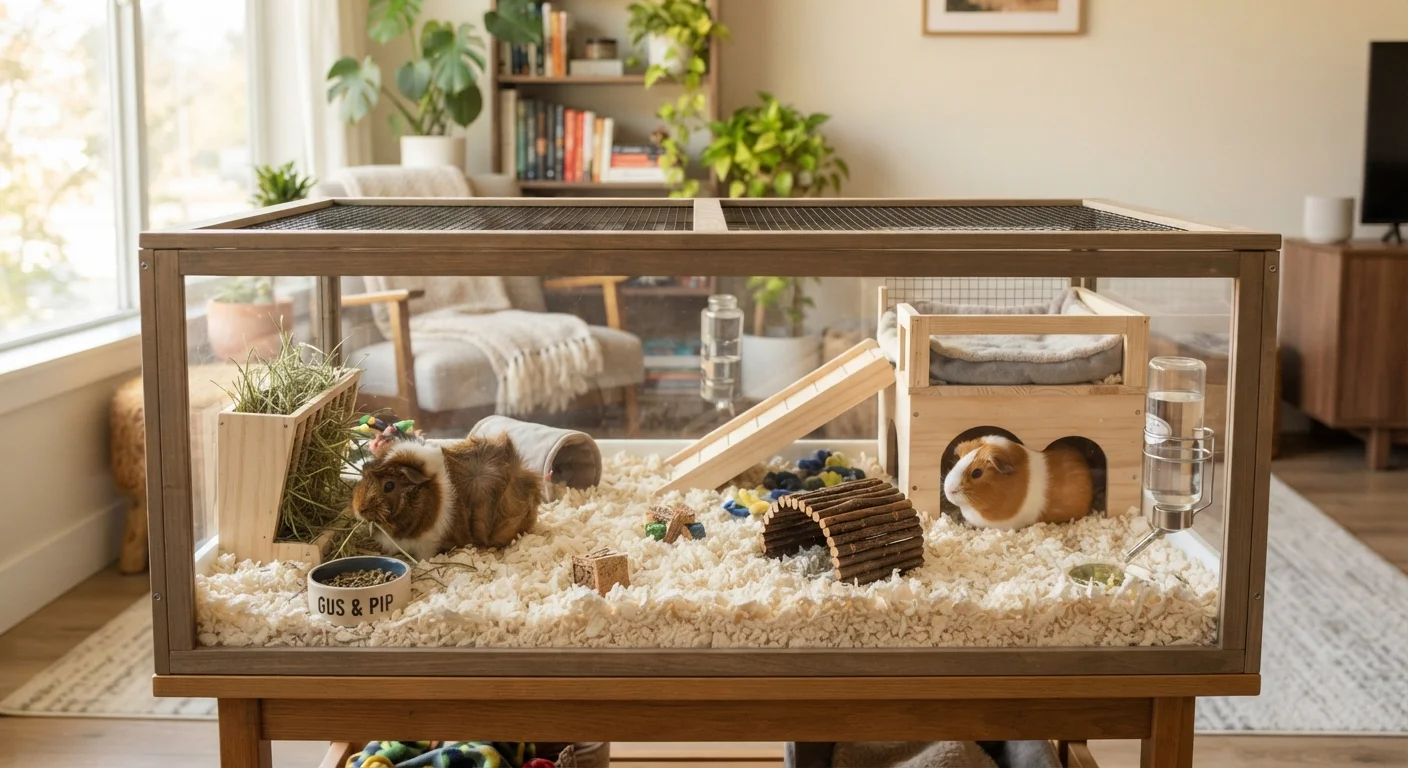
An appropriately sized cage with safe bedding is the foundation, but a complete setup includes several additional elements that support health and natural behavior.
Hideaways
Every guinea pig in the enclosure needs its own hide-a fully enclosed wooden or cardboard shelter where it can retreat when startled or seeking rest. Avoid plastic hides with poor ventilation. Wooden hides also serve as gentle gnawing surfaces.
Hay Rack or Mounded Hay
Unlimited timothy hay (or other grass hay appropriate for adult guinea pigs) must always be accessible. Hay accounts for approximately 70-80% of a guinea pig's diet and supports dental and digestive health. A hay rack keeps it off the bedding and reduces contamination.
Water Bottle or Heavy Bowl
Fresh water should be available at all times. Both sipper bottles and ceramic bowls work; bowls are more natural but require more frequent cleaning to prevent bedding contamination.
Food Dish
A heavy ceramic or metal dish is preferable to lightweight plastic, which guinea pigs can tip or chew. Keep pellet portions measured and supplement with fresh leafy greens daily.
For ideas on keeping your guinea pig mentally engaged within their space, see our guide on enrichment ideas for small animals.
Guinea Pigs vs. Other Small Pets: Setup Differs Significantly
If you're comparing guinea pig housing to setups for other species, be cautious about applying general small-pet advice. Guinea pig requirements differ considerably from those of hamsters, gerbils, and rabbits in terms of floor-space minimums, bedding depth, and social structure. Our guinea pig vs. rabbit comparison covers key habitat differences between these two commonly confused species.
Placement, Temperature, and Social Setup
Where you place the enclosure matters as much as what's inside it. Guinea pigs are sensitive to temperature extremes and do best in environments between 65°F and 75°F. Avoid direct sunlight, drafts, and placement near heating or cooling vents. Outdoor housing exposes guinea pigs to predator stress, humidity swings, and temperature fluctuations that are difficult to control.
Indoor placement in a low-traffic but family-visible area strikes a good balance-guinea pigs benefit from hearing household sounds and observing activity without being startled by sudden loud noises or the presence of other pets.
On the social front: guinea pigs are herd animals. A single guinea pig can bond with its owner, but the absence of conspecific (same-species) companionship is a recognized welfare concern. Bonded same-sex pairs or groups are the standard recommendation. Introductions between unfamiliar guinea pigs require careful, gradual steps in a neutral space to avoid injury. Our article on socializing small pets by species explains the process in detail.
If you're setting up before your guinea pig arrives, the small pet preparation checklist can help ensure everything is in place from day one.