Why Birds Face Unique Household Risks
Pet birds have extraordinarily sensitive respiratory systems. Their lungs process air far more efficiently than mammalian lungs do - which is precisely what makes airborne toxins so dangerous. A fume that causes mild irritation in a dog or cat can kill a bird in the same room within minutes. Yet many owners set up a cage, scatter some seed, and assume the home is safe by default.
This guide focuses on the hazards that are most commonly underestimated, even by experienced bird owners. Whether you keep a budgerigar, a cockatiel, a conure, or a larger parrot, the principles apply broadly. If you're just getting started, the starter's guide to small pet ownership provides a useful foundation before diving into specifics.
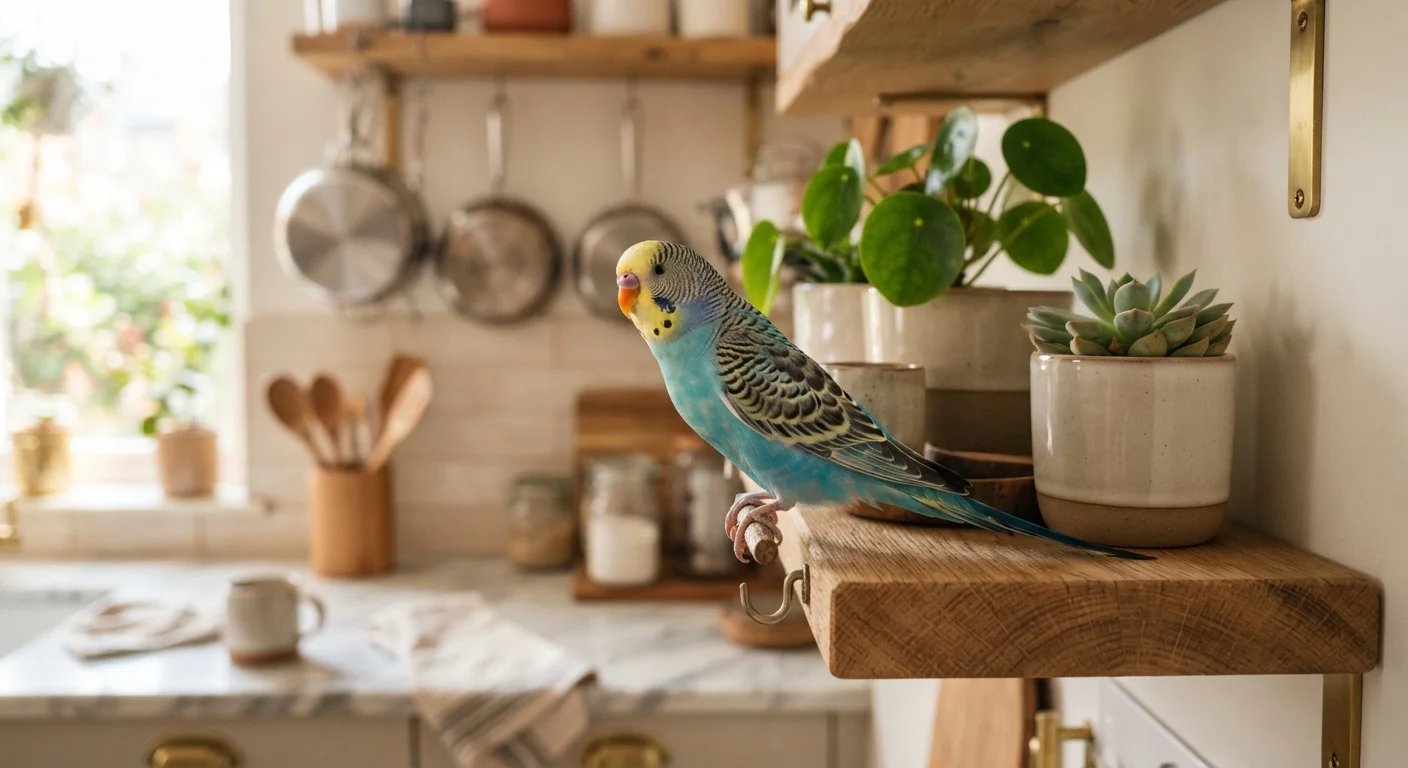
Using non-stick cookware without understanding the fume risk to birds.
Why it happens: Non-stick coatings are ubiquitous in modern kitchens, and the danger is invisible - there is no smell or visible smoke at normal cooking temperatures.
Burning scented candles, incense, or using aerosol sprays near a bird's living space.
Why it happens: Owners apply the same products they use around dogs or cats without realizing birds are dramatically more vulnerable to airborne particles and volatile compounds.
Allowing unsupervised out-of-cage time with ceiling fans running or windows open.
Why it happens: Owners underestimate how quickly a bird can reach a fan or an open window, particularly during the excitement of free-flight time.
Assuming that because a houseplant is non-toxic to dogs or cats, it is safe for birds.
Why it happens: Pet-safety plant databases are often written with dogs and cats in mind. Birds metabolize compounds differently, and some plants safe for mammals are harmful to avians.
Delaying veterinary care because the bird appears to be "acting normally."
Why it happens: Birds are prey animals and instinctively mask signs of illness until they are severely compromised - a survival mechanism that works against owners trying to gauge their pet's health.
Physical and Environmental Hazards That Catch Owners Off Guard
Beyond airborne toxins, the physical layout of a home presents its own category of risk. Open windows are one of the most common causes of bird escapes and injuries - even clipped birds can catch a draft and travel further than expected. Ceiling fans running while a bird is out of its cage cause severe, often fatal injuries every year. These accidents happen in seconds, typically because the bird's flight was not anticipated.
Never Leave Birds Alone With Other Pets
Even a brief, unsupervised interaction between a bird and a cat or dog can result in fatal injury. This applies regardless of how calm or bonded the animals appear during supervised time together. When you cannot directly supervise both animals, keep them in completely separate spaces with a closed door between them.
Other pets pose a serious threat that owners sometimes underestimate out of familiarity. A cat or dog that coexists peacefully with your bird during supervised visits can still inflict fatal wounds during a single unsupervised moment - even without apparent aggression. Bacteria naturally present in cat saliva, such as Pasteurella multocida, can cause rapid systemic infection in birds after even a minor scratch or bite.
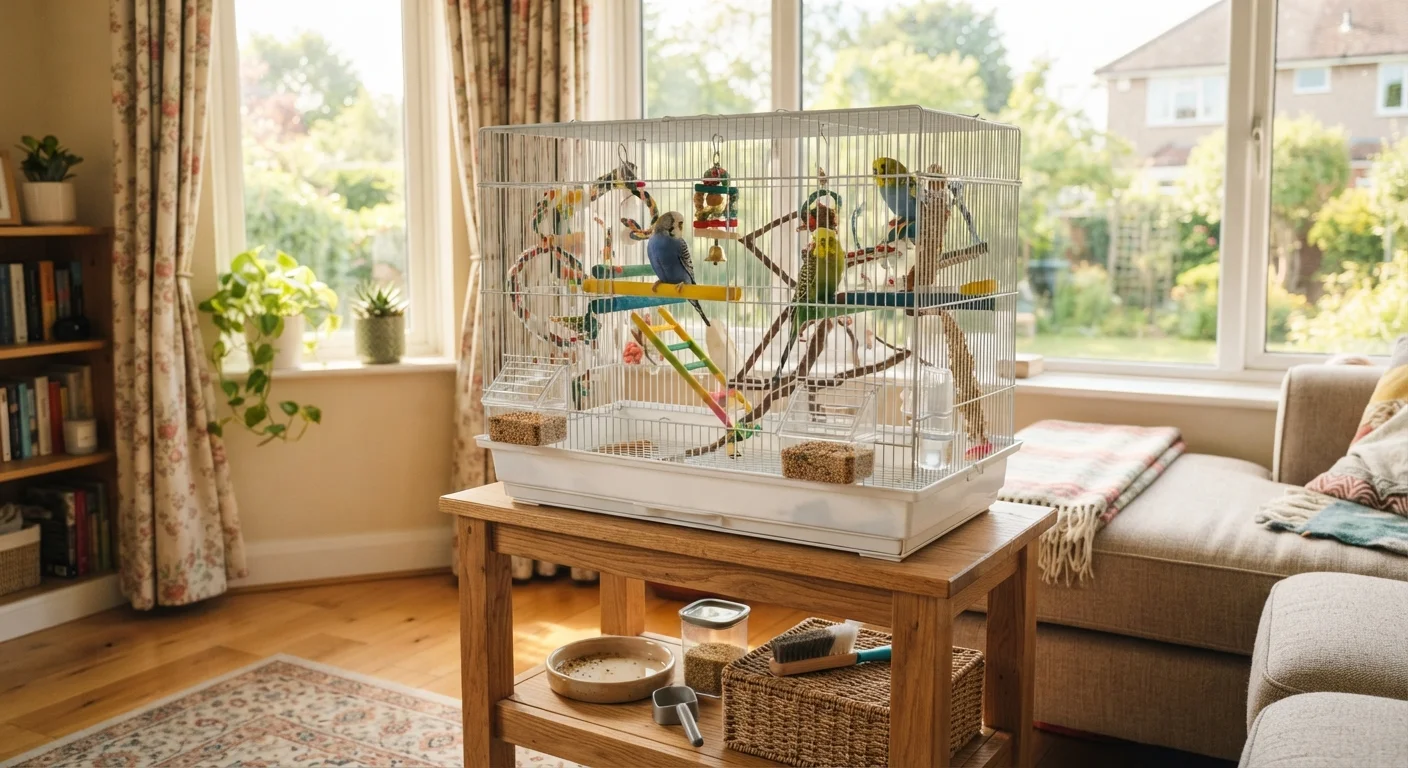
Houseplants are another overlooked risk. Many popular varieties - including philodendron, pothos, dieffenbachia, and oleander - are toxic to birds. Even plants not considered highly toxic can cause digestive distress. If you're setting up a cage for the first time, take stock of every plant within a bird's potential flight range before allowing out-of-cage time.
~600
Bird species affected by PTFE toxicity
Avian veterinary literature documents PTFE-related toxicity (commonly called "Teflon toxicosis") across a wide range of companion and wild bird species, with even brief overheating events proving fatal.
Top 3
Causes of emergency avian vet visits
Respiratory distress, trauma, and toxin exposure are consistently cited among the leading reasons pet birds require emergency veterinary care, according to avian veterinary practice surveys.
If your bird shows labored breathing, loss of balance, or sudden lethargy after any potential exposure, treat it as an emergency. The warning signs of illness in small animals are worth reviewing so you can act quickly when it matters most.
This article provides general educational information about bird safety. It is not a substitute for professional veterinary advice. Always consult a veterinarian experienced with avian species for guidance specific to your bird's health and environment.