What Defensive Driving Actually Means
Most drivers think of themselves as careful - and most also assume that following traffic laws is sufficient to stay safe. Defensive driving challenges both assumptions. It is an active system of risk management that goes beyond compliance, focused on anticipating what other drivers, pedestrians, and road conditions might do before a hazard develops.
The concept dates to formal driver education curricula developed in the mid-20th century, but its core logic is timeless: you cannot control other road users, but you can control your position, your speed, your attention, and your response time. Defensive driving is the deliberate management of those variables.
It is worth distinguishing this from timid driving. Hesitating unnecessarily, braking unpredictably, or refusing to merge at appropriate speed can itself create hazards. The goal is confident awareness - not anxiety behind the wheel. As part of a broader approach to road safety, it fits naturally alongside understanding skills that apply at every stage of a driver's life.
Space cushion
The open buffer of road you intentionally keep around your vehicle on all sides so you have room to react if something unexpected happens.
Scanning
Actively looking well ahead - and to the sides and mirrors - rather than fixating on the vehicle directly in front of you.
Following distance
The gap between your vehicle and the one ahead, typically measured in seconds using a fixed roadside reference point.
Cognitive distraction
A form of mental inattention where your mind is occupied with something other than driving, even if your eyes appear to be on the road.
Hazard anticipation
Recognizing conditions that could develop into a dangerous situation and adjusting your driving before the hazard fully materializes.
The Core Principles in Practice
Defensive driving rests on a handful of interconnected principles that work together rather than in isolation:
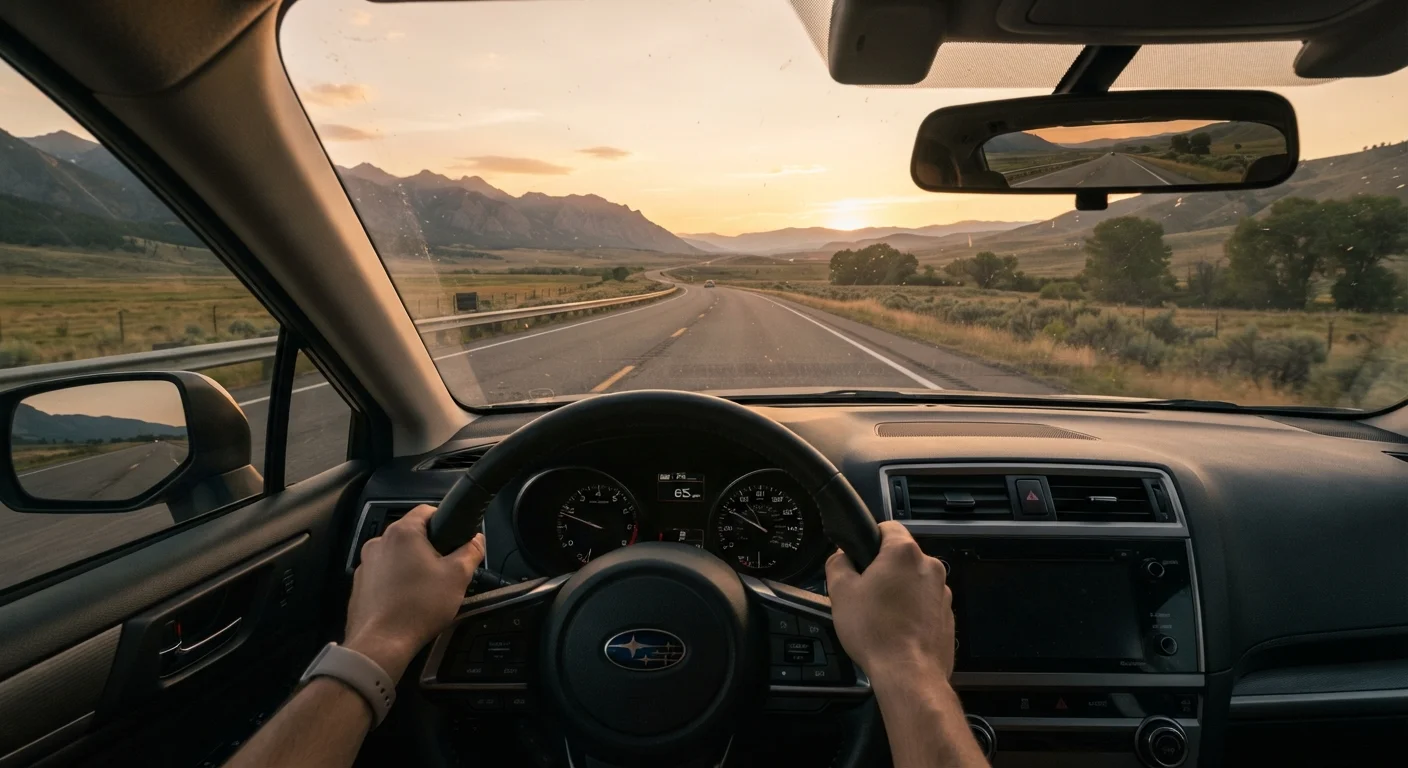
- Scan far ahead. Most drivers focus on the vehicle immediately in front of them. Defensive drivers look 10-15 seconds down the road - roughly a city block at urban speeds - to identify developing situations early enough to respond without panic.
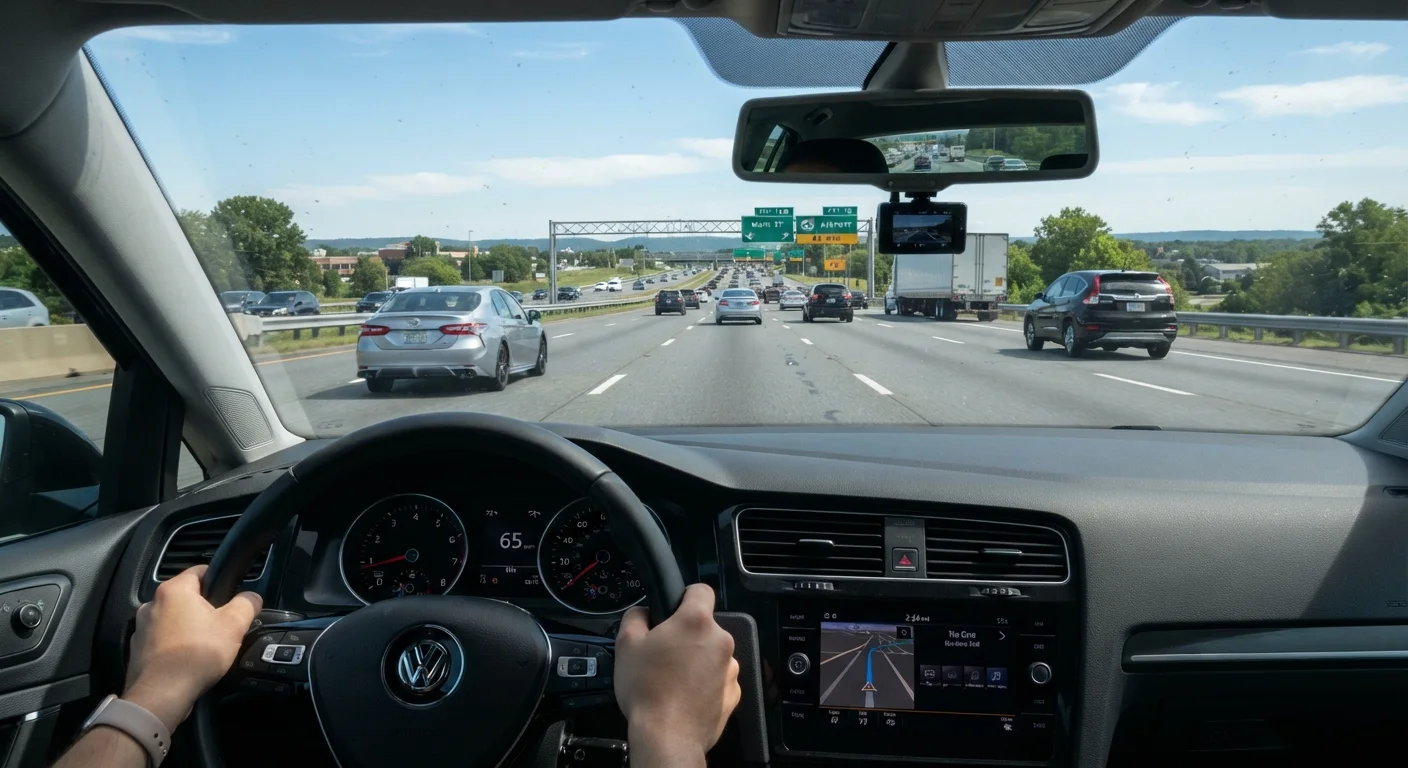
- Maintain a space cushion. Keep open space around your vehicle on all sides. The minimum recommended following distance is a 3-second gap behind the car ahead, measured when the car in front passes a fixed point. Increase this significantly in rain, snow, or poor visibility.
- Expect the unexpected. At every intersection, assume another vehicle may run a red light. Near parked cars, expect a door to open. At highway on-ramps, expect merging drivers to misjudge speed. Acting on these possibilities before they occur is what separates reactive from defensive driving.
- Manage your own state. Fatigue, emotional stress, and distraction compromise all other skills. Defensive driving includes honest self-assessment before and during a trip.
For a comparison of how these principles apply differently across driving environments, see our guide on highway versus city driving hazards.
Use the 3-Second Rule Consistently
Pick a stationary object - a sign, an overpass - and count how long it takes your vehicle to reach it after the car ahead passes it. If you arrive in under 3 seconds, you're following too closely. In rain or poor visibility, aim for at least 4-6 seconds. This single habit gives you meaningfully more response time in emergencies.
Common Hazards Defensive Drivers Anticipate
Certain road situations generate a disproportionate share of collisions. Knowing them by name makes it easier to apply anticipation deliberately:
- Intersections
- More than a third of all crashes occur at or near intersections. Even on a green light, a defensive driver checks cross-traffic before entering. This is sometimes called a covered brake approach - foot positioned near the brake before committing to the intersection.
- Merges and lane changes
- Blind spots are larger than most drivers assume, especially on passenger SUVs and trucks. Checking mirrors, signaling early, and physically glancing over your shoulder each time you change lanes addresses what mirrors alone miss.
- Adverse weather
- Rain, ice, snow, and fog all degrade traction and visibility simultaneously. The adjustments required are not instinctive - they need to be understood in advance. Our guide on how to drive in rain, snow, ice, and fog covers the specific skill shifts each condition demands.
- Aggressive or distracted drivers nearby
- When a driver near you is tailgating others, weaving, or clearly distracted, the defensive response is to create distance - slow slightly, change lanes if safe, or allow them to pass.
Where Defensive Driving Breaks Down
Understanding the failure modes is as important as knowing the principles. The most common ways defensive habits erode:
Familiarity Is a Risk Factor, Not a Safety Net
Studies in road safety literature consistently find that a high proportion of crashes occur within a few miles of the driver's home. When a route feels automatic, your brain allocates less attention to it - exactly the opposite of what defensive driving requires. Treat every drive as deserving the same level of awareness, regardless of how routine it seems.
- Complacency on familiar routes. Drivers are statistically more likely to crash close to home, on roads they drive daily. Familiarity reduces perceived risk and attention simultaneously.
- Phone use and cognitive distraction. Hands-free calling is widely perceived as safe, but research indicates it still substantially reduces situational awareness. Distracted driving myths persist precisely because the impairment isn't obvious to the person experiencing it.
- Responding to aggression with aggression. Tailgating back, brake-checking, or making gestures at aggressive drivers escalates a situation that defensive driving would otherwise neutralize. The risks - physical and legal - are significant. Understanding where aggressive driving ends and road rage begins clarifies why disengagement is always the correct response.
- Overconfidence in vehicle safety technology. Lane-keeping assist, automatic emergency braking, and similar systems are driver aids - not substitutes for attention. Treating them as autonomous safety nets undermines the vigilance these features are designed to supplement.
Building the Habit Over Time
Defensive driving is not a permanent state you achieve; it is a discipline you maintain. A few approaches that experienced road safety educators recommend:
- Debrief your own drives. After arriving, briefly consider whether any moment required a reactive correction that anticipation could have prevented. This reflection accelerates skill development faster than passive experience alone.
- Take a formal defensive driving course. Many states offer these through recognized road safety programs, and some insurers recognize completion for educational purposes. These courses often cover vehicle dynamics and risk perception topics that standard licensing tests do not address.
- Keep your vehicle in reliable condition. Worn tires, degraded brakes, and faulty lights all reduce the margin defensive driving relies on. Maintaining the vehicle itself is part of managing road risk - explore practical guidance at our car maintenance hub.
Defensive driving does not guarantee that nothing bad will ever happen on the road. What it does is compress the window in which hazards can become crashes, and expand the window in which you can respond effectively. That is a meaningful, practical advantage on every trip you take.
NHTSA Driver Safety Resources
The National Highway Traffic Safety Administration publishes research, safety statistics, and educational materials on crash prevention, distracted driving, and road safety regulations applicable to US drivers.
AAA Foundation for Traffic Safety
A non-profit research organization that publishes peer-reviewed studies on driver behavior, distraction, fatigue, and crash causation - useful for understanding the evidence behind defensive driving principles.