Why Night Driving Is Statistically More Dangerous
Traffic volumes drop after dark, yet fatal crashes disproportionately cluster in nighttime hours. According to the National Safety Council, the fatality rate per mile driven at night is roughly three times higher than during the day. The reasons are compounded: human eyes are not built for darkness, depth perception degrades significantly in low light, and peripheral vision narrows. Add in the glare from oncoming headlights - which can temporarily blind a driver for several seconds - and the road becomes a genuinely different environment after sunset.
Speed compounds everything. At 60 mph, a vehicle covers about 88 feet per second. Standard low-beam headlights illuminate roughly 160 to 200 feet ahead. That gap between stopping distance and visible range is sometimes called "overdriving your headlights," and it leaves almost no margin for unexpected obstacles. Understanding this arithmetic is the first step toward adjusting your habits accordingly.
3x
Higher nighttime fatal crash rate per mile driven
According to the National Safety Council, the fatality rate per mile driven is roughly three times higher at night than during daylight hours.
50%+
Reduction in headlight output from hazy lenses
Clouded or yellowed plastic headlight lenses can reduce effective light output by more than half, significantly narrowing forward visibility.
Start With Your Headlights - But Don't Stop There
Most drivers flip their headlights on and consider the job done. In practice, headlight effectiveness degrades faster than most people realize. Plastic headlight lenses yellow and haze over time, scattering light instead of projecting it cleanly. A headlight lens that looks merely cloudy can reduce output by 50 percent or more. Cleaning or restoring lenses is a low-cost maintenance step with a meaningful safety return.
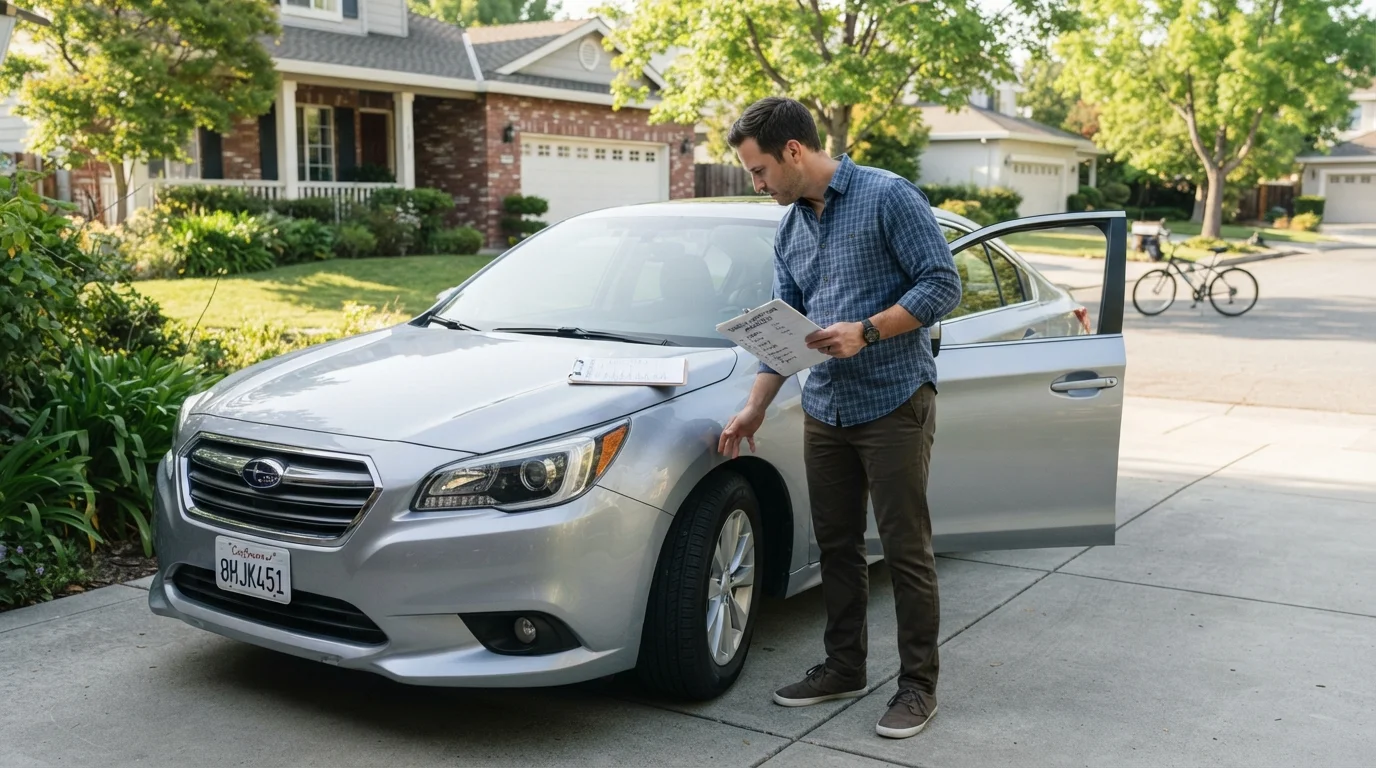
Aim matters too. Headlights that sag downward from wear or minor impact no longer illuminate the road at the correct angle. A qualified mechanic can check and adjust headlight aim - a quick procedure that most drivers never think to request. Before any extended night trip, it's worth including lights in a broader pre-departure check. See our pre-trip safety walkthrough for a practical checklist covering lights, tires, mirrors, and more.
Restore or replace cloudy headlight lenses before they degrade further.
Yellowed plastic lenses scatter light instead of projecting it, dramatically reducing the illuminated distance in front of your vehicle. A lens that looks only mildly hazy can cut effective output by 50 percent or more, narrowing your reaction window at speed.
Check and correct headlight aim as part of routine maintenance.
Headlights that point too low illuminate pavement close to the car rather than the road ahead. Minor impacts, suspension wear, and heavy loads in the trunk can all shift headlight alignment over time.
Reduce speed to stay within the illuminated range of your headlights.
Driving faster than your headlights can reveal ahead - a condition known as overdriving your headlights - means you may not be able to stop before reaching a hazard you can see. Slowing down is the simplest way to close that gap.
Increase following distance to at least three to four seconds after dark.
The standard two-second gap is a daytime minimum. At night, your ability to judge distance and the brake lights ahead are often your only cues - and they appear later than visual hazards would in daylight.
Use high beams correctly - switch to low beams within 500 feet of oncoming traffic.
High beams dramatically extend your forward vision on unlit roads, but they temporarily blind oncoming drivers if left on too long. Proper discipline protects both you and the drivers approaching you.
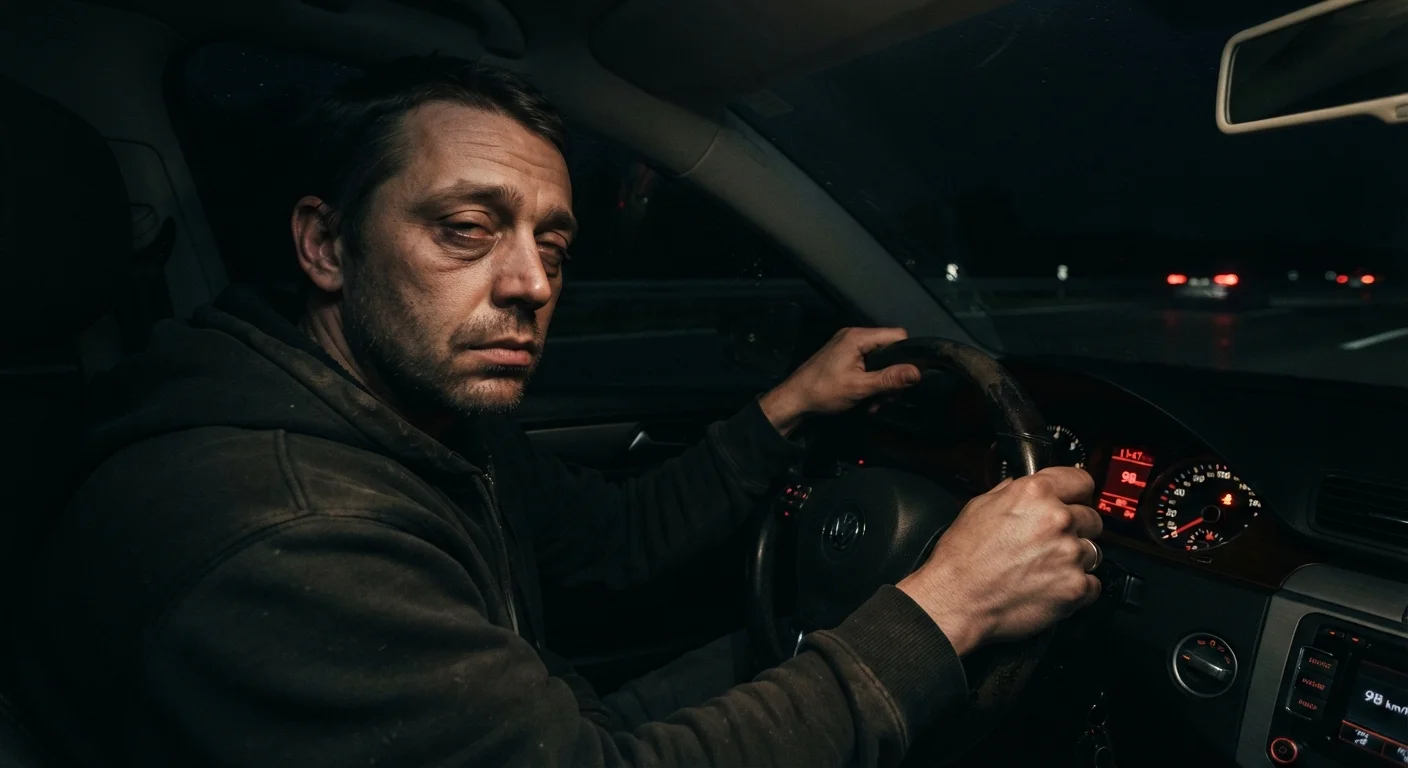
Plan to stop or take a break if fatigue appears during a nighttime drive.
The body's natural sleep cycle creates peak drowsiness between midnight and 6 a.m. Fatigue slows reaction time in ways that closely parallel alcohol impairment, and it can come on faster than drivers expect after dark.
Speed, Following Distance, and the Margin You Actually Need
Reducing speed at night is not timidity - it's physics. Slowing down extends the time between when your headlights reveal a hazard and when you reach it. On an unlit rural road, even dropping from 65 to 55 mph meaningfully expands your reaction window. This matters especially for hazards that appear suddenly: deer, debris, a slow-moving vehicle with no working taillights.
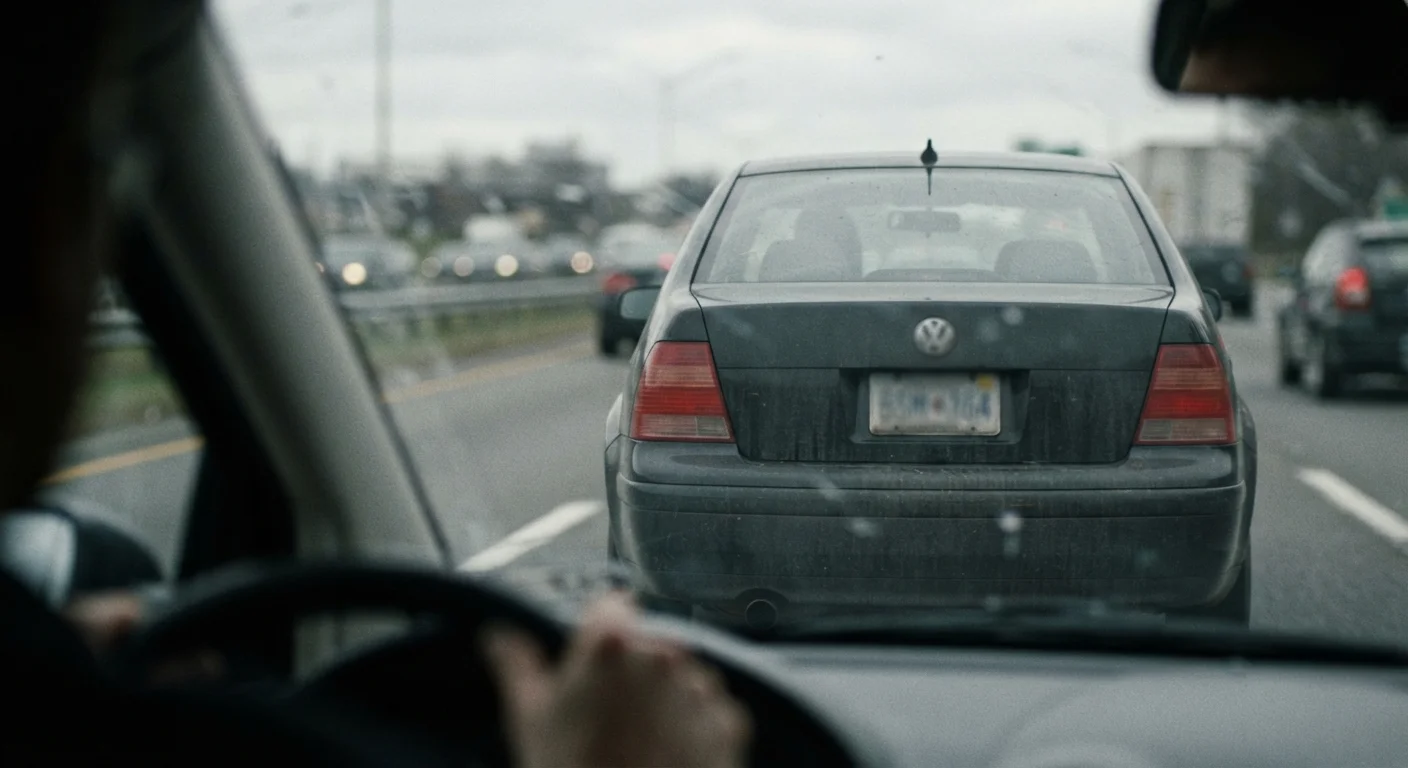
Following distance should also increase after dark. The standard two-second rule is a minimum for daytime; at night, three to four seconds is a more realistic buffer. If the vehicle ahead stops short, you need that extra space to brake within the range your headlights are actually covering. For more on how closing the gap creates risk, the dangers of tailgating are worth understanding in any light condition - but they're amplified in the dark.
Managing Glare and Fatigue - The Two Underrated Threats
Oncoming high beams are more than an annoyance. The pupil takes several seconds to re-adapt after exposure to intense light, during which your effective vision is significantly reduced. Rather than staring at approaching headlights, shift your gaze to the right edge of the road - the lane marking or shoulder - to maintain your lane while your eyes recover.
Use your own high beams when no oncoming traffic is visible and no vehicle is ahead of you. Switch back to low beams when another driver is within roughly 500 feet. This discipline protects other drivers from the same glare you're trying to avoid.
Fatigue is the threat that most drivers underestimate. The body's circadian rhythm naturally induces drowsiness between midnight and 6 a.m., regardless of how much sleep you got. Drowsy driving impairs reaction time in ways that rival alcohol impairment. If you notice heavy eyelids, drifting, or difficulty maintaining a consistent speed, treat it seriously. Our guide on fatigue at the wheel outlines the early warning signs and what to do before a microsleep happens.
Look Right When Headlights Approach
When oncoming high beams hit you, resist the instinct to look directly at the light. Instead, shift your gaze to the right edge of your lane - the painted line or shoulder - to maintain your path while your pupils re-adapt. This simple habit prevents the few seconds of near-blindness from becoming a steering error.
Adapting Your Full Driving Approach After Dark
Night driving isn't just about headlights and speed - it requires a holistic adjustment to how you read the road. Mirrors become more useful and more disorienting simultaneously: use your rearview mirror's night mode (the small lever on the mirror base, or the automatic dimming on newer vehicles) to reduce glare from vehicles behind you. Check blind spots and mirror gaps before lane changes, since the cues you rely on during daylight - color, contrast, clear peripheral shapes - are diminished.
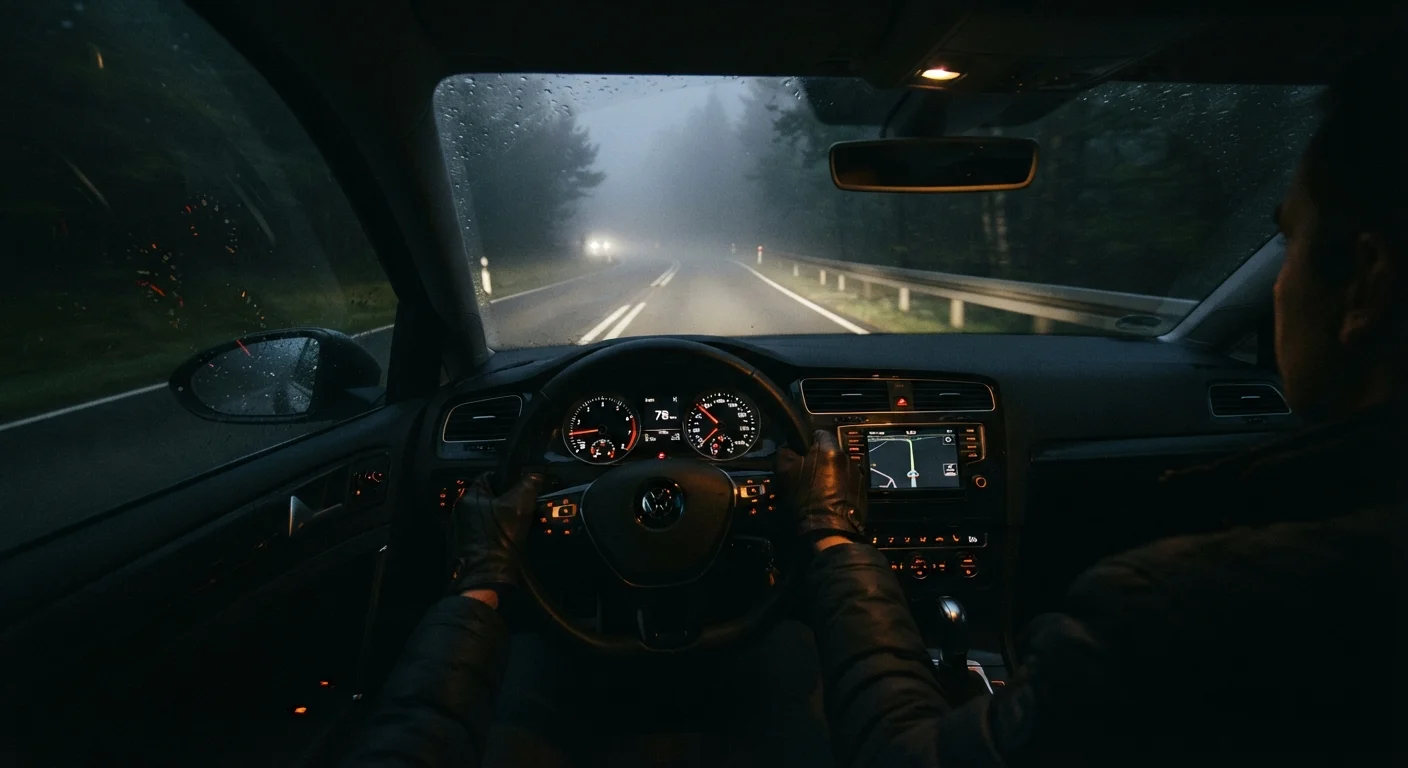
Weather adds another layer. Fog, rain, and wet pavement create light scatter that can make headlights nearly useless at longer ranges. If conditions deteriorate, slow down further and use low beams in fog - high beams reflect off water droplets and reduce your forward visibility. For a full breakdown of how different weather conditions affect traction and visibility, the guide on driving in rain, snow, ice, and fog applies directly to nighttime scenarios.
The underlying principle is simple: at night, your margin for error shrinks. Every adjustment - speed, following distance, light maintenance, fatigue awareness - exists to rebuild some of that margin. Drivers who treat darkness as a fundamentally different driving environment, rather than just a dimmer version of daytime, are the ones who navigate it most safely.