What Speed Limit Signs Actually Mean
A white rectangular speed limit sign posts the maximum legal speed for that road segment under ideal conditions - clear weather, dry pavement, normal traffic. Exceeding that number is a traffic violation regardless of how capable your vehicle feels at higher speeds.
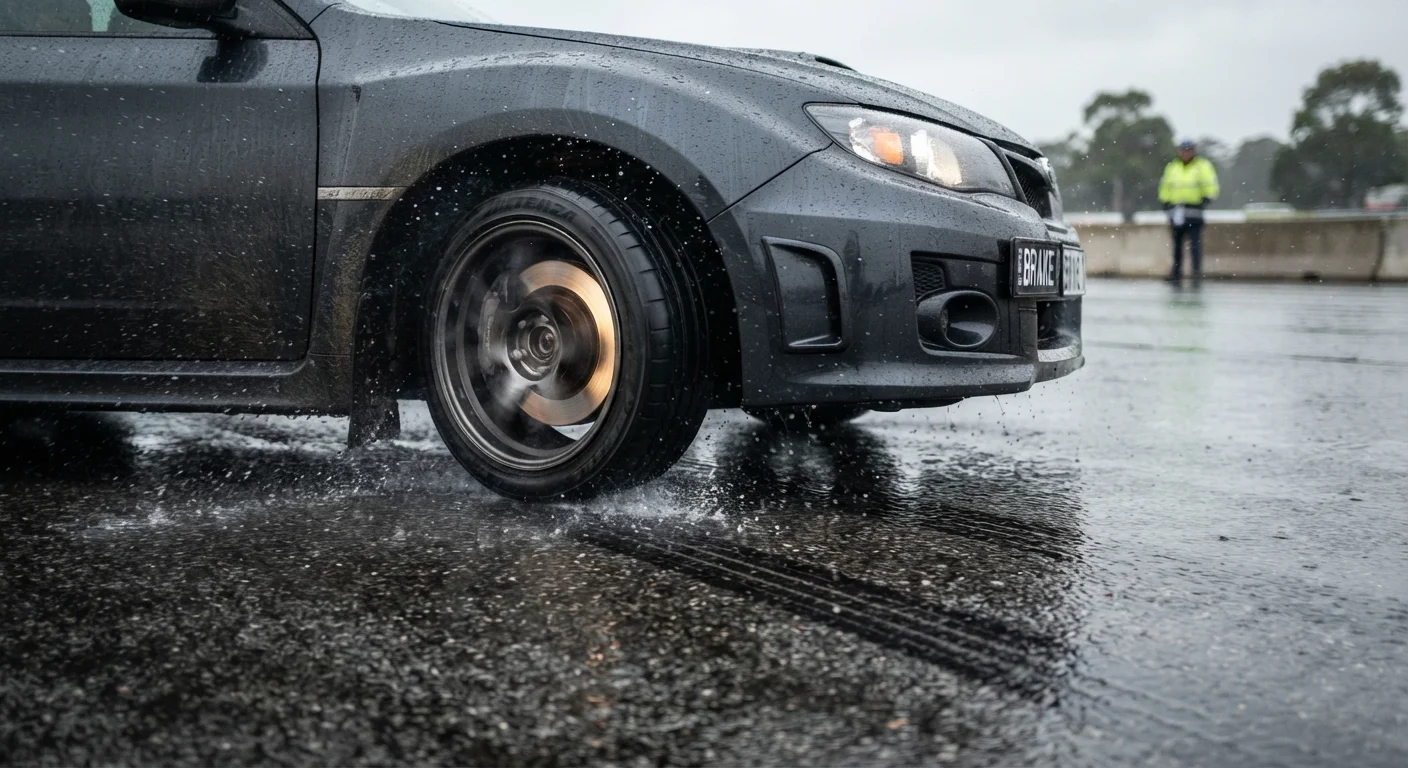
What drivers often miss is the word maximum. The posted number is a ceiling, not a target. Driving at the limit during heavy rain or dense fog can still constitute reckless or imprudent driving under most state laws, which require speed to be reasonable and prudent for existing conditions. See how adverse weather changes every element of vehicle control for a fuller breakdown of what those adjustments look like in practice.
Speed limits in the US are set by state and local authorities, not the federal government. That is why interstate highway limits can vary from 65 mph in one state to 85 mph in another, and why a city council can lower a residential street's limit independent of state minimums.
Advisory Speeds: The Yellow Signs Drivers Often Misread
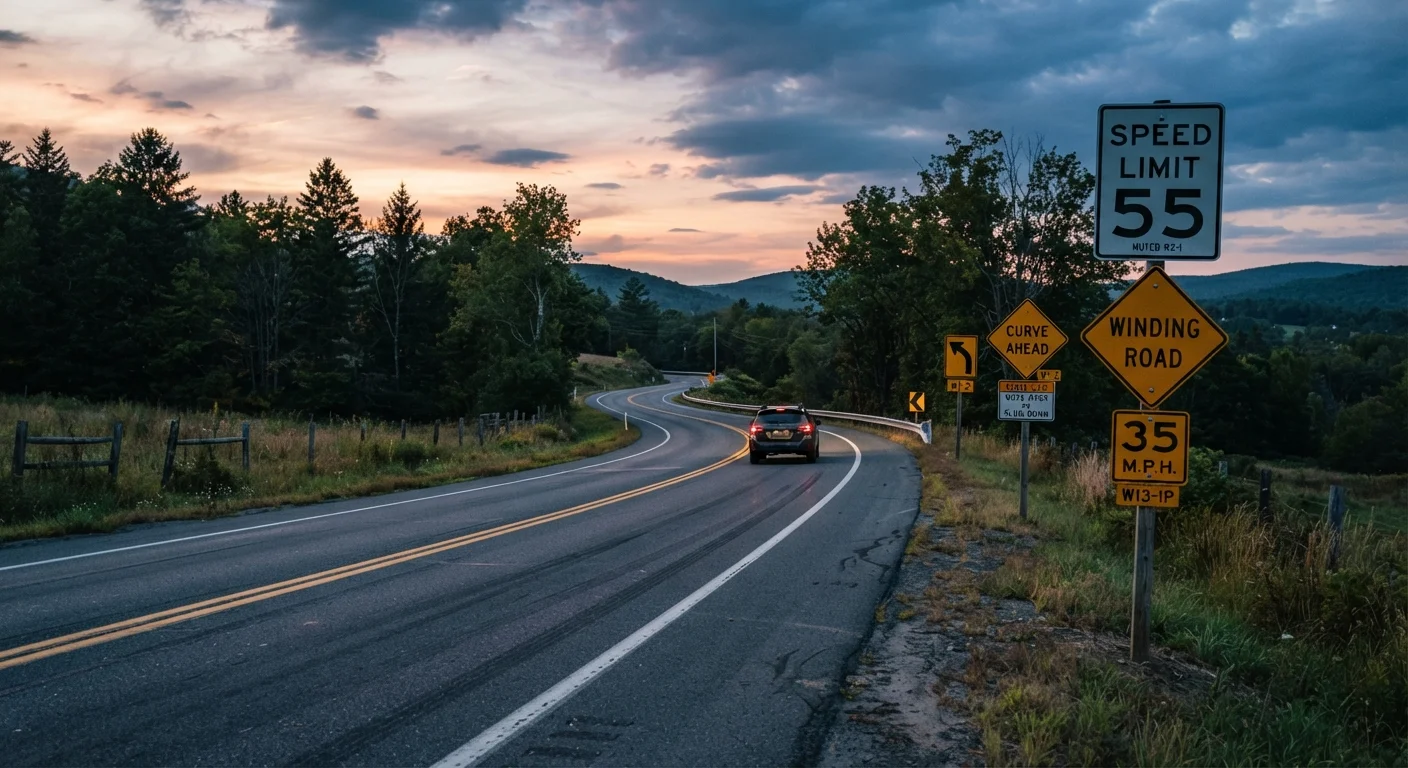
Yellow diamond-shaped or pennant-shaped signs display advisory speeds - and these are fundamentally different from posted limits. An advisory speed is a recommendation, not a legal maximum. It communicates the speed at which engineers determined a specific feature - a curve, ramp, or intersection - can be safely navigated under normal conditions.
Common advisory speed placements include:
- Curve warning signs ahead of sharp bends
- Highway on- and off-ramp signs
- Intersection approach signs in rural areas
- Steep downgrade warnings
Driving above an advisory speed is not automatically a moving violation, but if a crash occurs, exceeding it is strong evidence that the driver was not operating at a safe speed for conditions. Many drivers treat advisory signs as optional - a mindset that contributes to run-off-road crashes, which are among the most common fatal crash types on rural roads.
Posted Speed Limit
The legally enforceable maximum speed for a road segment, displayed on a white rectangular sign. Exceeding it is a traffic violation regardless of conditions.
Advisory Speed
A recommended - not legally required - speed for a specific road feature such as a curve or ramp. Displayed on yellow signs. Exceeding it is not automatically a violation but can indicate negligence if a crash occurs.
Basic Speed Law
A rule present in all US states requiring drivers to travel at a speed that is reasonable and prudent for existing conditions, even when at or below the posted limit.
MUTCD
The Manual on Uniform Traffic Control Devices - the federal standard governing the design, placement, and meaning of all road signs in the US, published by the Federal Highway Administration.
Statutory Speed Limit
A default speed limit set by state law that applies on certain road types when no sign is posted - for example, 25 mph in residential areas in many states.
Stopping distance physics becomes especially relevant on curves: your vehicle's braking ability and cornering grip work simultaneously, reducing both margins significantly at higher speeds.
When Conditions Should Override the Sign
Every US state has a basic speed law - sometimes called the "reasonable and prudent" standard - that applies even where no posted limit exists and can result in a citation even when you're traveling at or below the posted limit. The principle: no speed is legal if it is unsafe for present conditions.
The Basic Speed Law Can Surprise Drivers
A driver traveling at exactly the posted limit can still receive a citation in many states if an officer judges the speed unsafe for conditions at the time. This most commonly applies in situations involving ice, fog, accident scenes, or emergency vehicles. The posted sign sets a ceiling; it does not guarantee legality at that speed under all circumstances.
Conditions that commonly require speeds well below the posted limit include:
- Wet or icy pavement - traction is reduced substantially; braking distances extend dramatically
- Reduced visibility - fog, heavy rain, glare, or darkness narrow your effective reaction window
- Heavy traffic or congestion - following distances must expand as density increases
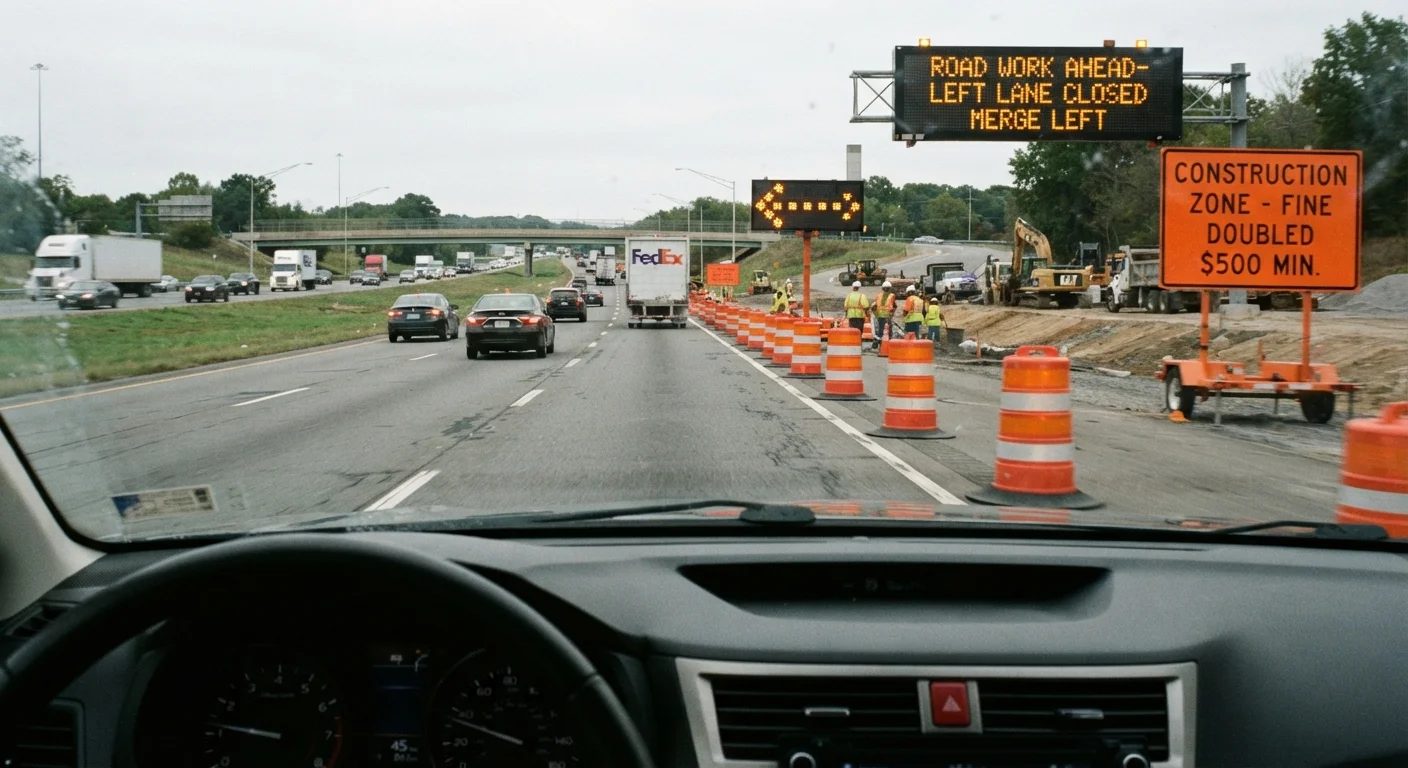
- Road construction - lanes narrow, surfaces change, and workers may be present; see the full guide to reduced-speed zones for penalties and zone-specific rules
- Vehicle load or condition - a trailer, roof cargo, or low tire pressure affects stopping and handling
Highway and city roads each present distinct speed-management challenges. Comparing highway and city driving hazards illustrates why a single speed-management mindset rarely transfers cleanly between the two environments.
~29%
Of traffic fatalities linked to speeding
According to the National Highway Traffic Safety Administration, speeding has been a factor in roughly 29% of all US traffic deaths in recent reporting years.
2x
Braking distance increase from wet pavement
Road safety research consistently shows that wet roads can double stopping distances compared to dry conditions at the same speed.