Two Forces Working Against You Before the Car Stops
Every stop your car makes is the result of two separate physical processes unfolding in sequence. Understanding each one reveals why the gap between you and the vehicle ahead is almost never as generous as it feels.
Reaction distance is the ground your vehicle covers between the moment you register a threat and the moment your foot actually depresses the brake. Even an alert, rested driver typically takes between 1.5 and 2 seconds to react. At 55 mph, that's around 120 feet of travel - before braking begins.
Braking distance begins the moment brake force is applied. Here, physics governs everything: the vehicle's kinetic energy must be fully dissipated through friction between the tires and road surface. The crucial detail is that braking distance scales with the square of speed. Going from 30 mph to 60 mph doesn't double your braking distance - it quadruples it. A car stopping from 30 mph on dry pavement might need about 45 feet of braking distance; from 60 mph, that climbs to roughly 180 feet or more.
Add both components together and the total stopping distance at highway speeds can easily exceed 300 feet - a figure that surprises most drivers when they see it written out.
~300 ft
Typical total stopping distance at 60 mph on dry pavement
This combines an average reaction distance of approximately 132 feet and a braking distance of roughly 180 feet, reflecting figures widely cited by highway safety researchers and driver education programs.
2-8×
Increase in stopping distance on wet or icy roads
Wet pavement roughly doubles typical stopping distances; ice and packed snow can increase them by six to eight times, depending on temperature, tire condition, and vehicle load.
1.5 sec
Average reaction time for an alert, unimpaired driver
Traffic safety research consistently places mean reaction time for healthy, attentive drivers in the 1.5-second range; fatigue, distraction, and impairment extend this measurably.
Why Human Judgment Consistently Fails Here
Drivers tend to underestimate stopping distances for several interconnected reasons. First, speed perception is unreliable. Research in traffic psychology has consistently found that drivers traveling at higher speeds underestimate how fast they're going - a well-documented perceptual limitation that becomes particularly dangerous on wide, open roads.
Second, the quadratic relationship between speed and braking distance is not intuitive. People naturally think in linear terms: twice the speed, twice the stop. The real math is far less forgiving. This misunderstanding leads drivers to feel that their following gap is adequate when it isn't.
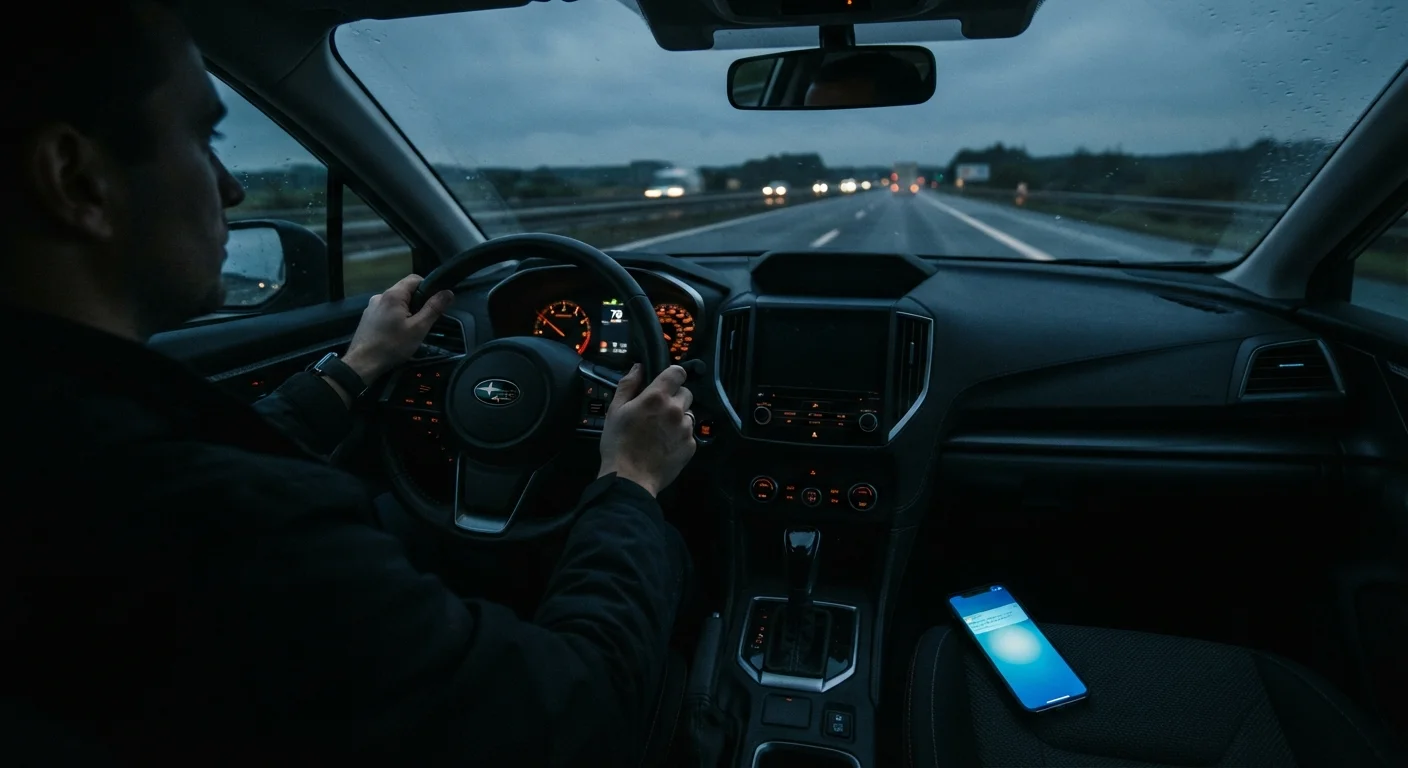
Third, reaction time is invisible. Drivers experience their own responses as nearly instantaneous, but even a fully attentive person needs over a second to process a hazard and move their foot. Any impairment - fatigue, distraction, alcohol, even a brief glance at a phone - stretches that window considerably. As explored in our coverage of distracted driving myths, even brief cognitive distraction measurably delays brake response, adding critical feet to reaction distance.
“Speed is the factor in road crashes that most people understand the least. The relationship between speed and crash energy is not linear - it is exponential. A small reduction in speed can produce a large reduction in the risk of a fatal crash.”
— Road Safety Research Community, Widely documented principle in traffic safety and injury prevention literature
Taken together, these factors create a systematic gap between how drivers estimate their stopping capacity and the physics of what actually happens on the road.
How Road and Weather Conditions Change Everything
All stopping distance calculations assume a baseline: dry pavement with tires in good condition. Real roads frequently deviate from that baseline - sometimes dramatically.
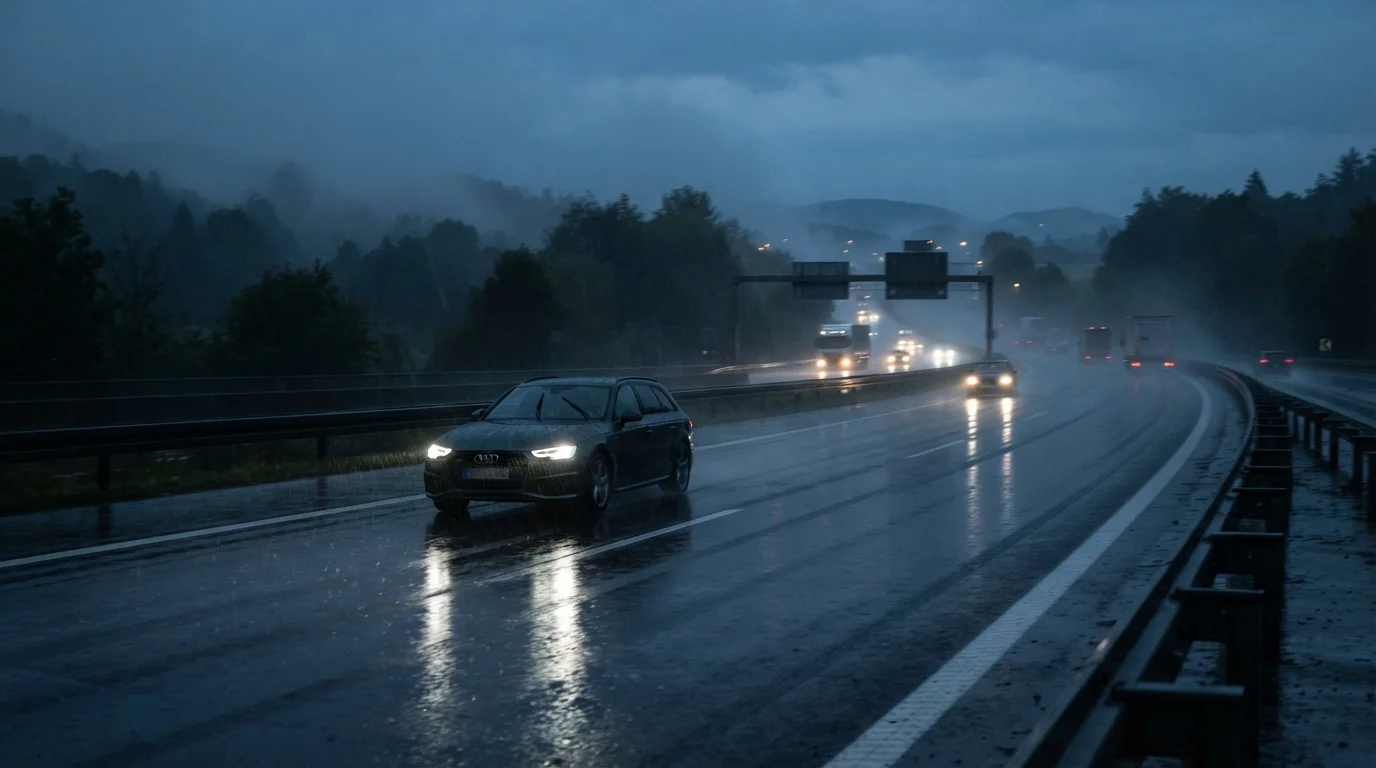
On wet pavement, the friction coefficient between tire and road drops substantially. Stopping distances are widely estimated to be roughly double those on dry surfaces in typical rain. Hydroplaning - where a tire rides on a film of water rather than contacting the road - can reduce braking effectiveness to near zero for brief periods.
Ice is far more severe. A glazed road surface can increase stopping distances by six to eight times compared to dry pavement. At those multipliers, a stop that would take 250 feet on dry asphalt could require over 1,500 feet on black ice - nearly three football fields. Our detailed guide on driving in adverse weather conditions covers how traction and braking shift across specific weather types.
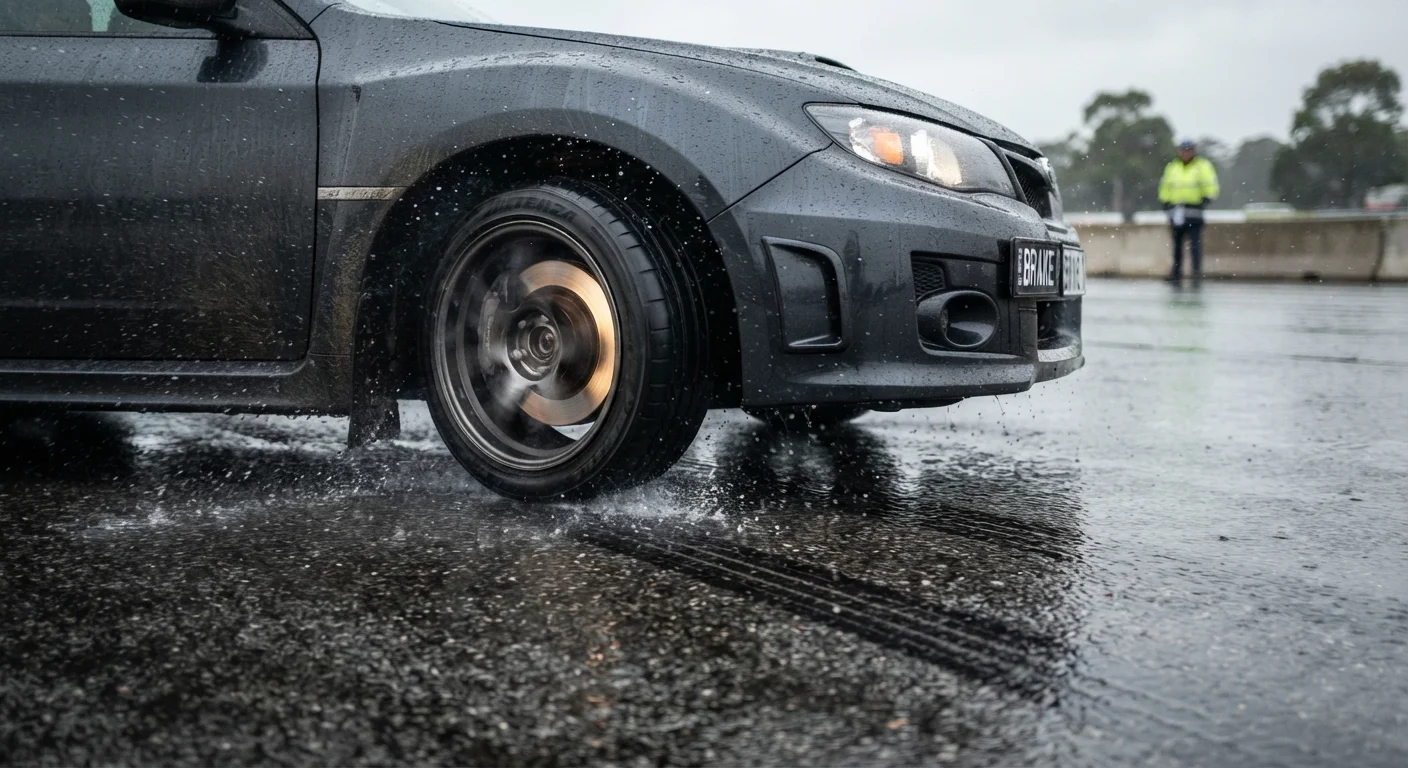
Tire condition also matters in ways drivers often overlook. Tread depth affects a tire's ability to channel water away from the contact patch. Worn tires lose wet-grip performance progressively, not all at once - meaning degradation can occur without the driver noticing a dramatic change in feel until conditions stress the system.
Check Your Tires Before Winter Driving
Tread depth is one of the most direct factors affecting wet and snow braking performance. A simple way to check is the penny test: insert a penny into the tread groove with Lincoln's head facing down - if you can see the top of his head, tread depth is likely below the threshold for safe wet-weather driving. A qualified tire professional can give you a precise reading.
Applying This Knowledge to Everyday Driving
Understanding stopping distance physics translates directly into practical habits. The most important is following distance. The familiar three-second rule - maintaining a gap that takes at least three seconds to close - is a reasonable baseline in ideal conditions, but should extend to five or six seconds in rain, at high speeds, or when carrying extra load. These are minimums, not targets to aim for exactly.
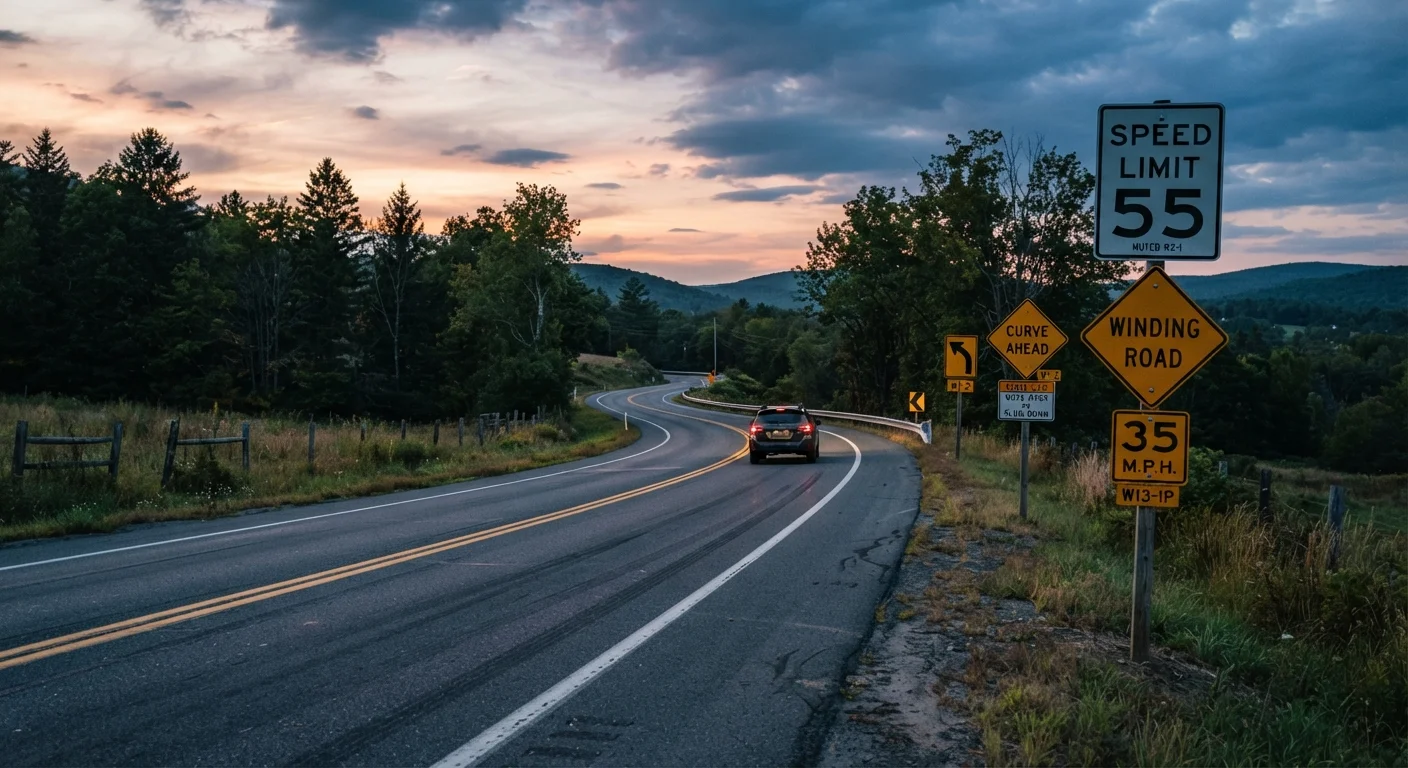
Speed choices matter more than most drivers appreciate. Reducing speed from 65 mph to 55 mph on a rain-slicked highway doesn't just feel safer - it mathematically reduces the braking energy that must be dissipated by roughly 28%. That margin can mean the difference between a controlled stop and a collision. Our explainer on speed limits and advisory speeds discusses how posted speeds are set and when conditions warrant going slower.
Defensive driving integrates this awareness into every mile. Rather than reacting to hazards as they emerge, drivers who internalize stopping distance reality scan further ahead, identify developing situations earlier, and create buffer room that reaction time and braking physics actually require. The principles of defensive driving are built around exactly this kind of anticipation.
No technology fully replaces physics. Automatic emergency braking systems can shorten reaction delay, but they operate within the same tire-friction constraints as conventional braking. Road conditions still determine ultimate stopping capability.