The Gap You Think You Have vs. the Gap You Actually Have
Most drivers who tailgate don't think of themselves as doing something dangerous. They're keeping up with traffic, staying close to avoid being cut off, or simply not paying attention to the distance. But the physics of the situation don't care about intent.
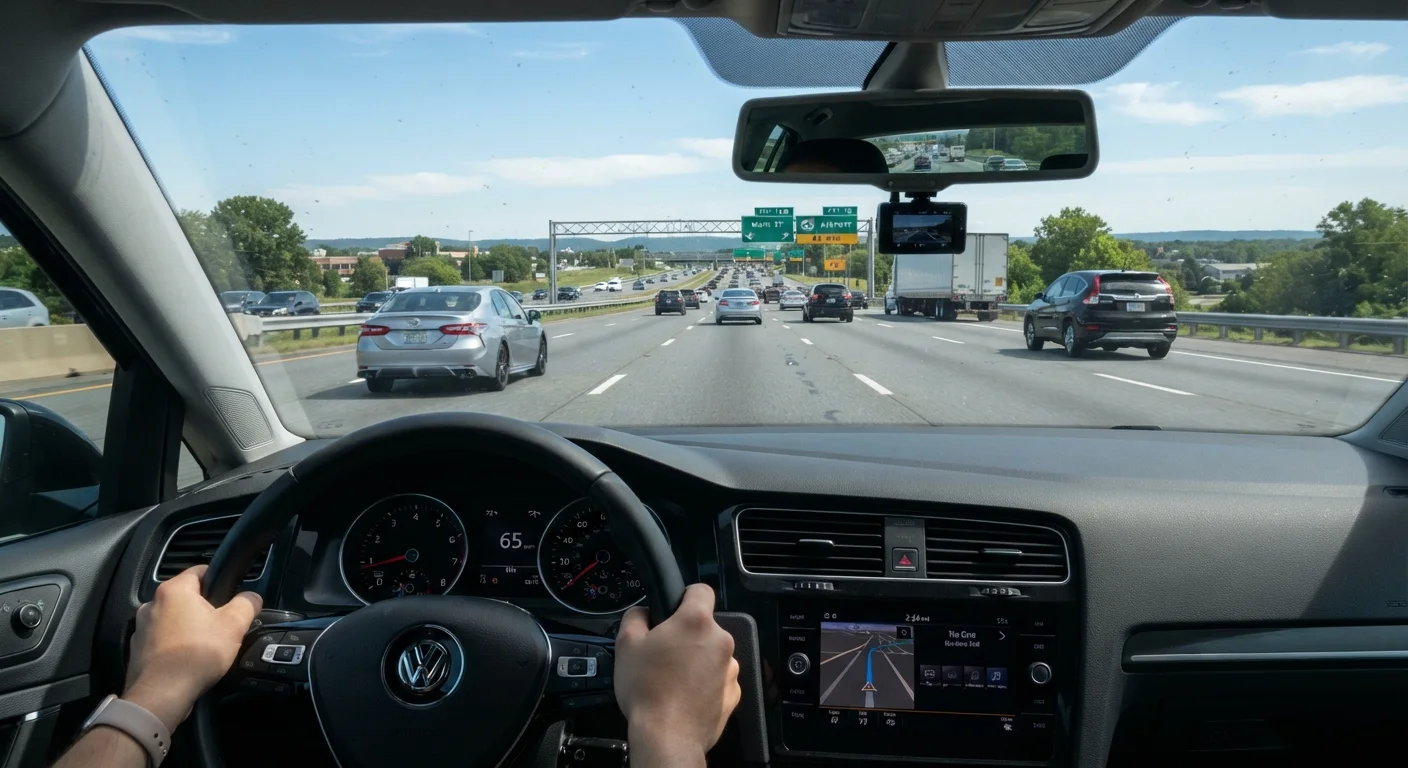
At 60 mph, your vehicle is covering 88 feet every second. If the car ahead brakes hard and your reaction time is 1.5 seconds - a commonly cited average - you've already traveled 132 feet before your foot even touches the brake pedal. That's roughly the length of four standard parking spaces, and you haven't started slowing down yet.
This is why the gap that looks comfortable at a glance can disappear in a fraction of a second. For a deeper look at the physics involved, see our guide to stopping distances.
~29%
Of all US crashes that are rear-end collisions
According to the National Highway Traffic Safety Administration (NHTSA), rear-end crashes are consistently one of the most frequent crash types reported nationally.
1.5 sec
Average driver reaction time before braking
Transportation safety research commonly cites 1.5 seconds as a typical perception-reaction time, during which a vehicle traveling at 60 mph covers roughly 132 feet.
3 seconds
Minimum recommended following distance
The 3-second rule is endorsed by the NHTSA and most state driver education programs as a baseline safe following gap under normal conditions.
Why Tailgating Feels Normal - But Isn't
Human beings aren't naturally good at judging distance at speed. At highway velocities, a gap that feels like a reasonable cushion can actually represent less than one second of following distance. This perceptual gap is compounded by a few common patterns:
- Flow conformity: When surrounding traffic bunches up, drivers unconsciously match the pace and spacing of vehicles around them - even when that spacing is unsafe.
- Destination pressure: Running late or navigating heavy traffic creates a mental state that shifts focus toward arriving rather than driving safely.
- Familiarity bias: Drivers who travel the same routes repeatedly often perceive them as lower-risk, leading to reduced alertness and tighter following gaps.
None of these are excuses for tailgating - they're explanations for why it's so common even among drivers who consider themselves skilled. Recognizing these tendencies is the first step toward counteracting them. Our article on what defensive driving actually means covers how to build habits that account for these blind spots.
How to Use the 3-Second Rule
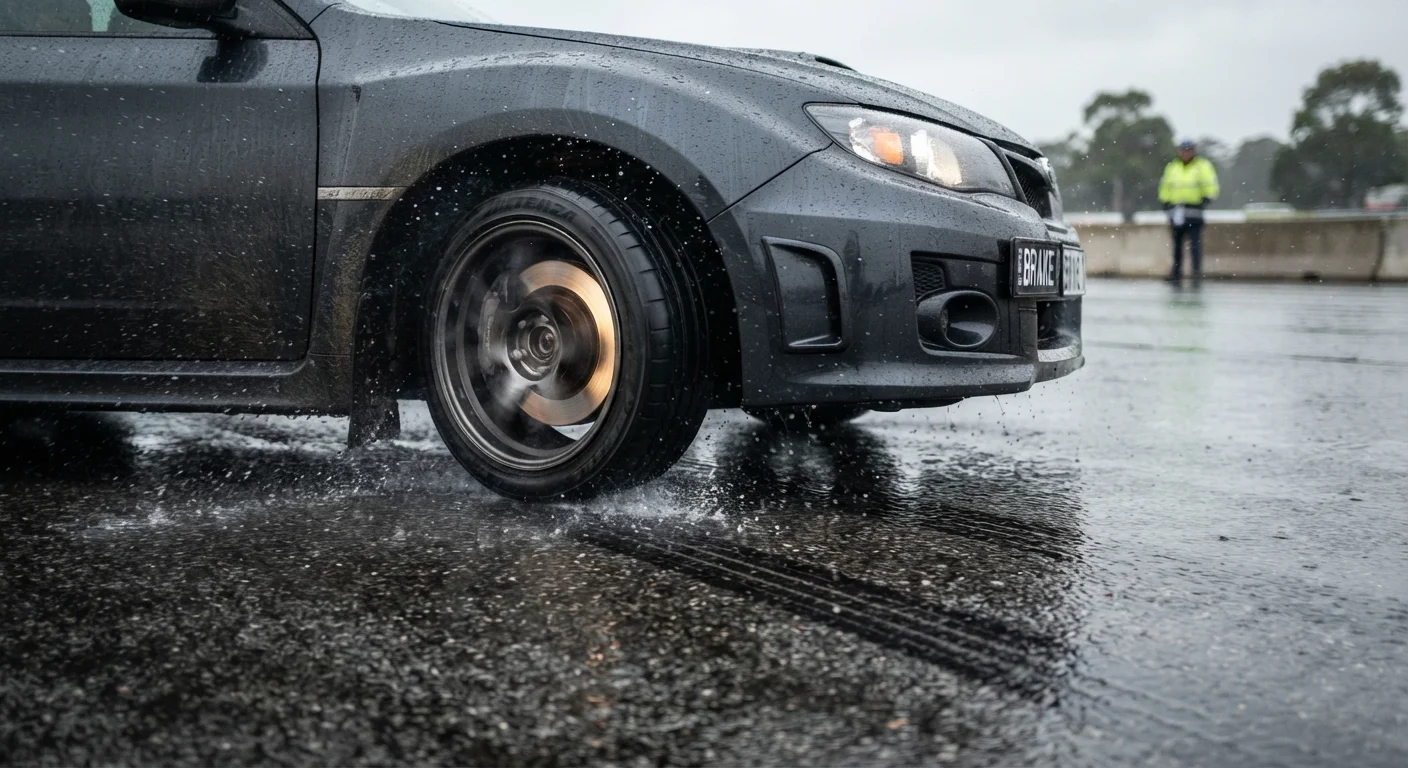
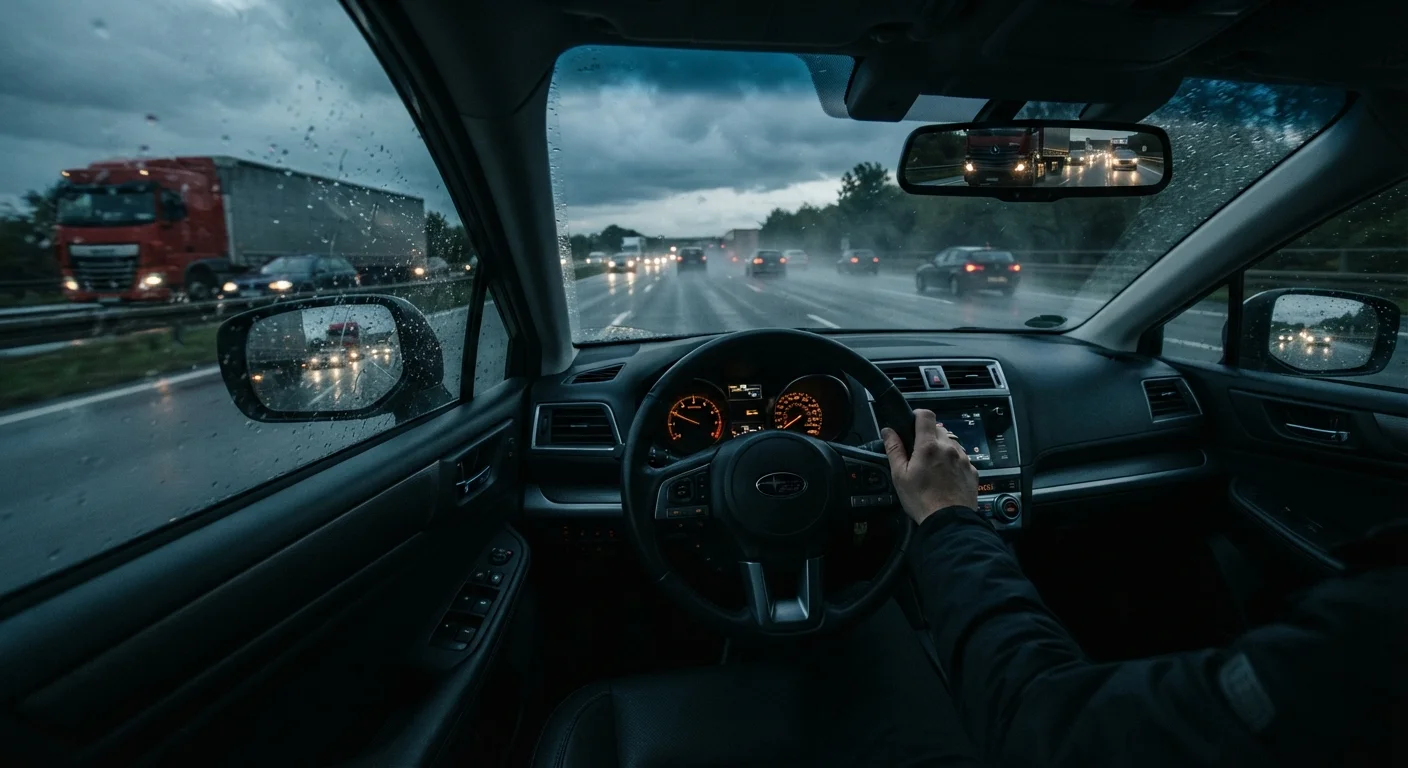
Pick a fixed roadside marker - a sign, overpass, or shadow line. When the vehicle ahead passes it, count: one thousand one, one thousand two, one thousand three. If you reach the marker before finishing the count, you're following too closely. In wet weather, poor visibility, or at higher speeds, extend your count to at least four or five seconds.
What Tailgating Does to Your Field of Vision
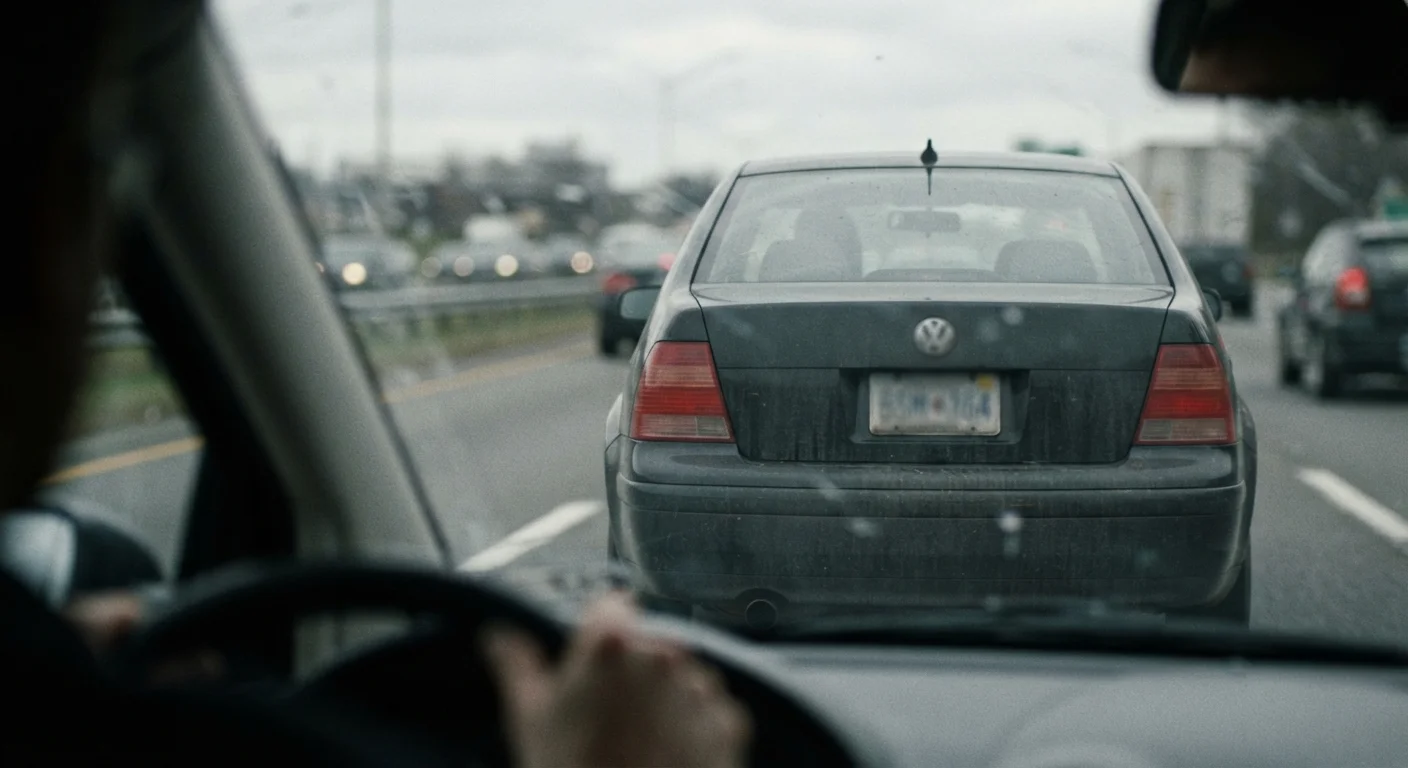
Following too closely doesn't just shorten your stopping distance - it also shrinks your ability to see what's happening beyond the vehicle directly in front of you. When you're far enough back, you can observe brake lights several cars ahead, spot debris in the road, or notice a highway merge starting to back up. When you're on someone's bumper, that context disappears entirely.
This is especially dangerous because hazards typically require more time to respond to than routine braking. A sudden lane obstruction or a pedestrian stepping into the road demands not just reaction time, but a decision - swerve, brake, or both. The less visual runway you have, the less time you have to make that call correctly.
Tailgating also connects to visibility challenges more broadly. Just as blind spots and mirror gaps can hide hazards beside your vehicle, a compressed following distance hides what's ahead of the car in front of you.
Larger Vehicles Require Even More Space
Trucks, SUVs, and vans have higher centers of gravity and longer stopping distances than passenger cars. If you're following a large vehicle closely, your view of the road ahead is even more obstructed, and the vehicle in front needs more room to stop - which compounds your own risk. Give large vehicles extra following distance as a default, not an exception.
The Legal and Behavioral Dimension
In most US states, following too closely is a specific traffic violation - and in some jurisdictions, sustained aggressive tailgating can escalate into a chargeable form of aggressive driving. The line between impatient driving and legally actionable behavior is closer than many drivers assume.
There's also an interpersonal dynamic worth understanding. Tailgating is one of the most common triggers for road rage incidents. When drivers feel pressured from behind, their stress levels rise, decision-making deteriorates, and the likelihood of an emotional response increases. For context on how this plays out, see our piece on aggressive driving and road rage.
If you're being tailgated, the safest response is generally to allow the driver to pass by moving right where possible, rather than braking sharply or engaging. Escalation rarely ends well for anyone involved.