Why Perennials Are a Smart Long-Term Garden Investment
Annuals deliver instant gratification, but they demand replanting every single season. Perennials take a different bargain: invest some attention upfront, and the plants return on their own year after year, often spreading and improving with age. For gardeners who want reliable color and texture without constant intervention, a well-planned perennial bed is one of the most practical choices available.
The key is matching the right plant to the right place. A coneflower that thrives in a sunny, dry border will struggle in deep shade. A hostas that flourishes in moist woodland soil won't survive a hot, exposed slope. Before planting, identify your site conditions - sun exposure, drainage, soil type, and your local USDA hardiness zone - and select accordingly. You can explore whether an in-ground or raised bed approach better suits your soil and space before committing to a layout.
The perennials below represent a cross-section of reliable, widely adaptable choices. None require coddling once their root systems establish - typically within the first full growing season.
Coneflower (Echinacea purpurea)
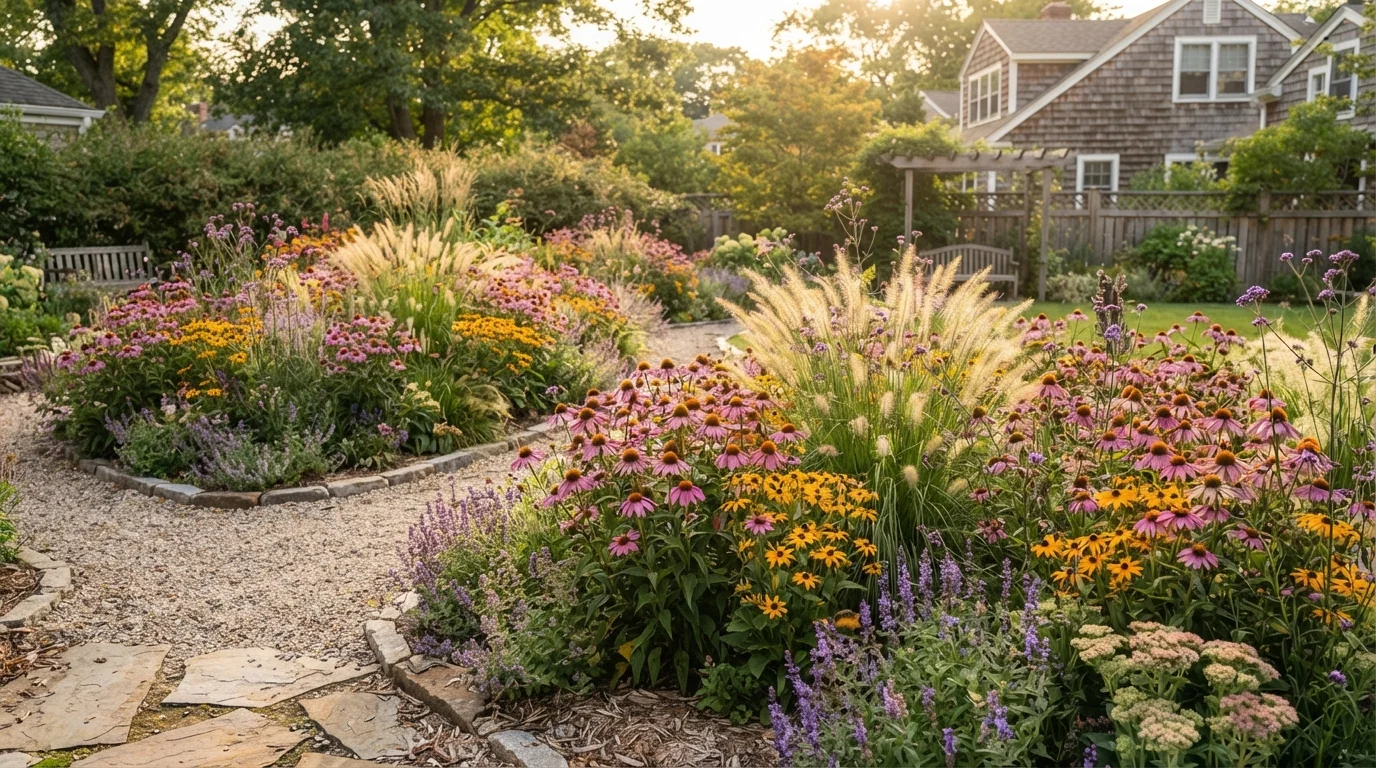
Coneflower is one of the most forgiving perennials available to US gardeners. It tolerates drought, poor soil, and summer heat once established, producing bold purple-pink blooms from midsummer through early fall. The seed heads that follow feed goldfinches and other birds well into winter, so resist the urge to deadhead too aggressively. Coneflower self-seeds modestly, gradually filling a border without becoming invasive. It performs best in full sun but tolerates light afternoon shade in hotter climates.
Coneflower tolerates drought and poor soil while feeding birds long after blooming ends.
Black-Eyed Susan (Rudbeckia fulgida)
With its cheerful golden-yellow daisy flowers and dark brown centers, black-eyed Susan blooms reliably from midsummer to frost. It adapts to a wide range of soil types, handles both heat and periodic drought, and spreads steadily by rhizomes to fill gaps in a border. Unlike some spreading perennials, it stays manageable and is easily controlled by dividing in spring every few years. Full sun produces the best flowering, though the plant tolerates partial shade.
Black-eyed Susan fills border gaps naturally and blooms from midsummer straight through to frost.
Daylily (Hemerocallis cultivars)
Daylilies are remarkably adaptable, performing in nearly every climate across the continental US. They tolerate poor soil, competition from tree roots, and significant drought once established. Modern cultivars offer a wide range of bloom colors, heights, and bloom times - some even rebloom in late summer. Their strap-like foliage provides texture between bloom periods. Divide clumps every four to five years when flowering begins to diminish. Note that daylilies are toxic to cats, so placement matters for pet owners.
Daylilies adapt to poor soil and drought, and modern cultivars can rebloom in late summer.
Salvia (Salvia nemorosa and related species)
Ornamental salvias produce dense spikes of violet, blue, or rose flowers that pollinators - especially bees and hummingbirds - visit eagerly. They prefer full sun and well-drained soil and are notably drought-tolerant once established. Cutting plants back by one-third after the first flush of bloom typically triggers a second round of flowering. Salvia is deer-resistant due to its aromatic foliage, making it a practical choice for gardens in areas where deer browsing is a persistent problem.
Ornamental salvia is drought-tolerant, deer-resistant, and often reblooms after a simple cutback.
Ornamental Grasses (Miscanthus, Panicum, and Pennisetum species)
Ornamental grasses add movement, year-round structure, and texture that few flowering perennials can match. Species such as switchgrass (Panicum virgatum), maiden grass (Miscanthus sinensis), and fountain grass (Pennisetum alopecuroides) establish quickly, require almost no fertilizing, and handle drought with ease in their second season onward. Their plumes and seed heads provide winter interest and wildlife habitat. Cut them back to a few inches from the ground in late winter before new growth emerges.
Ornamental grasses provide structure and wildlife habitat through all four seasons with minimal care.
Catmint (Nepeta x faassenii)
Catmint forms low, spreading mounds of silvery-green foliage covered in lavender-blue flower spikes from late spring through early summer. Like salvia, shearing it back by half after the main bloom encourages a second, often substantial, flush of flowers. It is exceptionally drought-tolerant, deer-resistant, and attractive to bees. Catmint works particularly well as an edging plant along paths or at the front of a mixed border, where its soft texture contrasts well with upright plants.
Catmint forms tidy, drought-tolerant mounds that bloom twice when cut back after the first flush.
Sedum / Stonecrop (Hylotelephium spectabile)
Tall sedums - now frequently reclassified under Hylotelephium - are among the most drought-tolerant flowering perennials available. Their succulent foliage looks attractive from spring through frost, and their flat-topped flower clusters in pink, rose, or white arrive in late summer when many other perennials have finished. The dried seed heads remain attractive through winter and should be left standing until spring cleanup. Sedums thrive in lean, well-drained soil and actually perform worse when over-fertilized or overwatered.
Sedums perform better in lean, dry soil - over-fertilizing and overwatering actually reduce their vigor.
Setting Your Perennials Up for Long-Term Success
Even the toughest perennial benefits from a good start. Amend planting holes with compost to improve drainage in clay or moisture retention in sandy soil. Water consistently during the first season - not daily, but deeply and less frequently, which encourages roots to reach down rather than stay near the surface. If you're uncertain about how often to water, the common watering myths that harm plants article is worth reviewing before you develop habits that could undermine your new plantings.
Mulch Is Your Best Low-Maintenance Tool
Applying 2-3 inches of organic mulch around newly planted perennials conserves soil moisture, moderates soil temperature, and suppresses weeds that compete for nutrients. Keep mulch a few inches away from plant crowns to prevent rot. Refreshing mulch each spring is one of the simplest ways to reduce the watering and weeding a perennial bed demands.
Once established, most of the perennials on this list need little beyond an annual cutback in late fall or early spring and division every three to five years when clumps become crowded. Many also pair well with other low-effort plants - see our guide to companion planting combinations that actually work for ideas that extend the season and reduce pest pressure naturally. For gardeners interested in supporting local ecosystems, our overview of native plants in the home landscape complements many of the species listed here.