Where Companion Planting Fact Meets Fiction
Companion planting - the practice of growing certain plants near each other to improve growth, deter pests, or attract beneficial insects - has been part of gardening culture for centuries. Some of that accumulated wisdom holds up under scrutiny. Much of it doesn't.
The challenge is that gardening lore spreads easily, and it can be hard to tell a well-supported pairing from one that simply sounds plausible. This article separates the reliable combinations from the myths, so you can make informed decisions about what to plant where - and why.
Whatever combinations you try, the foundation matters most. A well-amended soil and consistent watering practices will do more for your garden than any pairing, and our garden watering guide helps you avoid the mistakes that undermine even a well-planned layout.
Myth
Marigolds planted near vegetables will keep most pests away from the entire garden.
Fact
Marigolds can deter specific soil nematodes and attract some beneficial insects, but they do not provide broad pest protection across a garden.
The idea that marigolds act as a general-purpose pest shield is one of the most persistent myths in companion planting. The reality is more specific: certain marigold varieties - particularly Tagetes patula - produce root compounds that suppress some soil-dwelling nematode populations when planted densely over at least one growing season. For above-ground pests like aphids, whiteflies, or beetles, the evidence of deterrence is inconsistent at best. Marigolds are still worth growing - they attract pollinators and predatory insects - but expecting them to protect your whole vegetable patch will likely lead to disappointment.
Myth
The Three Sisters (corn, beans, and squash) is just a cultural tradition without practical benefits.
Fact
The Three Sisters combination has measurable functional advantages - beans fix nitrogen, squash shades out weeds, and corn provides a natural trellis for beans.
This is one of the most well-supported companion planting systems. Developed by Indigenous agricultural communities in North America, the combination works because each plant plays a distinct functional role. Beans are legumes that form symbiotic relationships with soil bacteria to fix atmospheric nitrogen - a nutrient that benefits the corn and squash. Squash leaves are broad enough to reduce weed germination and slow soil moisture loss. Corn stalks provide vertical support for bean vines. The system isn't magic, but the complementary functions are real and replicable in most US growing climates.
Myth
Basil planted near tomatoes significantly improves tomato flavor.
Fact
There is no reliable scientific evidence that basil affects tomato flavor; the pairing does offer some other modest benefits.
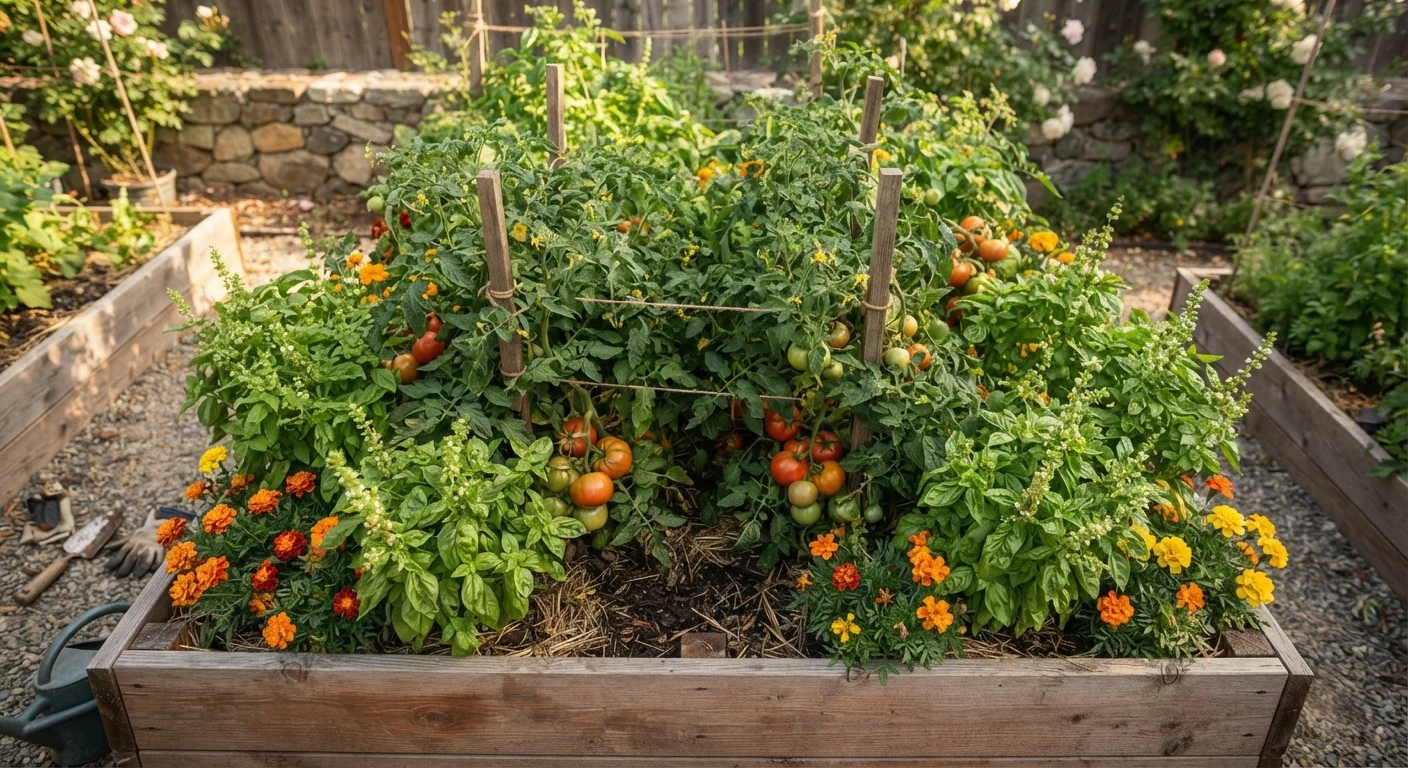
The claim that basil makes tomatoes taste better is widespread in gardening circles, but it lacks controlled scientific support. What researchers have found is more modest: basil may slightly reduce populations of certain aphid species and thrips in proximity to tomatoes, and it can attract pollinators. Planting basil near tomatoes is not a bad idea - they share similar sun, water, and temperature requirements, making them convenient co-inhabitants of a bed. Just don't expect the pairing to transform the flavor of your harvest. Soil quality and tomato variety have far more influence on taste. Good homemade compost applied at planting time will do more for flavor than any neighbor plant.
Myth
Planting onions near carrots keeps carrot flies away reliably.
Fact
Onions may reduce carrot fly pressure under some conditions, but field results are inconsistent and depend on planting density and layout.
The onion-and-carrot pairing is a staple of companion planting guides, based on the idea that onion scent confuses carrot flies. Some small-scale studies have found modest reductions in carrot fly damage when onions are interplanted at high density. However, the effect is not reliable across all conditions - factors like wind direction, the local carrot fly population, and how the beds are laid out all influence the outcome. Using physical row covers remains a more dependable approach to managing carrot fly, particularly in regions with high pest pressure. The onion-carrot pairing is worth trying, but treat it as one layer of a pest management plan, not a solution on its own.
Myth
Planting mint throughout the garden repels insects broadly.
Fact
Mint's strong scent may deter some insects near the plant itself, but it spreads aggressively and can quickly become a garden problem.
Mint does contain aromatic compounds that some insects avoid, and there is some evidence it can reduce aphid and flea beetle activity in its immediate vicinity. The problem is that mint spreads rapidly by underground runners and can overwhelm neighboring plants within a single growing season. Gardeners who plant mint freely in beds often spend subsequent seasons managing an invasive mint patch rather than enjoying any pest benefit. If you want to use mint as a companion, plant it in a container sunk into the soil to contain its roots - and accept that any insect-deterrent effect will be localized.
Putting Evidence-Based Companion Planting Into Practice
Once you understand which pairings are grounded in evidence, the next step is applying them in a way that actually fits your garden layout. A few practical principles help.
~5%
Typical yield increase from companion planting studies
A review of published companion planting research suggests average yield improvements are modest - often in the single digits - and highly dependent on crop, climate, and method.
1 full season
Minimum time for marigolds to suppress soil nematodes
University extension research indicates that nematode suppression from Tagetes marigolds requires dense planting maintained for at least one complete growing season.
Give combinations room to work. Companion effects - whether pest deterrence or nitrogen fixation - are not dramatic. They rarely substitute for proper spacing, fertilizing, or pest management. Think of them as modest, cumulative benefits rather than guarantees.
Observe across seasons. A combination that didn't seem to help one year may perform differently with changed weather, soil, or pest pressure. Keep simple notes on what you planted together and how each area performed.
Pair companions with sound structure. If you're working in a raised bed or small space, companion planting can do double duty - for example, low-growing basil beneath taller tomatoes can reduce soil moisture loss. Our guide to raised beds vs. in-ground planting covers how your bed type affects what combinations are practical.
Avoid Overcrowding in the Name of Companionship
One of the most common companion planting mistakes is planting too close together on the assumption that neighbors always help each other. Overcrowded plants compete for water, nutrients, and light - and can increase humidity levels that encourage fungal disease. Always respect recommended spacing even when interplanting, and prioritize each plant's individual growing requirements first.
Companion planting is a useful layer in a broader gardening strategy - not a standalone solution. Combine it with good compost, appropriate plant selection for your region, and the patience to observe what works in your specific conditions. For low-effort success, established perennials and native plants often naturally support local insect communities without needing a companion strategy at all.