What Microchipping Actually Involves
A microchip is a small passive transponder - roughly the size of a grain of rice - implanted beneath a cat's skin, typically between the shoulder blades. The chip stores a unique identification number that links to the owner's contact details in a pet recovery database. There is no battery, no moving parts, and no power source; the chip only activates when a compatible scanner passes over it.
The implantation procedure is performed with a hypodermic needle and takes only seconds. Most cats tolerate it as well as a standard vaccine injection. The chip itself does not move through the body in any meaningful way once implanted, and the procedure requires no sedation. Veterinarians can perform it during a routine wellness visit, often alongside spaying or neutering.
Microchips Are Not GPS Trackers
This is the single most persistent misconception about the technology. A microchip stores only a static ID number - it transmits no signal and has no location-reporting capability. Owners seeking real-time location monitoring should look into dedicated GPS collar devices, which are separate products with their own trade-offs around battery life and collar fit.
The Case For Microchipping Your Cat
Permanent identification that cannot be lost
Unlike collars or tags, a microchip stays with the cat for life. It cannot fall off, wear out, or be removed accidentally.
Dramatically improves reunion odds after loss
Research indicates that microchipped cats are returned to owners at a significantly higher rate than unidentified cats processed through shelters.
Routine, low-risk procedure
Implantation takes seconds, requires no anesthesia, and carries a very low rate of adverse events - comparable in risk profile to a vaccine injection.
Widely recognized across shelters and clinics
The vast majority of US animal shelters and veterinary practices have universal scanners and routinely check incoming stray animals.
Lasts the lifetime of the cat
Once implanted and registered, a microchip requires no battery replacements, renewals, or hardware updates over the cat's entire life.
~138×
Reunion rate advantage for microchipped cats
A study published in the Journal of the American Veterinary Medical Association found microchipped cats were approximately 20 times more likely to be returned to owners than those without chips; some shelter data suggests even larger differentials.
< 1%
Rate of significant adverse reactions
Veterinary literature consistently reports that serious complications from microchip implantation - including infection or tumor formation - occur in well under one percent of procedures.
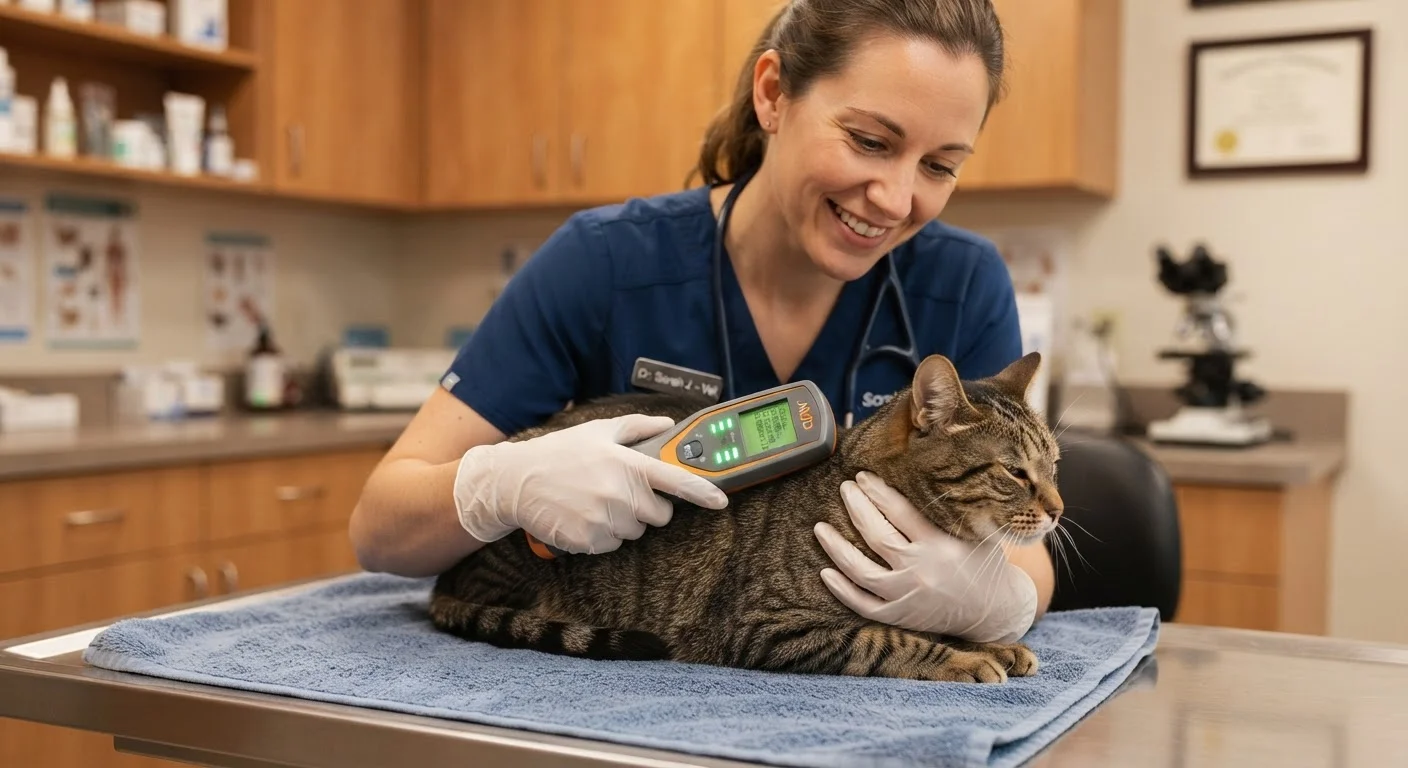
A collar and tag can fall off, be removed, or become illegible. A microchip cannot be lost in the same way. When a stray cat arrives at a shelter or veterinary clinic, scanning for a chip is one of the first steps staff take. Studies have consistently shown that microchipped cats are significantly more likely to be reunited with their owners than those without chips.
The procedure is also remarkably durable. Unlike a collar, a chip implanted today is expected to last the lifetime of the cat. One-time registration fees are modest, and many national databases maintain records indefinitely. For cats who spend any time outdoors, the identification benefit is particularly meaningful - a point worth considering alongside the broader risks covered in our guide to indoor and outdoor cat trade-offs.
The Case Against - or at Least the Caveats
Not a GPS - provides no real-time location
A microchip is a passive identifier, not a tracking device. It cannot tell an owner where a missing cat is; it only helps identify the cat once it is found.
Useless without an accurate registry entry
If contact information in the associated database is outdated, the chip cannot facilitate a reunion. Owner follow-through is essential to the system's function.
No single unified US database
Multiple competing registries operate in the United States. Owners must know which registry holds their chip's record and keep it updated across ownership changes.
Chip migration can complicate scanning
In a minority of cases, the chip may shift from the original implant site over time, requiring scanners to cover a broader area to detect it reliably.
Rare but possible adverse reactions
A very small number of cats experience localized swelling or discomfort at the implant site. Serious reactions are uncommon, but any concerns should be discussed with a veterinarian.
The most common misconception owners hold is that a microchip tracks a cat's location in real time. It does not. A chip is passive - it requires a scanner to be physically placed near the cat to retrieve any information. If a cat is lost in a field or taken far from any shelter, the chip provides no active alert or locating function.
The system also depends entirely on human follow-through. A chip linked to an outdated phone number or a closed email account is effectively useless in a recovery scenario. Owners who move, change numbers, or transfer ownership of the cat must update the registry for the chip to remain functional. This is a limitation that veterinarians frequently address when correcting owner misconceptions about the technology.
Finally, while adverse reactions are rare, they are documented. Chip migration - where the chip shifts from its implant site - occurs occasionally, which is why scanning multiple body areas has become standard practice in shelters.
Keeping the System Working: Registry Maintenance
Microchipping's effectiveness is directly tied to how well owners manage their registry entries. The United States does not have a single unified national database; instead, several independent registries operate alongside manufacturer-specific databases. Universal lookup tools exist that query multiple registries simultaneously, but owners should confirm at implantation which database their chip number is registered in and keep that record accessible.
At minimum, update your registry entry whenever you change your phone number, address, or email. If you rehome or transfer ownership of a cat, the registry record must be updated to reflect the new owner. Treating this the same way you would treat renewing a driver's license - as a routine administrative task tied to a life change - keeps the identification system reliable. Consider adding a registry check to the broader preventive care checklist described in our routine cat care overview.