Activity Patterns and Daily Schedules
One of the most practical differences between hamsters and gerbils is when they are active. Hamsters are primarily nocturnal - they sleep for much of the day and become lively in the evening and overnight. This matters because disrupting a hamster's daytime sleep can cause stress and even defensive biting. If your household is noisy during the day, a hamster may actually appreciate the quiet.
Gerbils, by contrast, follow a polyphasic activity pattern, cycling through short bursts of activity and rest throughout the day and night. This makes them easier to observe during daylight hours, which many owners find more rewarding. If you work from home or want a pet that's engaged when you are, gerbils are often the more compatible choice.
For enrichment strategies that suit both species, see enrichment ideas for small animals.
| Criterion | Hamster | Gerbil |
|---|---|---|
| Activity pattern | Primarily nocturnal | Active day and night (polyphasic) |
| Social structure | Solitary - housed alone | Social - pairs or small groups |
| Typical lifespan | 2-3 years | 3-5 years |
| Handling temperament | Can nip if startled; tameable | Curious, quick, less prone to biting |
| Minimum enclosure size | 450+ sq in floor space recommended | Larger to accommodate pair/group |
| Burrowing need | High - deep bedding essential | High - burrowing is a core behavior |
| Diet | Pellets, seeds, fresh veg, protein | Pellets, seeds, fresh veg, protein |
| Noise level | Wheel noise overnight | Active noise throughout day and night |
Social Needs: Solo vs. Paired Living
Social structure is arguably the single biggest distinction between these two species. Hamsters are solitary animals. In the wild, adult hamsters are territorial and typically only seek each other out to breed. Housing two hamsters together - even of the same sex - frequently results in fighting, sometimes with serious injuries. Most veterinary and small-animal care guidelines recommend keeping hamsters alone.
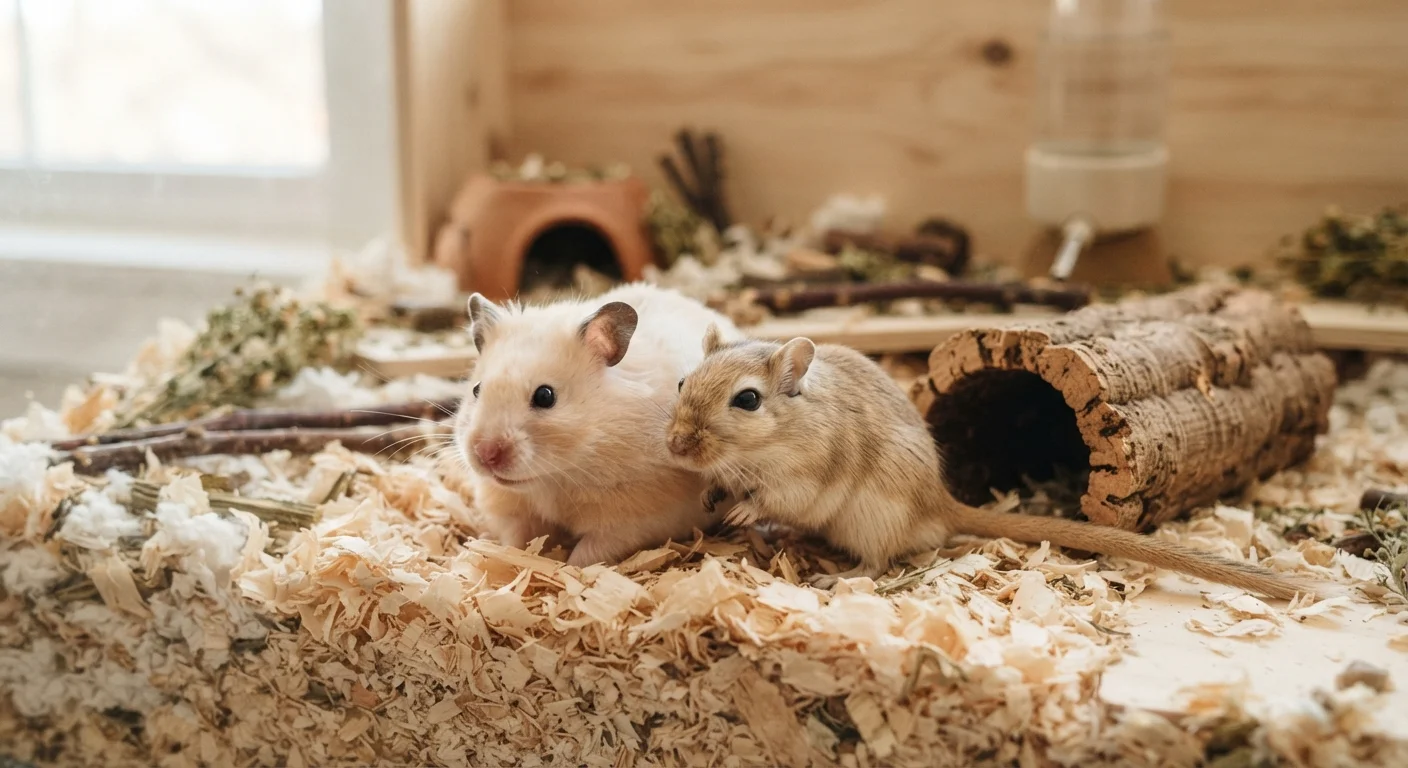
Gerbils are the opposite. They are highly social animals that form strong bonds with cage-mates and can experience significant stress when kept in isolation. Keeping gerbils in same-sex pairs or small groups is widely recommended by small-animal veterinarians. Introducing gerbils that weren't raised together requires care and a proper introduction method, but bonded pairs are generally stable and rewarding to keep.
To understand how introductions work and what social structures suit each species, socializing small pets by species offers practical guidance.
2-3 yrs
Average hamster lifespan
Dwarf hamster varieties often fall toward the shorter end of this range, while Syrian hamsters may reach 3 years with attentive care.
3-5 yrs
Average gerbil lifespan
Mongolian gerbils - the most common pet species - consistently live longer than hamsters under comparable husbandry conditions.
Solo
Recommended hamster housing
Veterinary and small-animal welfare guidance consistently recommends single housing for adult hamsters due to territorial aggression risks.
Lifespan, Handling, and Temperament
Hamsters typically live between 2 and 3 years, with dwarf varieties sometimes reaching the shorter end of that range. Syrian hamsters - the larger, more commonly kept type - are often considered more handleable once properly tamed, though individual temperament varies considerably. Hamsters can nip when startled or woken abruptly, so calm, consistent handling from a young age matters.
Gerbils live somewhat longer, averaging 3 to 5 years. They tend to be naturally curious and less prone to biting than hamsters, though they are quick and agile, which can make them harder to hold securely. Gerbils often enjoy supervised exploration outside their enclosure and respond well to patient, gentle handling.
Neither species is an ideal pet for children under 8 without close adult supervision, given their small size and the precision required for safe handling. If you're weighing small-pet options more broadly, the small pet ownership starter overview covers key considerations across species.
When to Consult a Veterinarian
Small mammals can mask signs of illness until they are significantly unwell. If a hamster or gerbil shows changes in eating, activity, coat condition, breathing, or weight, a veterinarian with small-mammal experience should be consulted promptly. Routine wellness visits are also worthwhile for catching dental or respiratory issues early, both of which are common in these species.
Enclosure, Diet, and Ongoing Care
Both species need adequately sized enclosures with deep bedding for burrowing - a critical behavioral need that is frequently underestimated. Small wire cages with shallow bedding trays do not meet the welfare needs of either hamsters or gerbils. Tank-style enclosures or bin cages with at least 6-8 inches of substrate are widely preferred by small-animal welfare organizations.
Diet for both species centers on a quality commercial pelleted or seed-mix food formulated for the species, supplemented with small amounts of fresh vegetables. Both are omnivorous and benefit from occasional protein sources. Fresh water should be available at all times. Neither species should be fed high-sugar foods or citrus fruits.
Gerbil pairs do require a larger footprint than a single hamster, since both animals need space for simultaneous activity and burrowing without conflict. Before bringing either pet home, use a small pet preparation checklist to make sure your supplies and setup are ready.