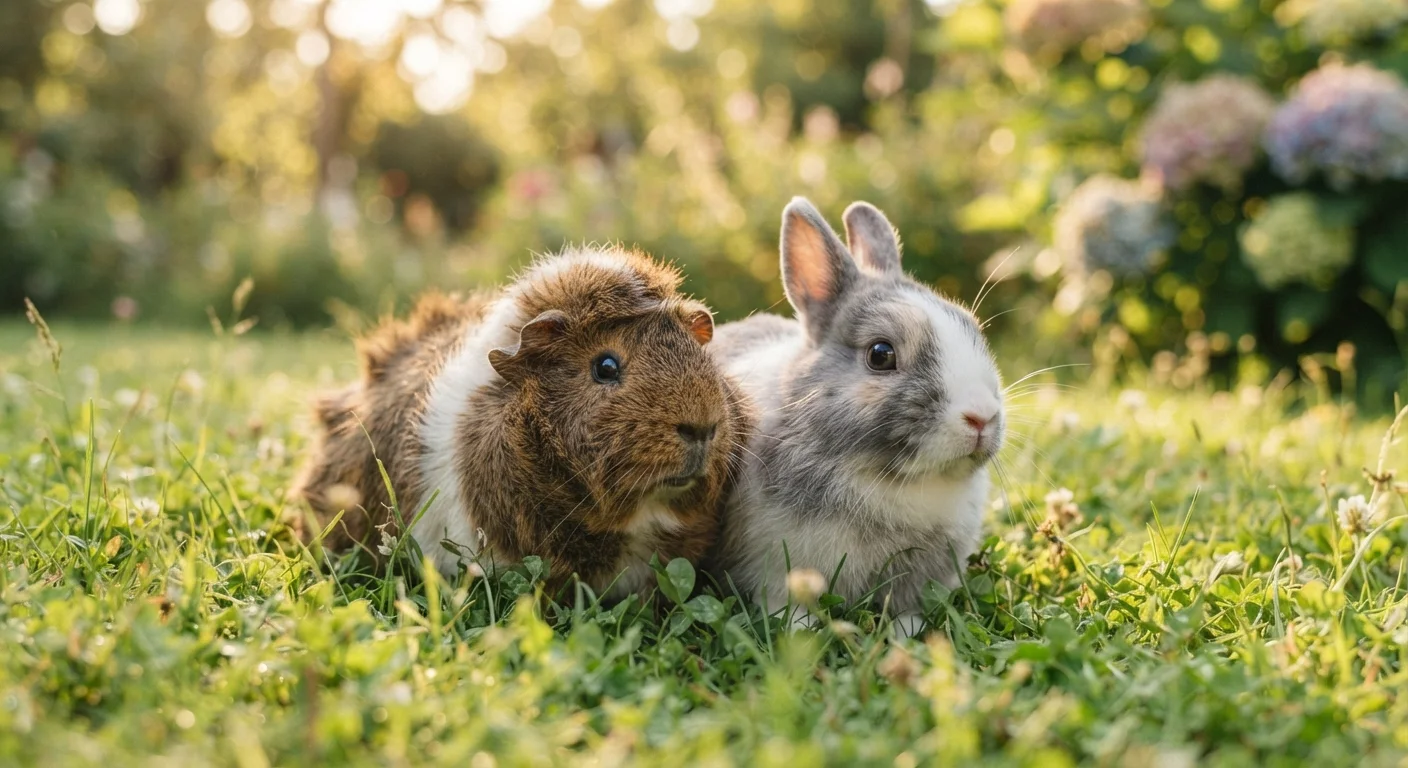

Why Prey Animals Are Wired Differently
Dogs and cats descended from predators. Rabbits, guinea pigs, chinchillas, hamsters, and most companion birds did not. They evolved as animals that are eaten - and that single fact shapes almost every aspect of their behavior, including how they experience and express stress.
The core survival strategy of a prey animal is concealment. An injured or frightened rabbit that visibly limps or trembles becomes an easy target. So over millions of years, these species developed a powerful drive to suppress outward signs of distress. This instinct does not disappear in a domestic living room. It means your pet guinea pig may be experiencing significant anxiety while appearing, to an untrained eye, perfectly calm.
If you are new to keeping these animals, the starter's overview for small-pet owners provides useful context on what makes their care fundamentally different from dog or cat ownership.
Prey Animals Are Not 'Low-Maintenance' Pets
A common misconception is that small animals like rabbits and guinea pigs require less attention than dogs or cats. In terms of observational vigilance, the opposite is often true. Because they suppress distress signals so effectively, owners must be more - not less - attuned to subtle behavioral changes. Passive ownership can allow serious problems to develop unnoticed.
What Triggers Stress in Small Companion Animals
Common stressors for prey-species pets fall into a few broad categories that owners can actively manage:
- Predator cues: The presence - or even the scent - of a cat or dog can keep a rabbit or guinea pig in a sustained stress state, even if the animals never directly interact.
- Sudden loud sounds: Fireworks, shouting, or high-volume music can trigger acute fear responses. Rabbits, in particular, have wide-range hearing that amplifies these events.
- Unpredictable handling: Being grabbed from above mimics a bird-of-prey attack. Consistent, predictable interaction from the side - at the animal's level - is less threatening.
- Isolation: Guinea pigs are highly social and experience genuine distress when housed alone. Rabbits also benefit significantly from companionship.
- Inadequate hiding space: Without a secure retreat, prey animals cannot self-regulate. This is a welfare essential, not a luxury.
Understanding which factors apply to your specific animal matters. The comparison between guinea pigs and rabbits outlines key behavioral differences worth knowing before setting up an enclosure.
~80%
Small-mammal illness cases showing late-stage presentation
Exotic-animal veterinarians frequently note that small prey mammals - including rabbits and guinea pigs - commonly present for care only after signs become severe, due to their instinct to conceal illness.
2nd leading cause
Stress-related GI stasis in rabbit mortality
Gastrointestinal stasis, which can be triggered or worsened by psychological stress, is consistently cited by rabbit-specialist vets as one of the leading causes of preventable death in domestic rabbits.
30-50%
Captive parrots showing stress-related feather disorders
Avian welfare researchers have estimated that a substantial proportion of captive parrots exhibit feather-destructive behavior at some point, with environmental stressors identified as a primary contributing factor.
Recognizing Stress Signals by Species
Because prey animals mask distress, owners need a working knowledge of species-specific stress signals - the subtle behavioral language each animal uses when something is wrong.
Rabbits
Watch for: teeth grinding (bruxism), hunched posture, repeated thumping, reduced appetite, changes in droppings, or unusual stillness. A rabbit that stops eating for more than a few hours warrants prompt veterinary attention, as gut stasis - a potentially fatal slowdown of the digestive system - can develop quickly under stress. The full breakdown of rabbit health needs covers this in more detail.
Guinea Pigs
Signs include: hiding more than usual, teeth chattering directed at people or other animals, weight loss, and a noticeable reduction in their characteristic vocalizations. A quiet guinea pig in a group is often the first indicator something is wrong.
Birds
Feather destruction, stereotypic behaviors (repetitive pacing or swinging), screaming, or conversely - unusual silence - all signal a bird under chronic stress. Parrots especially develop behavioral disorders that are difficult to reverse once established, making early intervention critical.
“The single biggest mistake small-animal owners make is interpreting a quiet, still animal as a contented one. In prey species, stillness is often the loudest alarm bell we have.”
— Exotic Animal Veterinary Consensus, General principle emphasized in small-mammal veterinary practice and welfare literature
What Owners Can Do: Practical Steps
Managing a prey animal's stress environment is active, ongoing work - not a one-time setup. The most impactful changes owners can make include:
- Provide cover and structure: Every enclosure should have at least one opaque hiding box or tunnel where the animal can retreat completely from view.
- Stabilize the sensory environment: Keep the animal's space away from high-traffic areas, televisions, and other pets. Consistent ambient noise (soft music or a fan) can buffer sudden sounds.
- Handle predictably and gently: Approach at eye level, move slowly, and let the animal initiate contact when possible. Trust-building takes time but dramatically reduces baseline anxiety.
- Enrich the environment: Mental stimulation counteracts stress. Foraging opportunities, tunnels, and variety reduce fearfulness and boredom simultaneously. The enrichment ideas for small animals article offers practical starting points.
- Schedule regular veterinary check-ups: Because prey animals hide illness, routine exams catch problems before they escalate. Find a vet experienced with exotic animals or small mammals.
If you are still in the planning stage, reviewing the preparation checklist for new small-pet owners before the animal arrives gives you the best foundation.
Keep a Simple Behavioral Baseline Log
Spend a few minutes each week noting your pet's typical eating amounts, droppings, activity patterns, and social behavior. A written record makes it far easier to spot early deviations - the kinds of subtle changes that are easy to dismiss as 'just a quiet day' without a reference point. Many vets find owner-recorded baselines genuinely useful during wellness exams.
This article provides general educational information about animal behavior and is not a substitute for professional veterinary advice. If you are concerned about your pet's health or behavior, consult a qualified veterinarian with experience in small mammals or avian species.