Hay: The Non-Negotiable Foundation
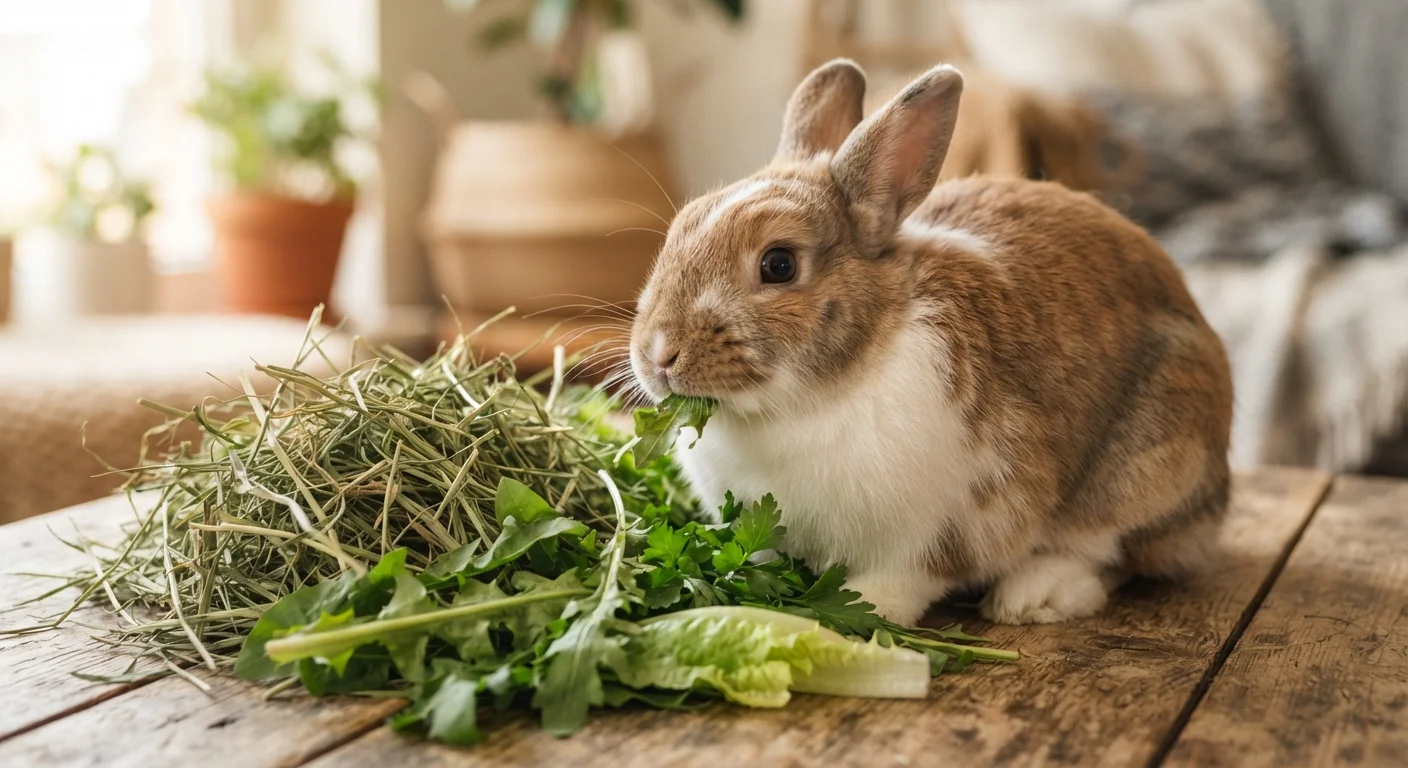
A rabbit's digestive system is built around continuous fiber intake. Grass hay-timothy, orchard, or meadow grass-should make up approximately 80% of a rabbit's daily diet and must be available at all times. The long fiber strands keep the gut moving, wear down continuously growing teeth, and support the cecum's delicate microbial balance.
Pellets have a role, but it is a supporting one. Most veterinary guidelines suggest no more than a quarter cup of high-fiber pellets per five pounds of body weight daily for adult rabbits. Fresh leafy greens-romaine lettuce, cilantro, or leafy herbs-add variety and hydration. Starchy vegetables and fruit should be treats, not staples. For a deeper look at what commonly goes wrong at feeding time, see common rabbit diet myths that owners repeat despite the evidence.
Gut Stasis Is a Veterinary Emergency
Gastrointestinal stasis-where the digestive tract slows or stops-can become fatal within 24 to 48 hours. Warning signs include not eating, no fecal output, a hunched posture, or a distended abdomen. If you observe these signs, contact an exotic vet immediately rather than waiting to see if the rabbit improves on its own.
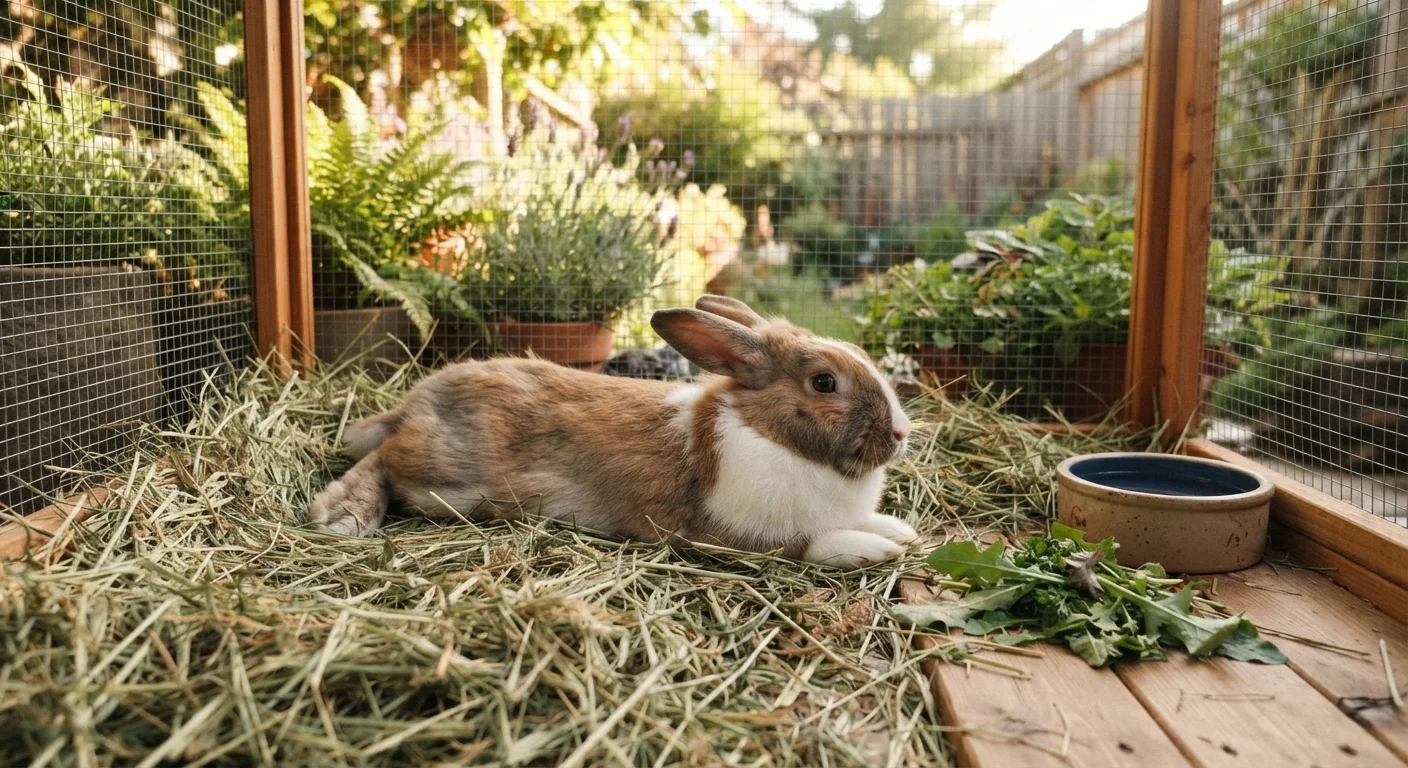
Fresh water must be available at all times, either in a heavy ceramic bowl or a bottle your rabbit has learned to use effectively. Dehydration accelerates gastrointestinal stasis-a life-threatening slowdown of gut motility.
Space, Exercise, and Environmental Design
The pet-store hutch sold alongside a rabbit is often dramatically undersized. A rabbit's enclosure should allow the animal to take at least three to four full hops in a straight line and to stand fully upright on its hind legs without its ears touching the ceiling. Many rabbit welfare organizations suggest an absolute minimum of 12 square feet of living space, combined with at least 24 square feet of daily exercise area.
Free-roaming time is not optional enrichment-it is a health requirement. Muscle atrophy, obesity, and skeletal problems are documented consequences of chronic confinement. Rabbit-proofing a room (covering electrical cables, blocking access to toxic houseplants) makes supervised roaming safer for everyone.
Rabbit-Proofing Makes Free Roaming Safe
Before allowing a rabbit to roam freely, cover or conceal all electrical cables-rabbits chew instinctively and cannot distinguish between a willow twig and a power cord. Also block access to toxic houseplants such as pothos, lilies, and aloe vera. A few hours of initial rabbit-proofing prevents emergency vet visits.
Social Needs and Companionship
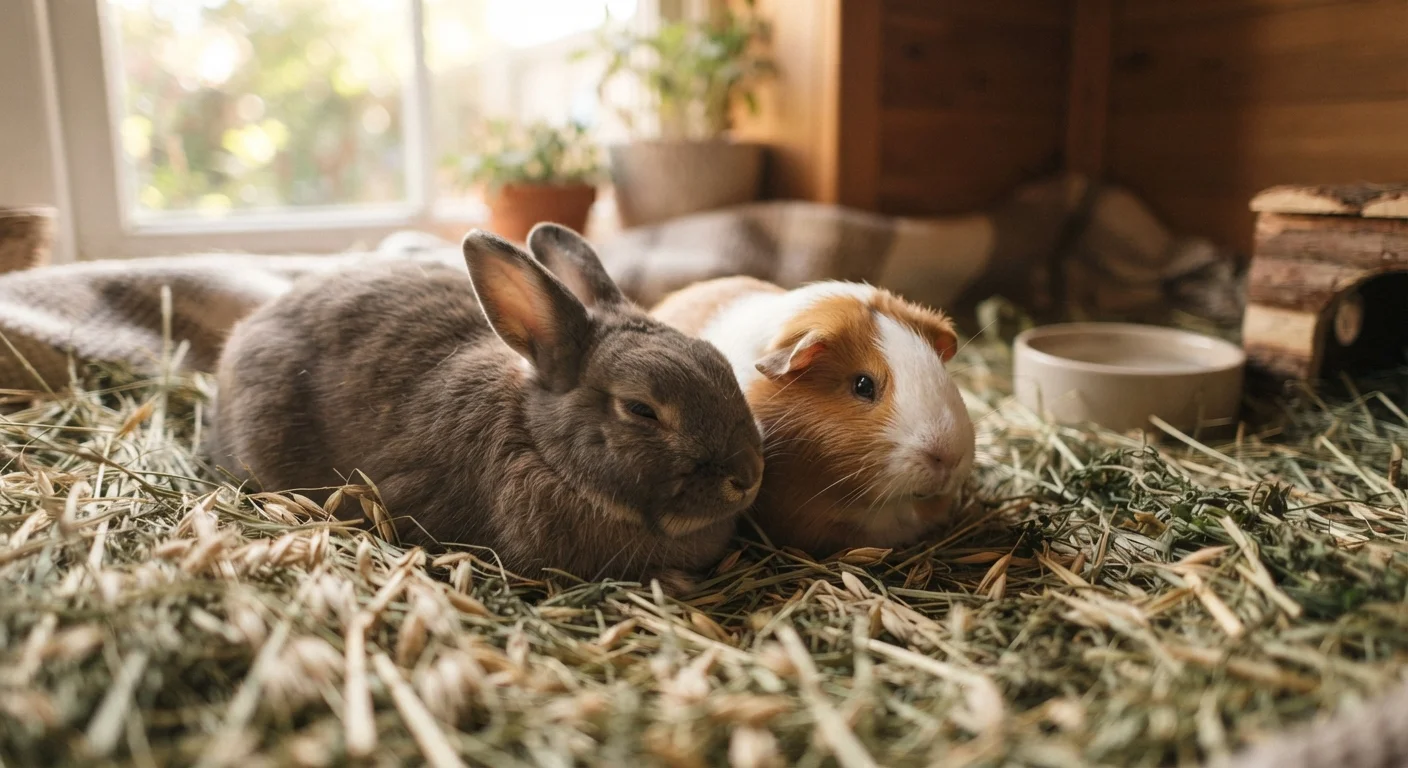
Rabbits are not solitary animals in nature, and most do not thrive in isolation. A bonded pair typically displays lower stress hormones, greater activity levels, and more confident exploratory behavior than solo rabbits. Bonding two rabbits requires patience-a slow, neutral-territory introduction process-but the long-term welfare benefit is substantial.
Understanding how rabbits communicate stress is essential before any bonding attempt. As prey species, they suppress obvious signs of distress until problems become serious. How prey animals experience stress explains the behavioral signals owners routinely miss.
When introducing two rabbits, always conduct initial meetings in a completely neutral space-a room neither rabbit has visited before. Even ten minutes of shared neutral-territory time daily accelerates bonding more reliably than longer sessions in a home territory.
Territorial aggression is the primary obstacle to bonding; eliminating home-turf advantage significantly reduces stress-driven fighting during introductions.
Weigh your rabbit weekly using a kitchen scale. A 10% drop in body weight often appears before any other observable symptom and can flag dental disease or gut slowdown early enough to treat successfully.
Rabbits mask illness effectively; objective measurements catch problems that behavioral observation alone will miss.
When a second rabbit is not possible, human interaction must increase proportionally. Daily, calm handling and play are not a substitute for conspecific companionship, but they meaningfully reduce isolation-related anxiety.
Veterinary Care for Rabbits
Rabbits are considered exotic pets by most veterinary practices, which means owners need to locate a vet with documented experience in rabbit medicine before a health crisis occurs. Annual wellness exams allow a clinician to assess dental health-a common problem given that rabbit teeth grow continuously-body condition, and gut sounds.
Spaying and neutering is strongly recommended. Unspayed females face a particularly high risk of uterine adenocarcinoma (uterine cancer), with some studies suggesting rates exceeding 50% in intact does over age four. Neutering males reduces hormone-driven aggression and territorial urine spraying, and supports successful bonding.
RHDV2: Know Your Regional Risk
Rabbit hemorrhagic disease virus type 2 (RHDV2) is a highly contagious and often fatal virus that has established itself in parts of the United States. It can be carried on clothing, shoes, and by wild rabbits. Owners should consult an exotic vet about current local risk levels and ask whether a vaccine is available and appropriate in their area.
Vaccinations relevant to domestic rabbits vary by region. In the United States, rabbit hemorrhagic disease virus (RHDV2) has spread to multiple states. Owners should ask their exotic vet about current local risk and available vaccine options.
Enrichment and Mental Well-Being
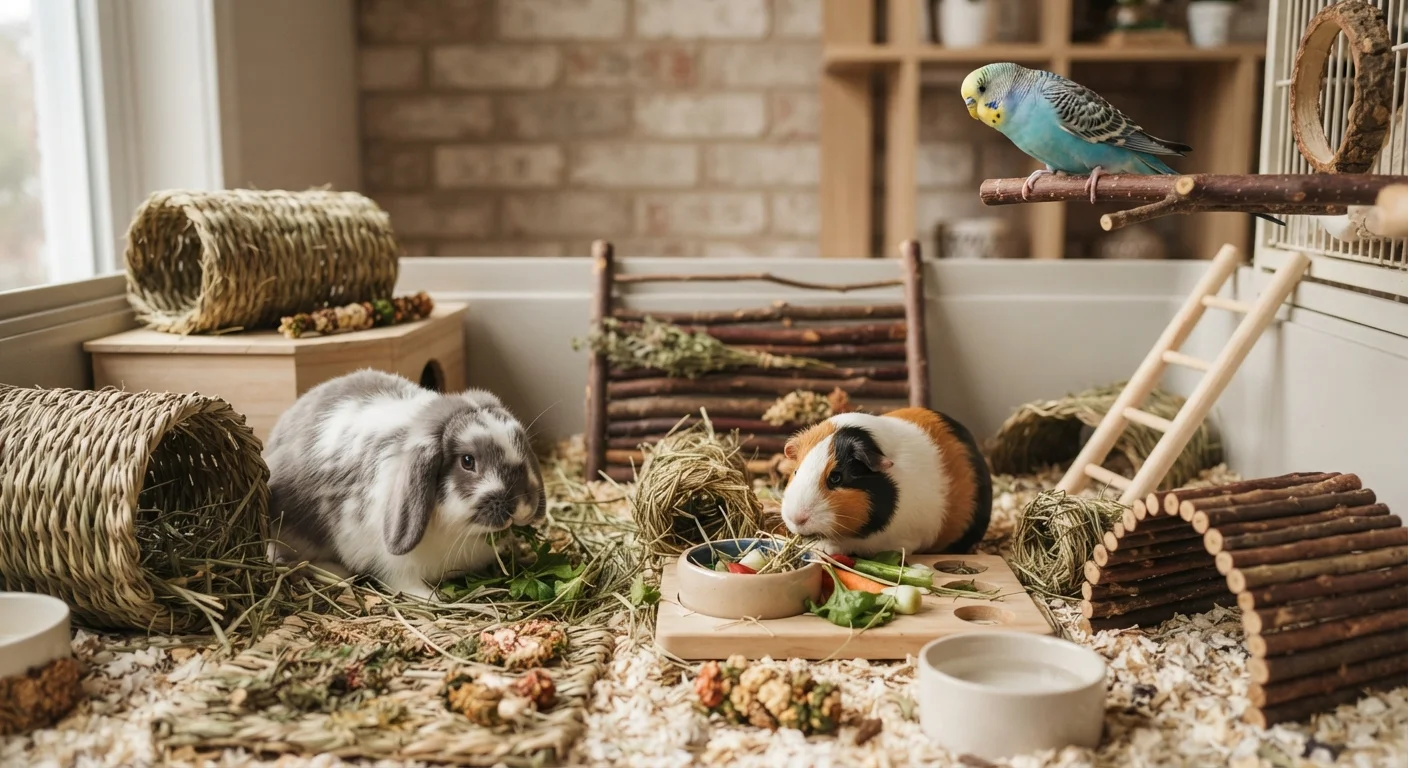
A physically healthy rabbit that is mentally under-stimulated will develop problematic behaviors: bar-chewing, fur-pulling, thumping, or persistent aggression. Enrichment does not require expensive products. Cardboard tunnels, paper bags stuffed with hay, willow balls, and rearranged furniture give rabbits novel problems to investigate and manipulate.
Foraging behaviors are especially valuable. Scattering pellets in hay rather than serving them in a bowl encourages natural searching activity and slows eating. Enrichment strategies for small animals covers a wider range of practical ideas applicable to rabbits of different temperaments.
If you are still deciding whether a rabbit is the right fit, comparing rabbits and guinea pigs offers an honest side-by-side look at what each species actually demands. And before bringing any small pet home, a preparation checklist helps confirm your space and schedule are genuinely ready.
This article provides general information about rabbit care and is not a substitute for advice from a qualified veterinarian familiar with your individual animal.